English

First Successful Polio Vaccine (1955)
The public announcement on April 12th, 1955, that the polio vaccine developed by Dr.
Reads at Grades 3–5 Listens at Grades 1–5
Print & create
Answer keys·No prep·Free with an account
28 worksheets · answer keys · full story · quiz · Ages 8-10 · CEFR B1
Plus adds 280,000+ more stories in 27 languages, audio for every one, and printables for all of them.
Just want First Successful Polio Vaccine (1955)?
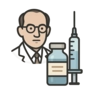
Hello there. My name is Dr. Jonas Salk, and I want to tell you a story about a time, not so long ago, when summertime felt a little less sunny. Back in the 1940s and 1950s, when your grandparents might have been children, summer was a time of excitement, but also a time of fear. A sickness called polio cast a dark shadow over everything. It was a virus, a tiny germ that you couldn't see, but it was strong enough to change a child's life forever. It would often come in the summer, and it could make a person's muscles weak, so weak that they might not be able to walk or run or even breathe on their own. Parents were so worried that they would close swimming pools and movie theaters, and they’d tell their children not to play in big crowds. I was a scientist, and seeing the fear in families’ eyes and hearing about so many children getting sick made me feel a deep, burning need to do something. I knew I had to find a way to stop polio.
I spent endless hours in my laboratory at the University of Pittsburgh. My team and I worked day and night, surrounded by glass beakers and microscopes, searching for an answer. I wanted to create a vaccine. Now, a vaccine is like a training school for your body. It teaches your body how to recognize and fight off a dangerous germ before the real germ ever has a chance to make you sick. The tricky part was figuring out the best way to teach the body. Many scientists at the time believed you had to use a live, but weakened, virus for the training to work. But I had a different idea. I believed we could use a 'killed' virus. We would take the polio virus and make it completely inactive, so it couldn't hurt anyone, but the body could still learn from its shape and build a strong defense against it. It was a new and unproven idea, and some people were skeptical. But I was so sure it would be safe and effective that I did something to prove it. In 1953, I took the vaccine myself. Then, my wife and our three sons also got the shot. My own children. I would never have let them do it if I wasn't absolutely certain it was safe. It was my way of showing the world that I believed in this recipe for hope with all my heart.
A Shot of Hope: My Fight Against Polio
Hello there. My name is Dr. Jonas Salk, and I want to tell you a story about a time, not so long ago, when summertime felt a little less sunny. Back in the 1940s and 1950s, when your grandparents might have been children, summer was a time of excitement, but also a time of fear. A sickness called polio cast a dark shadow over everything. It was a virus, a tiny germ that you couldn't see, but it was strong enough to change a child's life forever. It would often come in the summer, and it could make a person's muscles weak, so weak that they might not be able to walk or run or even breathe on their own. Parents were so worried that they would close swimming pools and movie theaters, and they’d tell their children not to play in big crowds. I was a scientist, and seeing the fear in families’ eyes and hearing about so many children getting sick made me feel a deep, burning need to do something. I knew I had to find a way to stop polio.
I spent endless hours in my laboratory at the University of Pittsburgh. My team and I worked day and night, surrounded by glass beakers and microscopes, searching for an answer. I wanted to create a vaccine. Now, a vaccine is like a training school for your body. It teaches your body how to recognize and fight off a dangerous germ before the real germ ever has a chance to make you sick. The tricky part was figuring out the best way to teach the body. Many scientists at the time believed you had to use a live, but weakened, virus for the training to work. But I had a different idea. I believed we could use a 'killed' virus. We would take the polio virus and make it completely inactive, so it couldn't hurt anyone, but the body could still learn from its shape and build a strong defense against it. It was a new and unproven idea, and some people were skeptical. But I was so sure it would be safe and effective that I did something to prove it. In 1953, I took the vaccine myself. Then, my wife and our three sons also got the shot. My own children. I would never have let them do it if I wasn't absolutely certain it was safe. It was my way of showing the world that I believed in this recipe for hope with all my heart.
After we knew the vaccine was safe, we needed to know if it truly worked for everyone. This led to the biggest test of its kind in history. In 1954, more than one million schoolchildren across America took part in a huge trial. These children were heroes. We called them the 'Polio Pioneers' because they were so brave, stepping forward to help science find a cure for everyone. For nearly a year, the whole world waited, holding its breath for the results. Can you imagine the suspense? Finally, the big day came: April 12th, 1955. I remember standing in a large hall filled with scientists and reporters. It was completely silent as a man began to read the results from a big report. And then he said the words we had all been praying for: the vaccine was 'safe, effective, and potent.' The room erupted in cheers. Church bells rang across the country, people hugged each other in the streets, and parents cried tears of pure joy. The shadow of fear was finally beginning to lift.
In the days that followed, people asked me who owned the vaccine. They wanted to know if I had put a patent on it, which would mean I would make a lot of money every time it was used. I remember a reporter asking me that question, and I had a simple answer for him. I said, 'Well, the people, I would say. There is no patent. Could you patent the sun?'. I believed that this discovery was too important to belong to just one person. It was a gift that belonged to the entire world, to every child, everywhere. Looking back, I see that our work showed that when people come together with curiosity, courage, and a desire to help others, we can solve even the biggest problems and bring light into the darkest of times.
Wow facts
About
The public announcement on April 12th, 1955, that the polio vaccine developed by Dr. Jonas Salk was safe and effective, marking a major turning point in the fight against poliomyelitis.
Take a Quiz
Question 1 of 5
Who were the 'Polio Pioneers,' and why does Dr. Salk call them brave?
Explore next






Want to do even more?
Go beyond exploring. Unlock tools that turn every story into real learning.

Storypie Plus for families
Full stories, quizzes, and printables. Nights and car rides, sorted.
- Unlimited audio stories
- Create Mode: your child stars in the story
- Offline downloads
- Printable worksheets & coloring pages

Why Storypie for Schools
Students engaged. Prep in seconds. Evenings back to you.
- Worksheets & Quizzes
- Classroom Management
- Formative Assessment
- Custom Curriculum & Lesson Plans
- 27 Languages

Why Storypie for Homeschool
Curriculum done. They'll ask for more. Hours back in your day.
- Worksheet Generator
- First-Person Audio Stories
- Built-in Comprehension Quizzes
- Custom Curriculum & Lesson Plans
- Print & Go Activities