English
 For Schools
 For Homeschool

The Shiny Story of Aluminum Foil
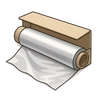
Hello there. You probably know me best as that crinkly, silvery sheet you pull from a box in your kitchen. I am Aluminum Foil, and I have a story that shines brighter than my surface. Before I came along, people often used my older cousin, Tin Foil, to wrap their food. While he tried his best, he had a habit of leaving a slightly metallic taste on sandwiches and cheeses, which wasn't very pleasant. My story, however, begins long before kitchens even had rolls of foil. It begins when my main ingredient, the element aluminum, was one of the most precious materials on Earth. In the 19th century, aluminum was rarer and more valuable than gold or silver. Emperor Napoleon III of France was so proud of his aluminum dinner plates that he only brought them out for his most honored guests; everyone else had to make do with gold. This incredible metal was lightweight, strong, and didn't rust, but it was trapped inside a common rock called bauxite and was incredibly difficult to extract. Freeing it was so expensive that only the wealthiest people in the world could afford it. Little did anyone know that a revolutionary change was coming, one that would take aluminum from an emperor's dining table and place it right into the hands of people everywhere.
My true journey from treasure to tool began with two brilliant young men who, though they never met, changed my destiny forever. In 1886, an American named Charles Martin Hall and a Frenchman named Paul Héroult independently discovered the same amazing thing: a process to unlock aluminum from bauxite using electricity. This method, which became known as the Hall-Héroult process, was a complete game-changer. Suddenly, producing pure aluminum became much easier and far less expensive. The world was flooded with this wonderful, once-rare metal, and inventors started dreaming up all the things they could do with it. My own creation story starts a few years later, across the ocean in a factory in Kreuzlingen, Switzerland. A man named Dr. Alfred Gautschi saw the potential in this newly abundant metal. On October 2nd, 1903, his factory, a pioneer in aluminum production, figured out how to do something remarkable. They took large, solid blocks of aluminum and passed them through enormous, heavy steel rollers. Imagine being squeezed and stretched, over and over, with immense pressure. With each pass, I was pressed thinner and thinner, longer and longer, until I became a continuous, flexible sheet. To get me to be incredibly thin without tearing, the factory workers discovered a clever trick. For the final pass, they would roll two of my layers together at the same time. The sides that touched the giant, polished steel rollers became mirror-bright and shiny. The two inner sides, which were pressed against each other, developed a softer, slightly duller finish. That is the secret of why, to this day, I have one shiny side and one matte side. I wasn't just metal anymore; I was a thin, strong, and versatile new material, ready to wrap the world.
My first important job came on April 27th, 1910, and I could not have been more proud. The famous Swiss chocolate company, Tobler, chose me to protect their delicious Toblerone bars. My silvery wrapping kept the chocolate fresh and safe from moisture and air, ensuring every triangular piece tasted just as the candymaker intended. Soon after, the makers of Life Savers candies realized I was perfect for keeping their minty rings from getting sticky and clumping together in their rolls. For decades, I worked mostly in commercial packaging, a hidden hero keeping products fresh. My big debut in homes came after World War II. During the war, aluminum production had soared to build airplanes and military equipment. When the war ended, companies like Reynolds Metals had a lot of aluminum and were looking for new ways to use it. On October 2nd, 1947, they introduced me to American families as ‘Reynolds Wrap.’ I became an instant star in the kitchen. I was perfect for baking potatoes, covering casseroles, and packing lunches for school. My journey didn't stop there. Today, I do so much more than just handle food. I’m used in art projects, I insulate buildings, and I even travel to space. As a thin thermal blanket, I protect astronauts and sensitive satellites from the extreme temperatures of the cosmos. From a treasure fit for an emperor to an everyday helper in your kitchen and a protector in outer space, my story is one of innovation and imagination. I am a reminder that sometimes, the most valuable things can become the most useful, ready to help with the next bright idea.
Activities
Take a Quiz
Test what you learned with a fun quiz!
Get creative with colors!
Print a coloring book page of this topic.