
 English
 For Schools
 For Homeschool

I Am Antiseptic
Before you knew my name, you only knew my absence. I am Antiseptic, but for most of human history, I was just an idea waiting to be discovered. To understand me, you must first imagine a world without me, a world that existed not so long ago in the 19th century. Hospitals then were not always places of healing; they were places of fear. The air was thick with the scent of sickness, and the halls echoed with worry. A simple cut from a farming tool or a broken bone from a fall could become a death sentence. Surgeons were skilled with their hands, but they were fighting an enemy they couldn’t see, a foe that was silent, invisible, and deadly. They didn't know that this enemy traveled on their unwashed hands, their coats, and the very instruments they used to save lives. After a successful operation, a mysterious and terrible thing called “hospital disease” would often set in. Wounds that should have healed would become inflamed and infected. People believed this was caused by bad air or an imbalance within the body. They were wrong. The enemy was germs, and I was the weapon they needed to fight back. I was the missing piece in a puzzle of immense suffering, a promise of clean healing that had not yet been spoken.
My story truly began as a series of whispers, quiet observations made by curious minds who dared to question the way things were. One of the first to hear my call was a Hungarian doctor named Ignaz Semmelweis, working in a Vienna hospital in the 1840s. He was tormented by a tragic mystery: why were so many mothers in the maternity ward dying of a fever after giving birth? He noticed something crucial. The doctors who delivered babies often came directly from performing autopsies, without cleaning their hands. The midwives, however, did not, and the mothers they cared for rarely got sick. Semmelweis suspected that invisible “particles” were being carried from the dead to the living. He ordered his doctors to wash their hands in a chlorine solution, and the death rate plummeted. He had found a part of me, the simple power of cleanliness, but his ideas were rejected and mocked. The world wasn't ready. A few years later, in the 1860s, a brilliant French scientist named Louis Pasteur gave me the voice I needed. Through his microscope, he proved that tiny living organisms—microbes or germs—were the cause of decay. He showed that these invisible beings made wine go sour and milk spoil. This was his revolutionary “germ theory.” If microbes could rot food, he reasoned, couldn't they also rot living tissue? He proved that the invisible world was real and powerful. Pasteur gave the enemy a name, and in doing so, he laid the foundation for my entire existence. He provided the scientific proof that Semmelweis had lacked, creating the key that would finally unlock my potential to save lives.
It took a thoughtful and determined Scottish surgeon to finally bring me into the operating room. His name was Joseph Lister, and he became my greatest champion. Working in Glasgow in the 1860s, Lister was frustrated and heartbroken by the number of his patients who died from infection after surgery. He read Louis Pasteur's work and had a moment of profound insight. He connected the dots: the germs that Pasteur described must be the cause of the infections he saw in his patients' wounds. He theorized that if he could kill the germs, the wounds would heal cleanly. He needed a way to fight this invisible enemy directly. Lister had heard that a chemical called carbolic acid was used to treat the foul smell of sewage, which he correctly guessed was caused by germs. He decided to try it. My defining moment came on August 12th, 1865. A young boy named James Greenlees was brought to the hospital with a severe leg fracture. The bone had broken through the skin, creating a compound fracture—an injury that was almost always fatal due to infection. Instead of amputating the leg, Lister took a brave chance. He cleaned the wound thoroughly and then applied dressings soaked in a solution of carbolic acid. I was finally at work, a chemical shield against the invading microbes. Lister carefully re-dressed the wound over several weeks, and everyone watched with bated breath. The result was astonishing. The boy's wound healed perfectly, without any sign of infection. James Greenlees walked out of that hospital on his own two feet. On that day, Lister proved my power. I was no longer just a theory; I was a life-saving reality.
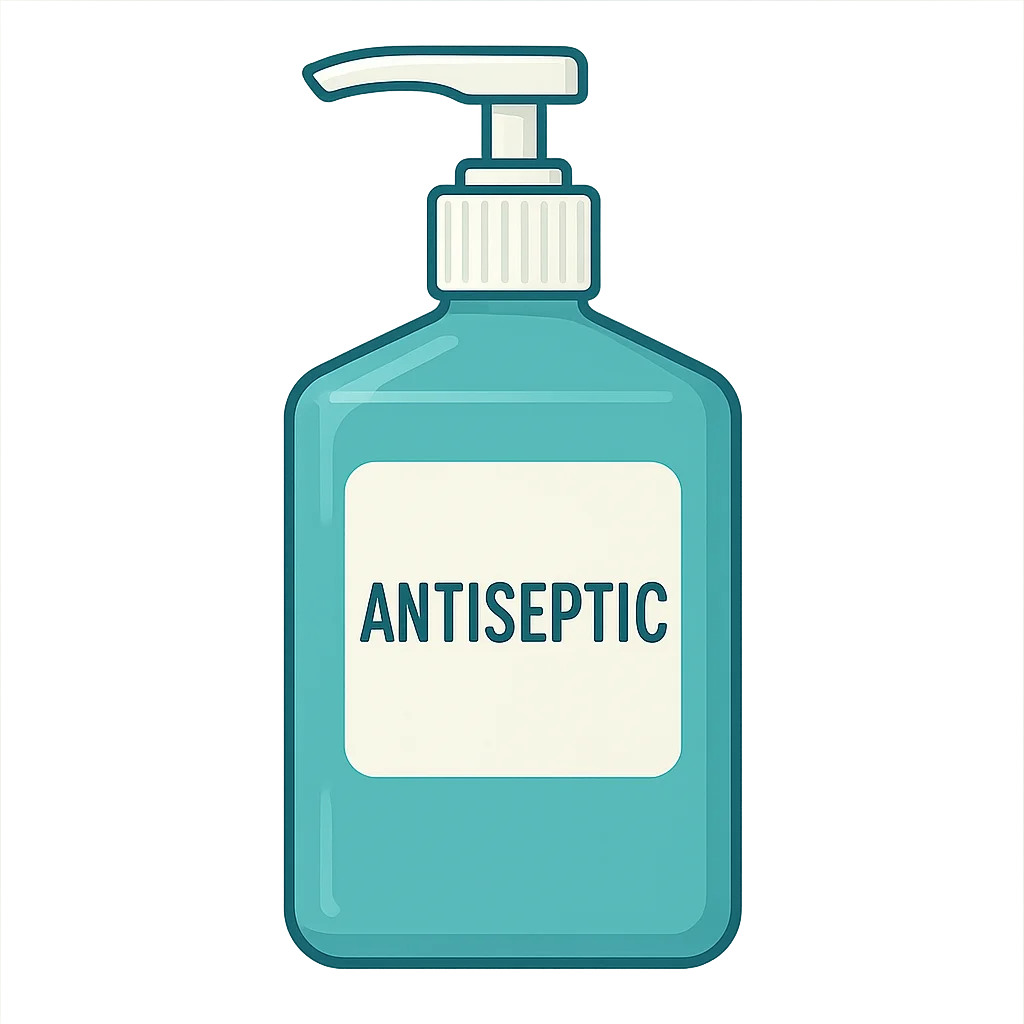
My victory was not immediate. The world of medicine was slow to change, and many surgeons scoffed at Lister's “germ theory.” They couldn't believe that invisible creatures were the cause of so much death, and they found the process of using carbolic acid messy and cumbersome. The acid spray Lister developed to kill germs in the air irritated the skin and filled the operating theater with a pungent smell. But Lister was a man of science and perseverance. He meticulously documented his results, showing a dramatic drop in the death rate for his surgical patients. The evidence became impossible to ignore. His success stories spoke louder than any criticism. Slowly, doctor by doctor, hospital by hospital, my principles were adopted. The messy carbolic spray was eventually replaced by more refined methods: sterilizing surgical instruments with heat, wearing clean gowns and masks, and washing hands thoroughly. Surgery was transformed from a desperate, high-risk gamble into a reliable and safe science. I had started a revolution. Today, I am everywhere, in countless forms Lister never could have imagined. I am in the antiseptic wipes you use on a scraped knee, the hand sanitizer in your backpack, and the sterile environment of every modern hospital. My journey from a whisper of an idea to a cornerstone of health is a reminder that the biggest changes often begin with a simple question and the courage to look for an answer no one else has seen.
Activities
Take a Quiz
Test what you learned with a fun quiz!
Get creative with colors!
Print a coloring book page of this topic.