English

Post-Impressionism
A 19th-century art movement characterized by visible brushstrokes…
Reads at Grades 3–5 Listens at Grades 1–5
Print & create
Answer keys·No prep·Free with an account
28 worksheets · answer keys · full story · quiz · Ages 8-10 · CEFR B1
Plus adds 244,000+ more stories in 27 languages, audio for every one, and printables for all of them.
Just want Post-Impressionism?
Have you ever tried to remember a dream right after you wake up? It’s a little fuzzy, isn’t it? The edges are soft, and the colors seem to swirl together. That’s a little bit like me. I am the feeling of a quick, blurry glance, not a long, hard stare. I am the sparkle of sunlight dancing on the surface of a pond, making the water look like it’s covered in a thousand tiny diamonds. I am the soft, gray haze of a misty morning before the sun has fully woken up, where the trees look like gentle ghosts in the distance. I am the lively rush of people with colorful umbrellas on a busy city street in the rain, their reflections wiggling on the wet pavement. I am not made of sharp, perfect lines that you could trace with a ruler. Instead, the artists who love me use quick, visible dabs and dashes of paint, like little bursts of energy. They place bright colors—a dot of blue next to a dot of yellow—right on the canvas, letting your own eyes do the magical work of mixing them into a vibrant green from afar. It’s a wonderful optical illusion. I am not about painting every single leaf on a tree or every button on a coat, which can be a bit boring. I am about capturing a feeling, a moment, an impression before it flutters away like a butterfly. What do you think is more important: painting exactly what you see, or painting how something makes you feel? I believe in the feeling. I am the magic of a moment, captured with a paintbrush before it vanishes forever.
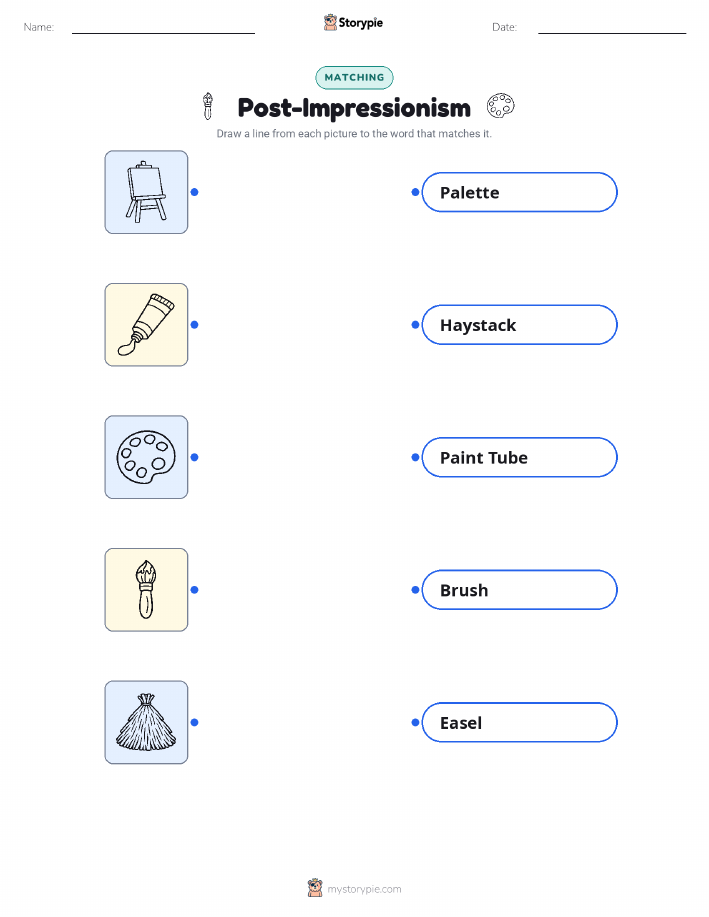
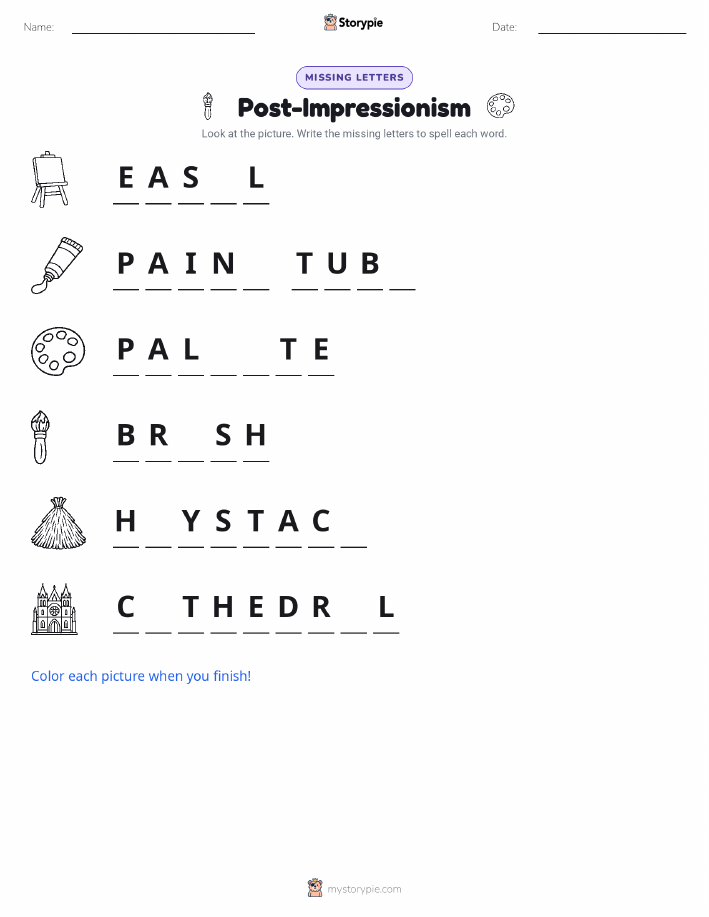
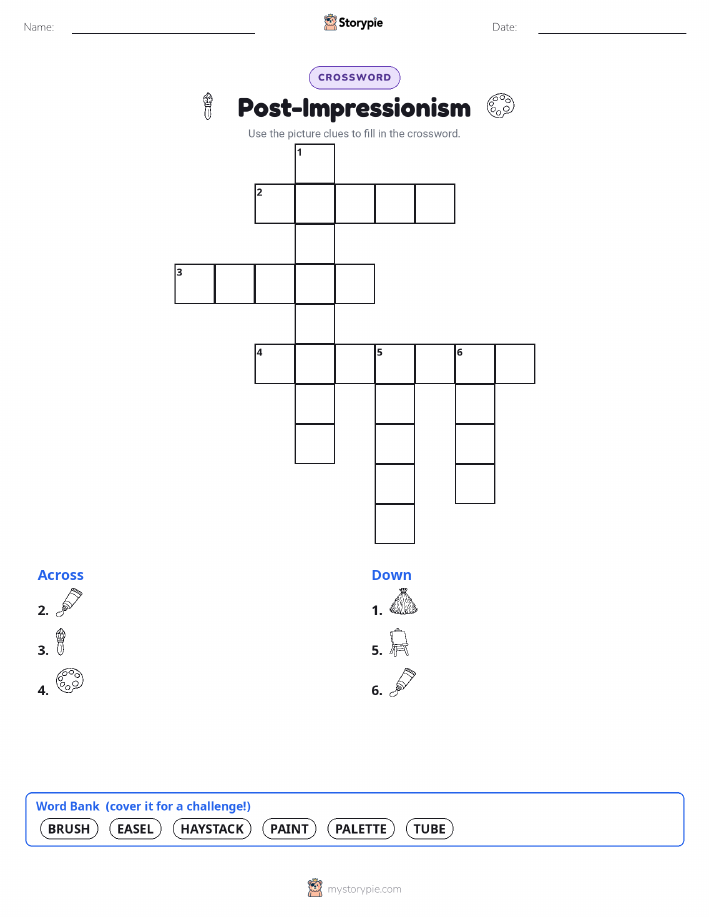
I was born in a beautiful, bustling city called Paris, in France, over 150 years ago. My name, which you may have guessed, is Impressionism. I was brought to life by a group of rebellious artist friends who were tired of the old, stuffy rules of art. At that time, the most respected art was serious and grand. It showed important historical events or portraits of wealthy people, all painted with perfect, smooth brushstrokes inside dark studios. My friends thought this was so dull. They declared, “The world outside is full of light and color and life. Why are we hiding indoors?”. So, they did something revolutionary. They packed up their paints and their easels—the wooden stands that hold up a canvas—and went outside to paint. This practice was called painting ‘en plein air,’ which is French for ‘in the open air.’ They wanted to paint real life as it was happening. One of my very best friends was an artist named Claude Monet. He loved to paint the way light changed throughout the day. In 1872, he painted a picture of a harbor at sunrise. The sun was a glowing orange ball in a hazy, purple sky, and the boats were just blurry shapes in the water. He called his painting ‘Impression, Sunrise.’ A couple of years later, in 1874, Monet and his friends decided to have their own art show because the official art galleries wouldn't accept their work. A grumpy art critic named Louis Leroy came to the show. He saw Monet’s painting and, wanting to make fun of it, he wrote a mean review calling the artists a bunch of ‘Impressionists.’ He meant it as an insult, suggesting their work was sloppy and unfinished. But can you guess what happened? My friends loved the name. They thought it perfectly described what they were trying to do—capture an impression. So the name stuck. Other amazing artists joined our group, like Edgar Degas, who loved to paint the graceful movements of ballet dancers and the thrilling speed of horse races. And there was Pierre-Auguste Renoir, whose paintings are like happy parties frozen in time, full of people laughing, dancing, and enjoying picnics in the sunshine. We showed the world that a simple boat, a field of poppies, or a busy train station was just as beautiful and important as a king on his throne.
I Am Impressionism
Have you ever tried to remember a dream right after you wake up? It’s a little fuzzy, isn’t it? The edges are soft, and the colors seem to swirl together. That’s a little bit like me. I am the feeling of a quick, blurry glance, not a long, hard stare. I am the sparkle of sunlight dancing on the surface of a pond, making the water look like it’s covered in a thousand tiny diamonds. I am the soft, gray haze of a misty morning before the sun has fully woken up, where the trees look like gentle ghosts in the distance. I am the lively rush of people with colorful umbrellas on a busy city street in the rain, their reflections wiggling on the wet pavement. I am not made of sharp, perfect lines that you could trace with a ruler. Instead, the artists who love me use quick, visible dabs and dashes of paint, like little bursts of energy. They place bright colors—a dot of blue next to a dot of yellow—right on the canvas, letting your own eyes do the magical work of mixing them into a vibrant green from afar. It’s a wonderful optical illusion. I am not about painting every single leaf on a tree or every button on a coat, which can be a bit boring. I am about capturing a feeling, a moment, an impression before it flutters away like a butterfly. What do you think is more important: painting exactly what you see, or painting how something makes you feel? I believe in the feeling. I am the magic of a moment, captured with a paintbrush before it vanishes forever.
I was born in a beautiful, bustling city called Paris, in France, over 150 years ago. My name, which you may have guessed, is Impressionism. I was brought to life by a group of rebellious artist friends who were tired of the old, stuffy rules of art. At that time, the most respected art was serious and grand. It showed important historical events or portraits of wealthy people, all painted with perfect, smooth brushstrokes inside dark studios. My friends thought this was so dull. They declared, “The world outside is full of light and color and life. Why are we hiding indoors?”. So, they did something revolutionary. They packed up their paints and their easels—the wooden stands that hold up a canvas—and went outside to paint. This practice was called painting ‘en plein air,’ which is French for ‘in the open air.’ They wanted to paint real life as it was happening. One of my very best friends was an artist named Claude Monet. He loved to paint the way light changed throughout the day. In 1872, he painted a picture of a harbor at sunrise. The sun was a glowing orange ball in a hazy, purple sky, and the boats were just blurry shapes in the water. He called his painting ‘Impression, Sunrise.’ A couple of years later, in 1874, Monet and his friends decided to have their own art show because the official art galleries wouldn't accept their work. A grumpy art critic named Louis Leroy came to the show. He saw Monet’s painting and, wanting to make fun of it, he wrote a mean review calling the artists a bunch of ‘Impressionists.’ He meant it as an insult, suggesting their work was sloppy and unfinished. But can you guess what happened? My friends loved the name. They thought it perfectly described what they were trying to do—capture an impression. So the name stuck. Other amazing artists joined our group, like Edgar Degas, who loved to paint the graceful movements of ballet dancers and the thrilling speed of horse races. And there was Pierre-Auguste Renoir, whose paintings are like happy parties frozen in time, full of people laughing, dancing, and enjoying picnics in the sunshine. We showed the world that a simple boat, a field of poppies, or a busy train station was just as beautiful and important as a king on his throne.
My arrival changed the art world forever. Before me, artists were expected to paint the world as realistically as possible, like a perfect window into another place. But I taught them something new and exciting: art could be about your own personal vision. It could be about emotion, light, and the way a scene makes you feel deep inside, not just what your eyes see on the surface. I opened a big, colorful door for all the new and wonderfully strange kinds of art that came after me. Think of me as the first domino in a long, creative line. My story is a reminder that sometimes, following your own ideas and even breaking the rules can lead to something truly beautiful and revolutionary. You don’t have to look in a museum to find me. I am still all around you, every single day. You can see me in the blur of red and white lights from a car window on a rainy night. You can find me in the shifting colors of a sunset, as the sky melts from orange to pink to deep purple. You can even find me in the way steam rises and dances from a cup of hot chocolate on a cold day. I am the magic of seeing the beauty in a fleeting moment. I am still here, helping you see the world not just as it is, but as it feels.
Wow facts
About
A 19th-century art movement characterized by visible brushstrokes, an emphasis on the changing qualities of light, and ordinary subject matter, which originated with a group of Paris-based artists.
Take a Quiz
Question 1 of 5
In the story, the artists painted 'en plein air.' What does this French phrase mean and why was it important for them?
Explore next




Want to do even more?
Go beyond exploring. Unlock tools that turn every story into real learning.

Storypie Plus for families
Full stories, quizzes, and printables. Nights and car rides, sorted.
- Unlimited audio stories
- Create Mode: your child stars in the story
- Offline downloads
- Printable worksheets & coloring pages

Why Storypie for Schools
Students engaged. Prep in seconds. Evenings back to you.
- Worksheets & Quizzes
- Classroom Management
- Formative Assessment
- Custom Curriculum & Lesson Plans
- 27 Languages

Why Storypie for Homeschool
Curriculum done. They'll ask for more. Hours back in your day.
- Worksheet Generator
- First-Person Audio Stories
- Built-in Comprehension Quizzes
- Custom Curriculum & Lesson Plans
- Print & Go Activities