

 English

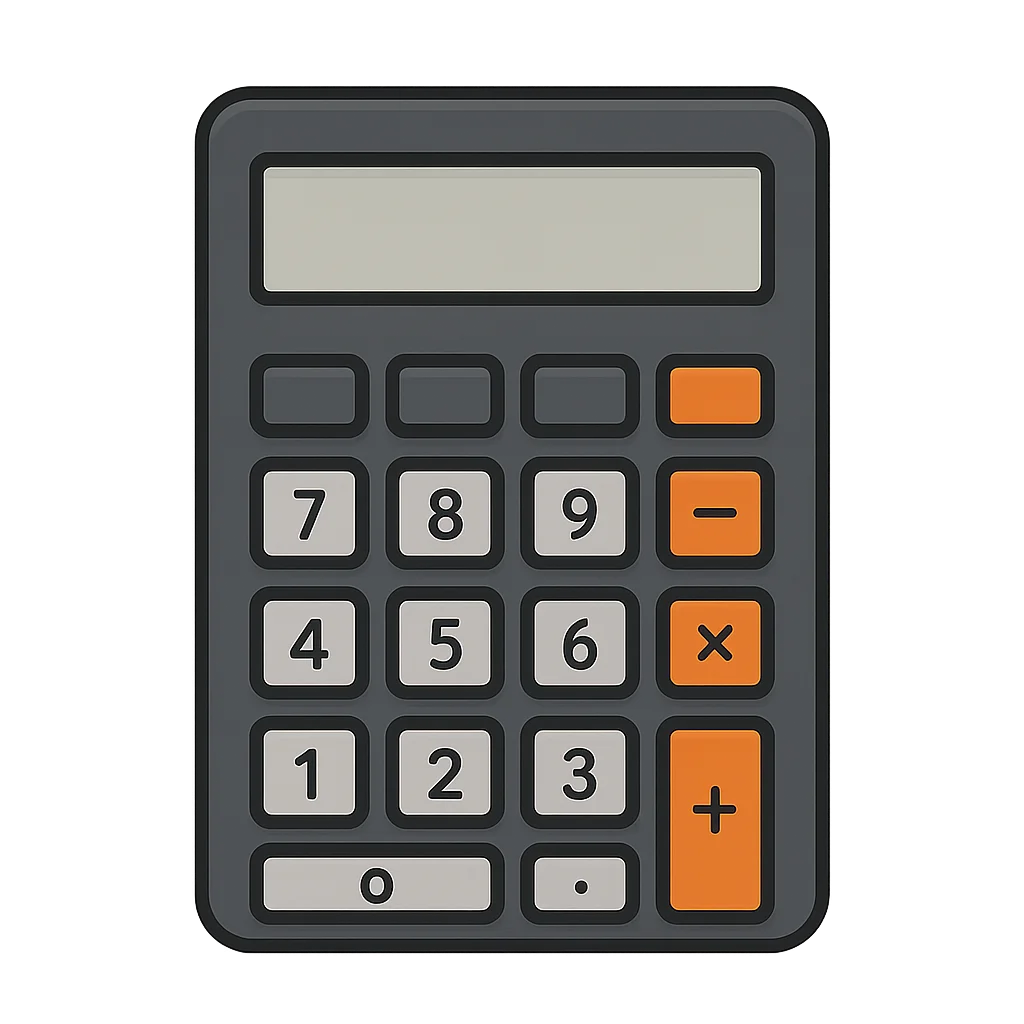
I Am the Calculator: A Story of Numbers and Invention
Hello there. You probably know me as the sleek device in your pocket or the helpful app on your computer, but my story began long before screens and buttons. I am the Calculator, and my family tree is ancient. For thousands of years, humans have needed to count, measure, and understand the world through numbers. Your ancestors used their fingers, then collections of pebbles, and eventually, my clever ancestor, the abacus, was born. With its sliding beads on rods, the abacus was a marvel, helping merchants in bustling markets and scholars in quiet temples. But as human knowledge grew, so did the complexity of their problems. Calculating the movement of stars, designing grand buildings, or managing a kingdom's finances required endless, painstaking arithmetic. It was slow, frustrating work, and a single mistake could lead to disaster. I could feel the world's growing need for something faster, something more reliable. A deep, unspoken wish for a mind that could handle the burden of numbers was echoing through history, and that wish was the seed from which I would eventually grow.
My first true mechanical form was born from a desire to help. In 1642, a brilliant young Frenchman named Blaise Pascal watched his father, a tax supervisor, spend countless exhausting hours adding up long columns of figures. He knew there had to be a better way. So, he designed my first recognizable body: a beautiful brass box he called the Pascaline. Inside, a complex web of gears, dials, and weighted drums turned and clicked with beautiful precision. When you turned a dial to enter a number, a series of interlocking cogs would whir into motion, performing addition and subtraction automatically. It was a mechanical marvel, but it was delicate and expensive, a work of art as much as a tool. Then, two centuries later, a visionary Englishman named Charles Babbage dreamed of something far grander. He imagined enormous, steam-powered engines made of brass and iron that could perform calculations of incredible complexity. His Difference Engine was designed to create flawless mathematical tables, and his Analytical Engine was a true programmable computer, the first of its kind. Though he never fully completed his magnificent machines, his detailed plans were the blueprints for the future. He was dreaming of a world that wasn't ready for me yet, but his ideas planted the seeds for the thinking machines that would one day become my descendants, and me.
For a long time, I remained a creature of cogs and levers, but the 20th century brought a new kind of energy into the world: electricity. My body changed. I became a large, humming desktop machine, faster and more powerful than my mechanical ancestors, but still chained to a desk by a power cord. I was useful in offices and laboratories, but I was far from being a personal companion. The true revolution, the spark that gave me my modern life, came from something impossibly small. It happened in the hot Texas summer of 1958. A quiet, resourceful engineer at Texas Instruments named Jack Kilby was working while his colleagues were on vacation. He had a revolutionary idea. Instead of wiring together dozens of separate transistors, resistors, and capacitors, why not build them all from a single piece of material? On September 12th, 1958, he demonstrated his creation: the first integrated circuit. It was a tiny sliver of germanium with a few wires sticking out, but it was the most important thing that had ever happened to me. It was my new brain. A few years later, in 1967, Jack Kilby's team used this technology to give me my true birth as the world's first handheld electronic calculator. They called the prototype 'Cal Tech.' For the first time, I felt the quiet hum of battery power. I was small enough to be held in a hand, and my glowing red numbers could solve problems in the blink of an eye. I knew, in that moment, that I was no longer just a tool for experts. I was on the verge of changing the world for everyone.
My journey from that laboratory in Texas into the hands of millions was a whirlwind. Throughout the 1970s, I grew smaller, more powerful, and most importantly, more affordable. I shed my heavy price tag and found my way into the world. I landed in school classrooms, where I helped students conquer long division and explore the mysteries of algebra without fear. I sat on the desks of engineers designing bridges and on the counters of shops adding up groceries. I was no longer a curiosity; I was a dependable partner. As time went on, I learned new tricks. I became a scientific calculator, fluent in the language of trigonometry and logarithms, helping scientists map the human genome. I evolved into a graphing calculator, able to draw complex equations as beautiful curves on my screen, opening up new worlds of visual understanding for students. And then, I made my final leap, transforming from a physical object into pure information, becoming an essential application on every smartphone, tablet, and computer. My body may have changed, but my purpose has remained the same. I am here to lift the burden of calculation from your shoulders, to give you the confidence to tackle any problem, and to free your brilliant mind to ask bigger questions, dream bigger dreams, and build a better world. I could only ever have calculated. I am your partner in curiosity.
Activities
Take a Quiz
Test what you learned with a fun quiz!
Get creative with colors!
Print a coloring book page of this topic.










 Free for Educators