

 English

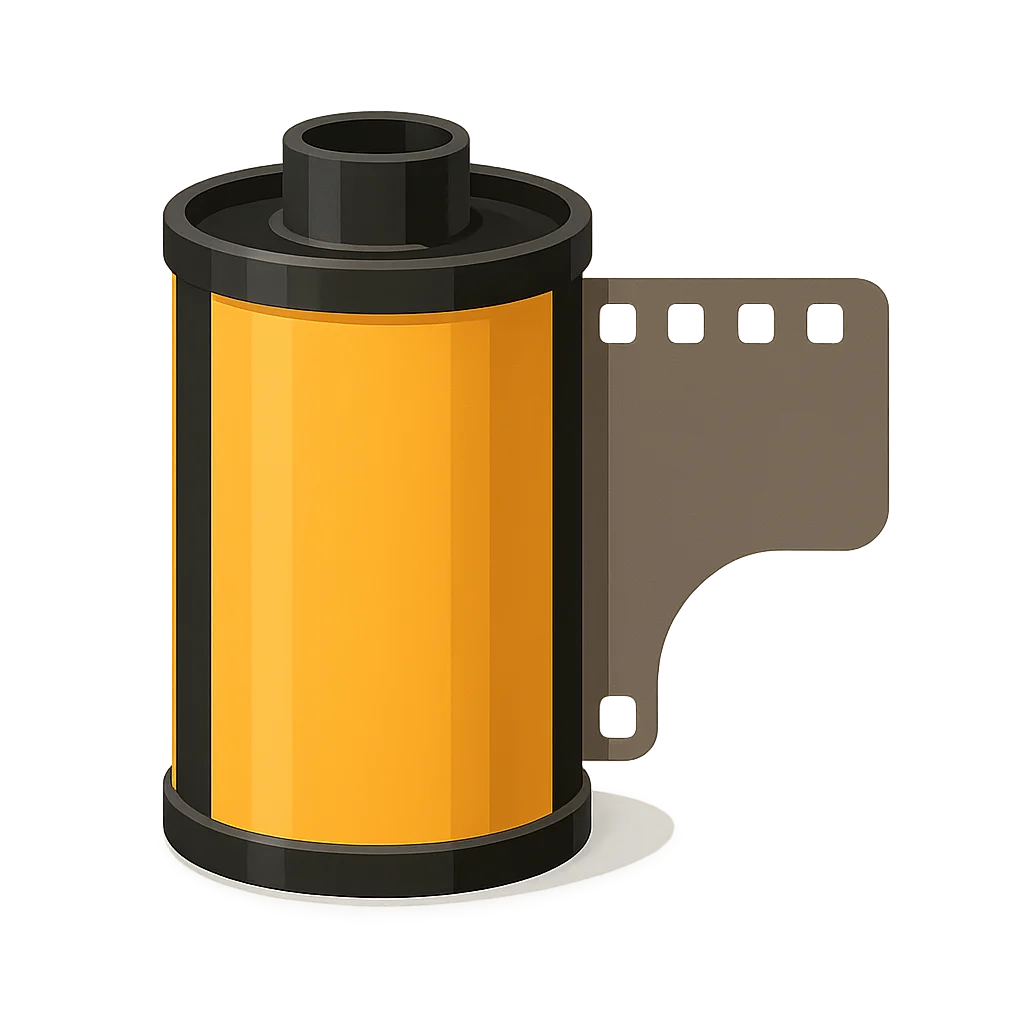
A Moment in Time: My Story as Camera Film
Before you could capture a memory with a simple tap on a screen, there was me. I am Camera Film, a storyteller made of light and shadow, a keeper of moments that would otherwise vanish forever. My story begins in a time when the world was seen mostly in black and white, and photography was a serious, complicated affair. Imagine a photographer in the 1870s, hidden under a thick, black cloth, wrestling with a camera as large as a suitcase. Their subject had to stay perfectly still, sometimes for minutes, while a bulky glass plate coated in sticky, light-sensitive chemicals did its slow work. A fleeting smile, a bird in mid-flight, a child's spontaneous laugh—these moments were lost to time. Photography was an art for patient professionals and wealthy enthusiasts, not for everyday people. The process was messy, the equipment was heavy, and the results were uncertain. The world was full of vibrant, moving stories, but it lacked a simple, reliable way to hold onto them. People needed a way to freeze time, to save a piece of their lives not just in their minds, but in their hands. That is where my story truly begins, born from a desire to make memories last.
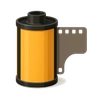
My existence is owed to a determined and visionary man named George Eastman. He wasn't a professional photographer, but he was fascinated by the art and deeply frustrated by its complexity. He dreamed of a world where anyone, not just an expert, could take a picture. His quest began in the late 1870s, not in a fancy laboratory, but in his mother’s kitchen in Rochester, New York. Night after night, after working his day job as a bank clerk, he experimented tirelessly. He knew the heavy glass plates had to go. He needed something light, flexible, and consistent. He spent years testing different formulas and materials, facing countless failures. By 1884, he had a breakthrough: a method for coating a long, flexible strip of paper with a photographic emulsion. A few years later, he improved upon this by using a transparent base called celluloid. This was my true birth. I was no longer a fragile, heavy plate; I was a nimble, rollable strip, capable of holding dozens of pictures in a single spool. But I was only half of the solution. I needed a partner, a camera designed just for me. So, in 1888, Mr. Eastman introduced the Kodak camera. It was small, simple, and came pre-loaded with enough of me to take one hundred pictures. The genius was in the slogan he created: 'You press the button, we do the rest.' An owner would take all their pictures, then mail the entire camera back to his factory. There, his team would develop me, print the photos, and send everything back with a fresh roll of film inside. Suddenly, the power to capture a moment belonged to everyone. The world was about to see itself in a whole new way.
Once the button was pressed and my spool was full of invisible, or 'latent,' images, my journey was far from over. I would be carefully removed from the camera, but not in the light. My secrets could only be revealed in total darkness. Sealed in a light-proof container, I traveled back to the factory in Rochester, where my transformation would begin. The experience was a suspenseful one. I would be unrolled in a darkroom, lit only by a dim, red safelight that couldn't expose me. I was then submerged in a series of chemical baths. The first, the developer, was the most magical. Slowly, like a ghost appearing in the mist, the captured light from a family picnic or a city street would emerge on my surface, turning from a latent image into a visible negative. After a stop bath and a fixer to make the image permanent, I was ready. My negatives were then used to print the final photographs, the tangible memories that people could hold and share. I recorded everything. I held the image of the Wright brothers' first flight on December 17th, 1903, and I documented the lives of families growing and changing through the decades. My ability to be spooled onto a reel also sparked another incredible invention. People realized that if they could capture still images in rapid succession and play them back, they could create the illusion of movement. And so, from my very essence, motion pictures were born, bringing stories to life in a way the world had never seen. I wasn't just preserving memories; I was helping to create a whole new form of art and entertainment.
Today, the world looks very different. You carry powerful cameras in your pockets, devices that can capture thousands of images without ever needing me. My physical form, the delicate celluloid strip, has become a relic of a bygone era for most people. But when I look at a smartphone, I don’t feel obsolete; I feel proud. I see my legacy living on in every digital sensor. That tiny electronic chip does the exact same job I was created for: it captures light to preserve a moment in time. The fundamental idea that George Eastman pursued in his mother's kitchen—making photography accessible to all—has been realized beyond his wildest dreams. My purpose was to give people the power to tell their own stories, to hold onto the faces of loved ones, and to share their view of the world. That purpose is more alive today than ever before. So the next time you take a picture, remember the long journey from heavy glass plates to the simple roll of film that changed everything. Remember that every photograph is a small miracle, a testament to human ingenuity and our universal desire to connect with one another by sharing the moments that matter most.
Activities
Take a Quiz
Test what you learned with a fun quiz!
Get creative with colors!
Print a coloring book page of this topic.












 Free for Educators