

 English

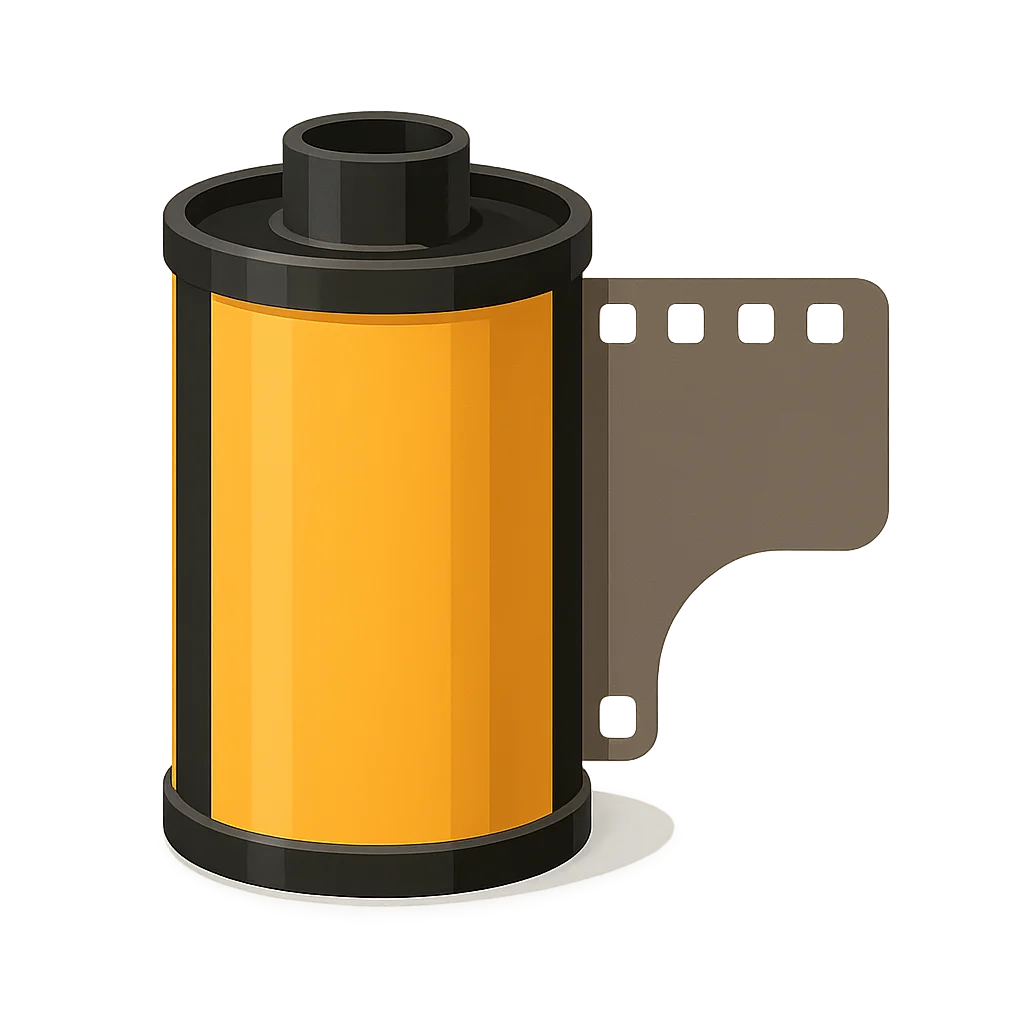
The Story of Camera Film
Hello, I’m Camera Film. You might not recognize me at first, but I am a magical strip that holds memories. Before I was born, capturing a moment was a huge, messy job. Imagine a photographer carrying a giant wooden box, heavy glass plates, and jars of smelly, wet chemicals just to take one picture. It was so difficult and expensive that only a few experts could do it. People had to sit perfectly still for a long time, trying not to blink, just to have their portrait taken. But a clever man with a big dream, named George Eastman, thought that everyone should be able to save their favorite moments. He saw families laughing and children playing and knew there had to be a simpler, easier way to keep those memories from fading away. He believed that photography should be as easy as using a pencil, and he set out to create me.
My story really begins in a kitchen that smelled of strange potions. George Eastman worked day and night, experimenting with different recipes. He wasn't baking cookies; he was trying to create the perfect light-sensitive jelly, or 'emulsion,' to coat onto a flexible base. He wanted me to be light, strong, and able to roll up, completely different from those clumsy glass plates. After hundreds of tries, he finally did it. I was born. I was a long, flexible ribbon, light enough to be spooled up and tucked safely inside a small box. On September 4th, 1888, my big moment arrived. I was placed inside the very first Kodak camera. This camera was a simple leather box, and George Eastman gave it a wonderful slogan that explained everything: 'You press the button, we do the rest.' People no longer needed to know about chemicals or darkrooms. They could just point the camera, click a button, and trust me to hold onto their memory. When they had taken all their pictures, they sent the whole camera back to George's company, and I would be developed into beautiful photographs before being sent back with a fresh roll of me inside, ready for new adventures.
Suddenly, the world was filled with photographers. I traveled everywhere, tucked inside pockets and bags, ready for action. I captured the wonder on a child's face at their first birthday party, the proud smiles at a graduation, and the quiet beauty of a family vacation by the sea. My life was spent in the dark, waiting patiently. Then, in a flash, a little window called the shutter would open for a split second. Click. Light would pour in and paint a picture onto my special coating. I couldn't see it yet, but I held the image like a secret promise. I remembered the exact shape of a smiling face or the pattern of leaves on a tree. Later, I would be taken to a special darkroom where, like magic, the secret images I held would slowly appear in a chemical bath, turning from a ghostly outline into a clear, permanent memory that someone could hold in their hands and cherish forever.
My life has changed a lot since those early days. Now, many of my younger cousins, the digital sensors in phones and computers, do the job of capturing memories. They are very fast and can hold thousands of pictures at once. But I am proud because I was the one who started it all. I am the one who first taught the world how to freeze a moment in time. I put the power of photography into everyone's hands and filled countless photo albums with birthdays, holidays, and everyday smiles. Whether a picture is a pattern of silver on my surface or a collection of pixels on a screen, the magic of saving a precious moment is the gift I helped give to the world.
Activities
Take a Quiz
Test what you learned with a fun quiz!
Get creative with colors!
Print a coloring book page of this topic.














 Free for Educators