

 English

The Story of Central Heating
Hello there. You probably can't see me, but I bet you can feel me. I am Central Heating, the gentle, warm hug that wraps around your entire house on a chilly day. Before I came along, life was much colder. Imagine your whole family crowded around a single, crackling fireplace. The spot right in front of the fire was toasty, but just a few steps away, the air was icy. Rooms were often smoky from the fire, and hallways felt like frozen tunnels. People wore thick sweaters and blankets even when they were inside. It was a constant battle against the cold. My job is to change all of that. I work quietly behind the scenes, sending warmth through walls and floors, making every single room a cozy place to be. But I wasn't born overnight. My story is a long one, stretching back thousands of years and involving clever minds from all over the world who helped make me the reliable, invisible friend I am today.
My story begins a very long time ago, in a powerful place called Ancient Rome. The Romans were brilliant builders and thinkers, and they came up with my earliest ancestor, a clever system called the hypocaust. It was like a secret, underground furnace. Deep below their grand bathhouses and fancy villas, workers would keep fires roaring. The hot air from these fires didn't just disappear up a chimney. Instead, the engineers guided it into special open spaces they had built underneath the marble floors. The warm air would flow like a hidden river, heating the floor above it so that it felt warm to walk on. The heat would then rise and travel through hollow tiles in the walls, warming the entire room without any smoke or ash. It was an amazing idea, but when the great Roman Empire fell, many of its secrets, including the hypocaust, were lost and forgotten. For more than a thousand years, people went back to shivering around open fires, and my wonderful Roman secret slept, waiting to be rediscovered.
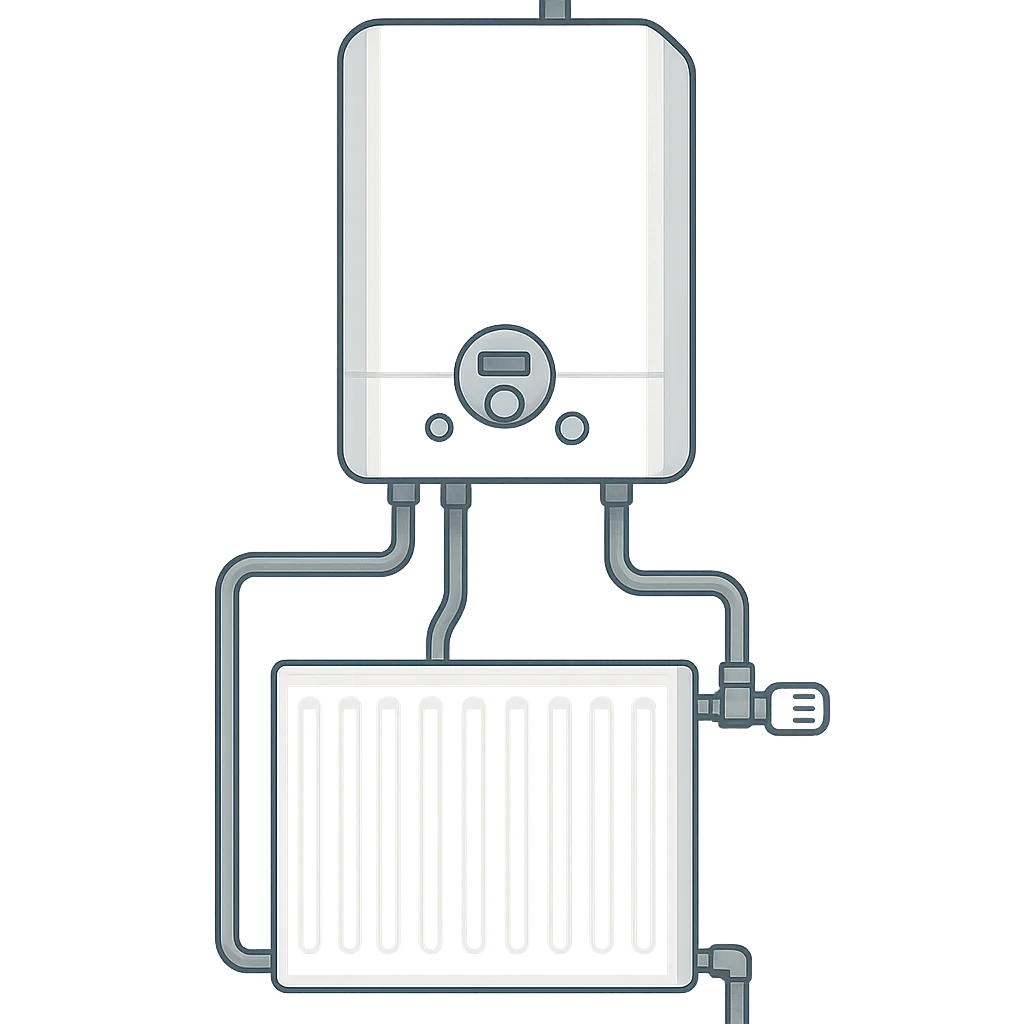
For centuries, the world was a much colder place. Then, my story jumps forward to the year 1855, in the chilly city of St. Petersburg, Russia, where winters are incredibly long and snowy. A brilliant inventor named Franz San Galli looked at the clunky, inefficient stoves people were using and thought there had to be a better way. He had a bright idea that would change everything. He called his invention the 'hot-box,' but you know it today as the radiator. He designed a series of tall, connected iron pipes. Instead of fire, hot water or steam would be pumped through these pipes. The heat from the water would then warm up the metal, and the metal would let that warmth radiate, or spread out, into the room. It was a fantastic breakthrough. Radiators didn't produce smoke, so the air stayed clean and fresh. They were much safer than having an open flame inside, and you could put one in every room you wanted to heat. Mr. San Galli’s invention was a huge step forward for me. I was no longer just a memory from ancient Rome; I was becoming a real, practical solution for keeping people warm and safe during the coldest months of the year.
After Mr. San Galli's radiator, my idea started to travel and grow. More and more inventors began to think about how to make me even better and easier for everyone to use. One of those brilliant minds was a woman named Alice Parker. On December 23rd, 1919, she received a patent for a truly revolutionary idea. She designed a new kind of furnace that was powered by natural gas, which was a cleaner and more convenient fuel than coal or wood. But the most special part of her design was how it moved the heat. Her system used a fan to push warm air through a series of tubes, called ducts, that could lead to many different rooms in a house. This was a game-changer. It meant that a single furnace in the basement could warm up the kitchen, the living room, and all the bedrooms upstairs at the same time. Alice Parker's invention made it possible for me, Central Heating, to become a part of regular family homes, not just fancy mansions or giant buildings. She helped turn me into something that could bring comfort to everyone.
And that brings us to today. I am your cozy companion, working silently to keep you comfortable. I'm much smarter now than I was in the days of the Romans or even in Alice Parker's time. I work with a little device on your wall called a thermostat, which is like my brain. You can tell it exactly how warm you want to be, and I will get to work, turning on and off to keep the temperature just right. I have come a long way from the smoky fires of the past. Looking back on my long journey, from the secret tunnels of Rome to the clever radiators of Russia and the brilliant furnace designs in America, I feel proud. I'm more than just hot air; I am the feeling of safety and comfort. I keep the winter chill outside your window so that inside, your family has a warm and happy space to read stories, play games, and grow together.
Activities
Take a Quiz
Test what you learned with a fun quiz!
Get creative with colors!
Print a coloring book page of this topic.
















 Free for Educators