

 English

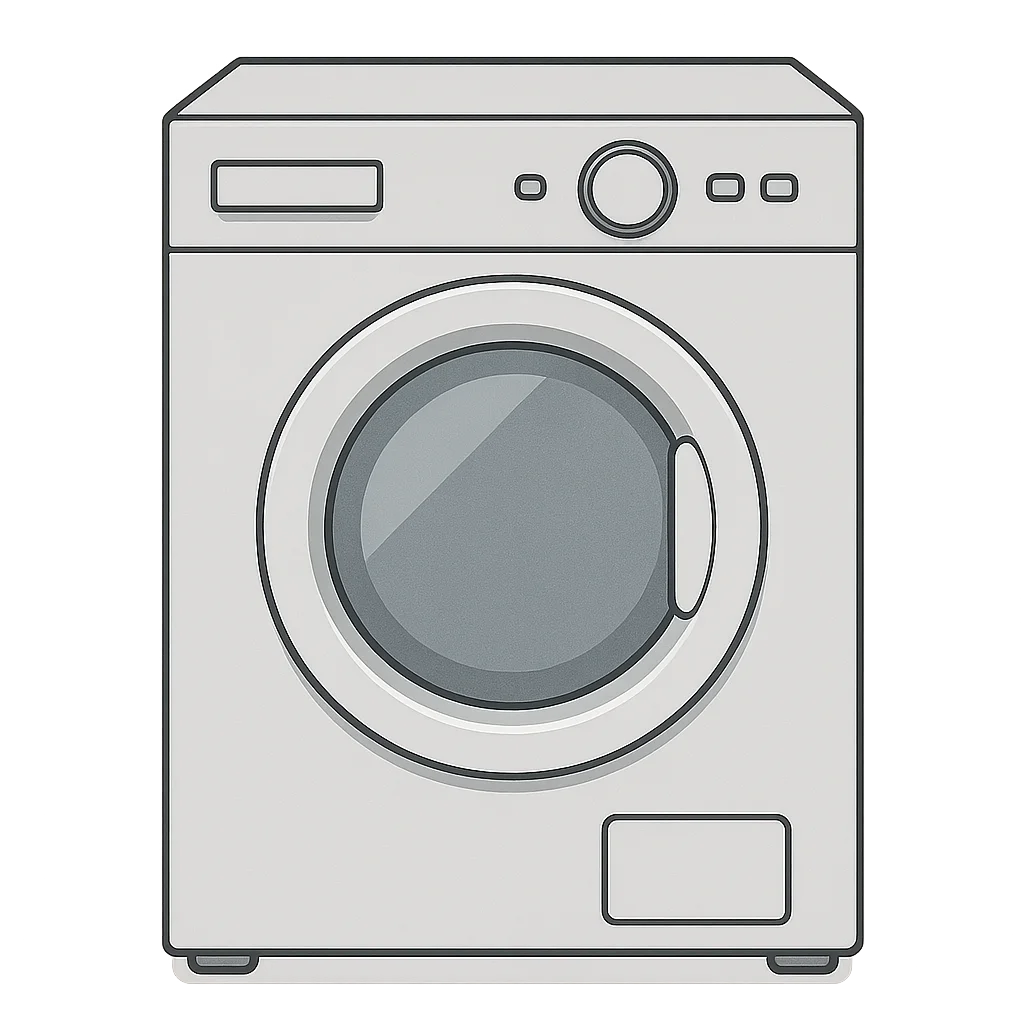
The Story of the Clothes Dryer
Hello there. You might know me as that warm, humming machine in your laundry room, but my story started long before I found a home with you. I am the Clothes Dryer, and I was born from a simple, universal problem: wet clothes and unpredictable weather. Before I came along, laundry day was an epic battle against the elements. Imagine your family hauling heavy baskets of soaking wet laundry outside to a clothesline. They would pin each item up, one by one, hoping for a sunny, breezy day. But what if it rained? Or snowed? Or what if the wind was so fierce it blew clean clothes right into the mud? All that hard work would be for nothing. Clothes could stay damp for days, smelling musty and feeling stiff. The dream was simple but profound: to be able to dry clothes quickly and reliably, any day of the year, no matter what the sky looked like. I was the answer to that dream, a promise of warm, dry clothes on demand.
My family tree is long and fascinating, stretching back to a time of fire and steam. One of my earliest ancestors was born in France around the year 1800. It was called a 'ventilator', which was a fancy name for a large, metal drum with holes in it. People would stuff their wet laundry inside and then turn a crank by hand to tumble the clothes over an open fire. It was hard work and quite dangerous. One wrong move and the clothes could catch fire. It was a clever idea, but it needed to be safer and easier. My story took a significant leap forward in America, thanks to an inventor named George T. Sampson. On June 7th, 1892, he received a patent for his version of me. He was a brilliant thinker who understood the biggest problem with my French ancestor: the open flame. His invention was a metal drum, but it was designed to be placed near a stove. The heat from the stove would warm the drum and the air inside, drying the clothes without ever exposing them to dangerous soot or sparks. It was a revolutionary step in home safety and convenience, proving that laundry didn't have to be a risky chore. I was still a long way from the automatic machine you know today, but Mr. Sampson had set me on the right path.
My true transformation began with the spark of electricity that was lighting up the world in the early 20th century. In the 1930s, an inventor from North Dakota named J. Ross Moore looked at the hand-cranked, stove-heated contraptions of the past and had a vision for something much better. He dreamed of an automatic, electric version of me that would do all the work on its own. He spent years tinkering in his workshop, sketching designs and building prototypes. He was determined to create a machine that was not only effective but also affordable enough for the average family. However, his journey was filled with challenges. When he finally had a working model, he took his idea to many large manufacturing companies, but they all turned him down. They didn't believe people would spend money on a machine just for drying clothes. They called it a luxury, an unnecessary expense. Mr. Moore felt discouraged, but he refused to give up on his dream. He knew his invention could change lives. Finally, after many rejections, he found a company that shared his vision: the Hamilton Manufacturing Company of Wisconsin. They saw the potential in his electric dryer, and together, they decided to bring me to life.
My grand debut to the world happened in 1938. The Hamilton Manufacturing Company introduced me to the public, and they gave me a beautiful name: the 'June Day'. I was the very first automatic electric dryer, a shiny metal cabinet with a tumbling drum powered by an electric motor and warmed by a heating element. I was an instant sensation. For the first time, families could have perfectly dry clothes in a fraction of the time, without any manual labor. But my story was just beginning. Like any new invention, I had a lot of growing up to do. Throughout the 1940s and 1950s, my designers gave me timers, so I would automatically shut off. In the 1960s, I gained adjustable temperature controls to better care for delicate fabrics. By the 1970s, many of my models had a glass window on the door, so you could watch the clothes happily tumbling inside. My most important evolution came much later, with the invention of moisture sensors. These tiny electronic brains could tell exactly when the clothes were dry and would turn me off automatically, saving energy and preventing over-drying. I had become smarter, safer, and more efficient than Mr. Moore ever could have imagined.
Today, I am a quiet, reliable helper in millions of homes around the world. My journey from a risky, hand-cranked drum over a fire to the smart machine you use today is a story of human ingenuity and perseverance. The vision of inventors like George T. Sampson and J. Ross Moore freed generations of people from the time-consuming, weather-dependent chore of doing laundry. Because of their determination, you have more time for homework, for playing outside, for reading a book, or for simply spending time with your family. I am more than just a machine. I am a little bit of extra time, a little bit of comfort, and a reminder that one clever idea can make the world a warmer, cozier place, one fluffy towel at a time.
Activities
Take a Quiz
Test what you learned with a fun quiz!
Get creative with colors!
Print a coloring book page of this topic.














 Free for Educators