

 English

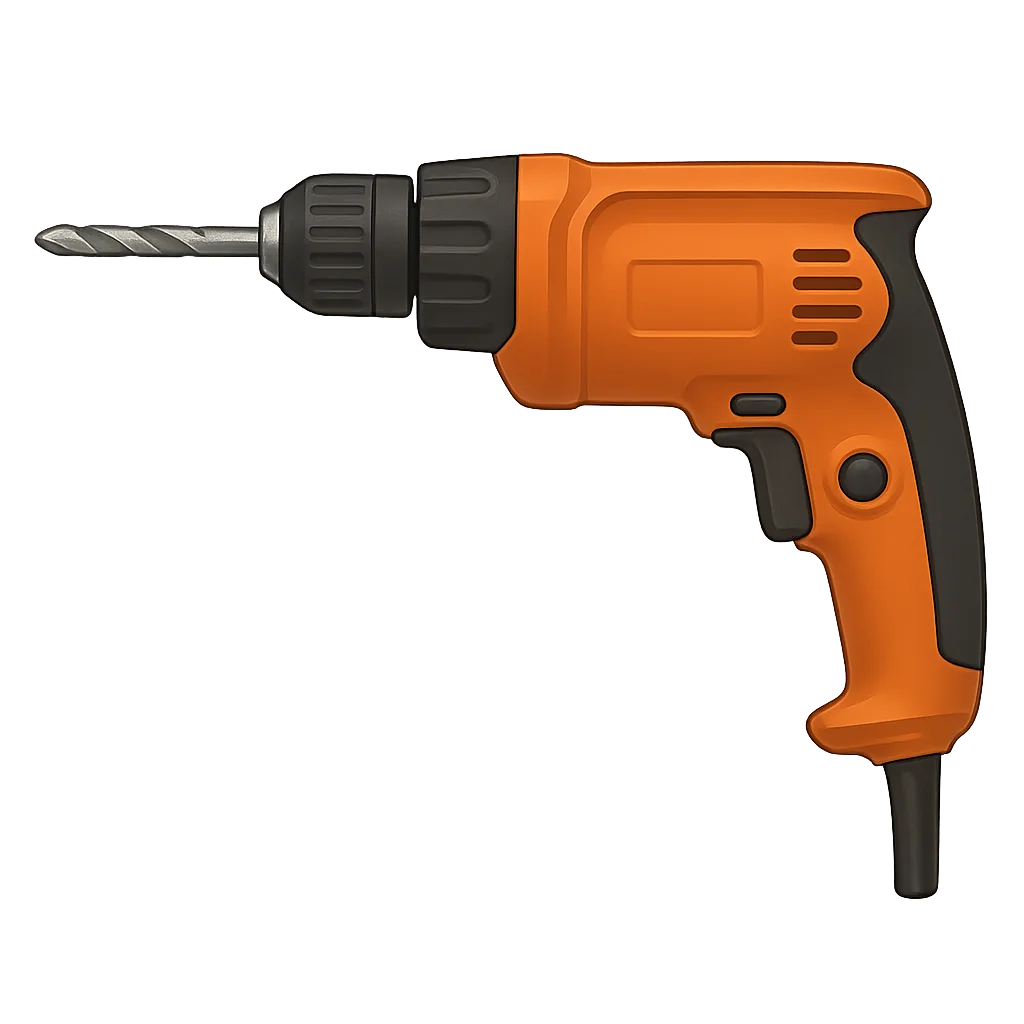
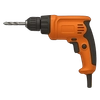
The Electric Drill: A Story of Power and Progress
Before you ever saw me hanging in a workshop or buzzing on a construction site, the world was a much quieter, and much slower, place. I am the Electric Drill, and my story begins in an era of pure muscle and sweat. Imagine trying to build a house, a ship, or even a simple piece of furniture. Every single hole had to be made by hand, using a tool called a brace and bit. A person would have to press down with all their weight and turn a crank, over and over again, just to bore a single opening into a piece of wood. It was exhausting, painstaking work that took incredible strength and patience. The world in the late 19th century, however, was changing. Factories were humming, cities were growing taller, and a new kind of energy was crackling in the air. This energy was electricity, a force that promised to change everything. People were looking for faster, stronger, and more efficient ways to do things, and the old ways of drilling by hand just couldn't keep up with the pace of their ambitions. The world needed a new kind of power, a revolutionary tool that could match the electrifying spirit of the age. It was into this buzzing world of new ideas that the thought of me first sparked to life.
My true birth, however, happened far from the bustling cities of Europe and America, in Melbourne, Australia. It was there that two forward-thinking men, Arthur James Arnot and William Blanch Brain, recognized a colossal challenge that needed a powerful solution. They weren't thinking about building furniture; they were thinking about the dangerous, back-breaking work of miners who chiseled away at rock and coal deep within the earth. On August 20th, 1889, they were granted a patent for the very first version of me. I wasn't the sleek, handheld tool you know today. I was a giant. My first body was enormous and so heavy that I had to be mounted on a stand. I was completely stationary, a mechanical beast designed for one purpose: to drill into the hardest materials imaginable. My electric motor whirred with a power no human could ever match, driving a drill bit into solid rock with relentless force. My purpose was clear and noble. I was created to make one of the world's most difficult jobs a little easier and a lot safer. I couldn't move, but I could move mountains of rock, and in doing so, I brought a new kind of hope into the darkness of the mines.
For years, I was a specialist, a powerful but clumsy giant confined to heavy industry. But human ingenuity is a restless thing, and soon inventors began to wonder if I could do more. My first major step toward freedom came in 1895, in Germany. Two brothers, Wilhelm and Carl Fein, looked at my massive frame and imagined something smaller, something that could be taken to the work instead of having the work brought to me. They created the first portable version of me. I was still quite heavy and required two strong hands to operate, but I could move. I was no longer bolted to the floor. I could travel to construction sites and shipyards, bringing my electric power wherever it was needed. My world was expanding, but my true transformation was yet to come. That happened in 1917, in a small machine shop in Baltimore, USA. Two brilliant entrepreneurs, S. Duncan Black and Alonzo G. Decker, observed how people struggled to control me. They had a vision for a tool that felt like an extension of the human hand. They designed a new body for me, inspired by the shape of a pistol. They gave me a comfortable grip and, most importantly, a trigger switch. With a simple squeeze of a finger, a user could control my power. This design was a revolution. It made me intuitive, balanced, and easy to command. I was no longer just a machine for specialized workers; I was becoming a tool for everyone.
My new form was a wild success, but I still had one limitation that kept me tethered: my power cord. As useful as I was, I could only go as far as my cord could reach. The dream of true freedom, of working anywhere without restriction, was finally realized in 1961. The clever minds at Black & Decker, the same company that gave me my famous grip, developed a self-contained nickel-cadmium battery pack. They cut my cord. I was finally free. I could climb ladders to the highest roofs, venture into fields to mend fences, and work in attics and basements far from any electrical outlet. My potential was now limitless, and it would soon take me to a place no one could have ever imagined. My greatest adventure began when NASA needed a special tool for its Apollo astronauts. They needed to drill core samples from the surface of the Moon, and they designed a unique version of me for the job. I went to space. From a massive, stationary machine in an Australian coal mine to a cordless explorer on the lunar surface, my journey has been incredible. I am proof that innovation never stops, and that a powerful idea, refined with persistence and creativity, can empower people to build their dreams, whether it's a bookshelf in their home or a scientific outpost on another world.
Activities
Take a Quiz
Test what you learned with a fun quiz!
Get creative with colors!
Print a coloring book page of this topic.









 Free for Educators