

 English

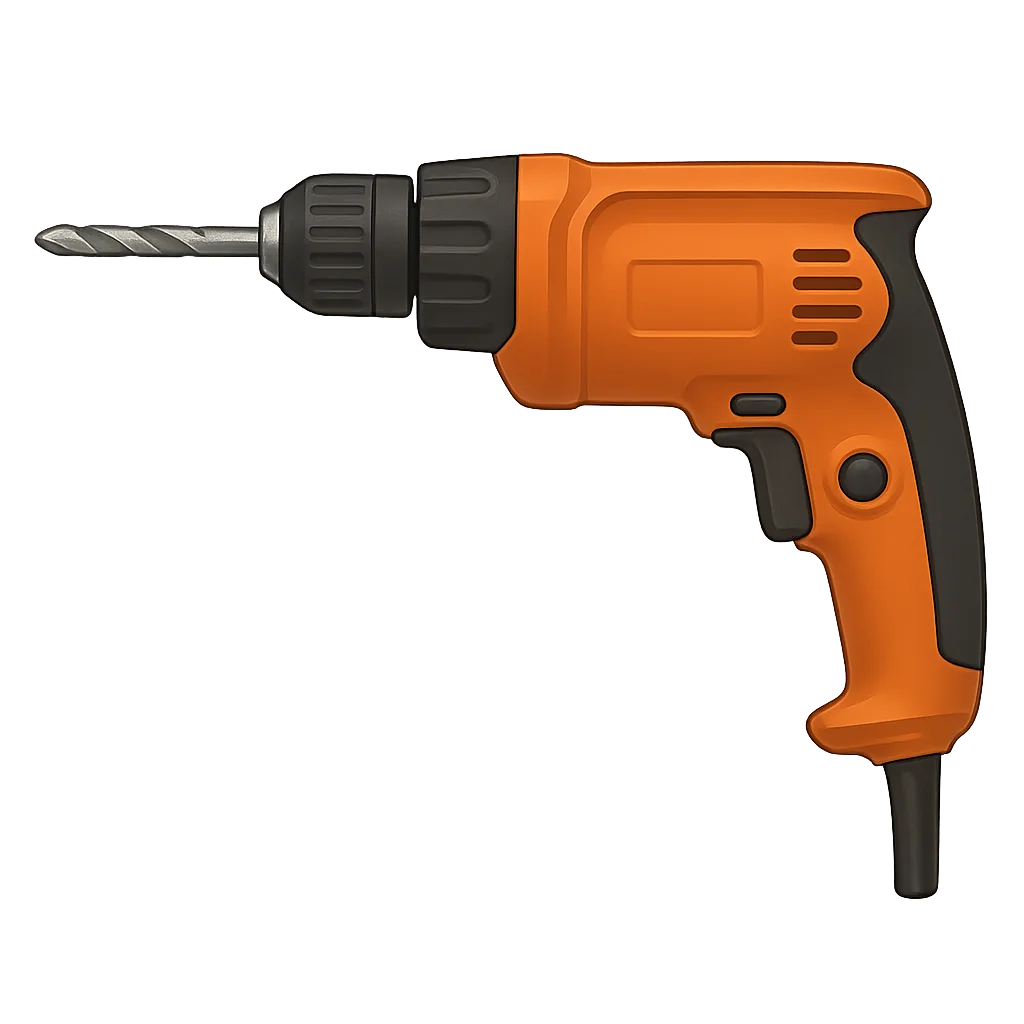
The Story of the Electric Drill
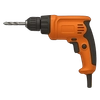
Hello there. Listen closely, and you’ll hear my signature hum. Bzzzzzz! I am the Electric Drill, a spinning, whirling bundle of buzzing energy. My purpose is simple: to make holes, quickly and perfectly. But before I came along, the world was a much quieter, and much slower, place for builders. Imagine you wanted to construct a bookshelf or even just hang a picture on the wall. You couldn't just pick me up and press a button for instant power. Oh no. You would have needed my slow-moving ancestor, a tool called a brace. It looked like a big metal question mark with a wooden handle. To use it, you had to grip it tightly and turn a crank by hand, over and over and over again. Your arm would get tired, your muscles would ache, and it took so much patience just to make one little hole. Building a whole house? That was a monumental job that took many strong people a very, very long time. Every single hole for every single nail or screw was a tough challenge. People pushed and strained, sweat dripping from their foreheads, just to connect two pieces of wood. It was hard, tiring work, the kind of work that made your whole body feel like a tired, floppy noodle. The world was waiting for a spark, a new kind of power to make building less of a struggle and more of a creation.
That spark of an idea finally happened down in Australia, a land of bright sunshine and big projects. I like to think of my creators, Arthur James Arnot and William Blanch Brain, as my parents. They were two very clever engineers who saw how tired people were getting from all that manual cranking. On a historic day, August 20th, 1889, they officially patented a brilliant idea: what if they could harness the new and exciting power of electricity to do all the spinning? And so, my first version was born. But I wasn't the sleek, easy-to-hold tool you see today. At first, I was a giant. I was so big and heavy that I had to be mounted to a stand, and I was mostly used deep underground in mines to drill into solid rock. I was incredibly strong, but I couldn't travel. My life changed forever in 1895 when a German company called Fein looked at my powerful but stationary form and thought, "This tool should be able to see the world." They worked hard and created a version of me that was portable. I was still quite heavy, like carrying a big bag of potatoes under your arm, but at least I could be carried to a job site instead of being stuck in one place. My most important transformation, the one that made me a true friend to builders everywhere, happened in America. In 1917, two inventors named S. Duncan Black and Alonzo G. Decker gave me the famous shape I have today. They were inspired by the design of a pistol and gave me a comfortable handle to grip and a simple trigger switch right under the finger. Suddenly, anyone could hold me, aim me, and with a gentle squeeze, command my whirling power. I was no longer a clumsy, heavy machine. I was a tool that felt like a natural extension of your own hand.
With my new, user-friendly design, I was ready to help build the future. And I did. My buzzing sound became the soundtrack of progress. I helped raise skyscrapers that touched the clouds, their steel frames held together by bolts I made way for. I helped assemble the cars that filled the highways and the airplanes that soared through the skies. I was there, helping to build the cozy wooden houses where families lived and the sturdy furniture they used every day. From a massive mining machine, I had transformed into a common sight in every workshop, garage, and toolbox. I gave people the power to fix a wobbly chair, hang a new shelf, or build a treehouse in the backyard. I became a partner in creativity. Today, my family has grown. My modern cousins are cordless, powered by batteries that let them roam free. We can go anywhere, up on a roof or out in a field, without a power cord trailing behind us like a leash. We are lighter and more powerful than ever before. Looking back, I am so proud. I started as a simple idea to make a hard job easier, but I became so much more. I am proof that a little spark of electricity and a lot of imagination can change the world. I help turn what you can picture in your mind into something real you can touch and use, building a better, stronger, and more beautiful world, one perfect hole at a time.
Activities
Take a Quiz
Test what you learned with a fun quiz!
Get creative with colors!
Print a coloring book page of this topic.










 Free for Educators