

 English

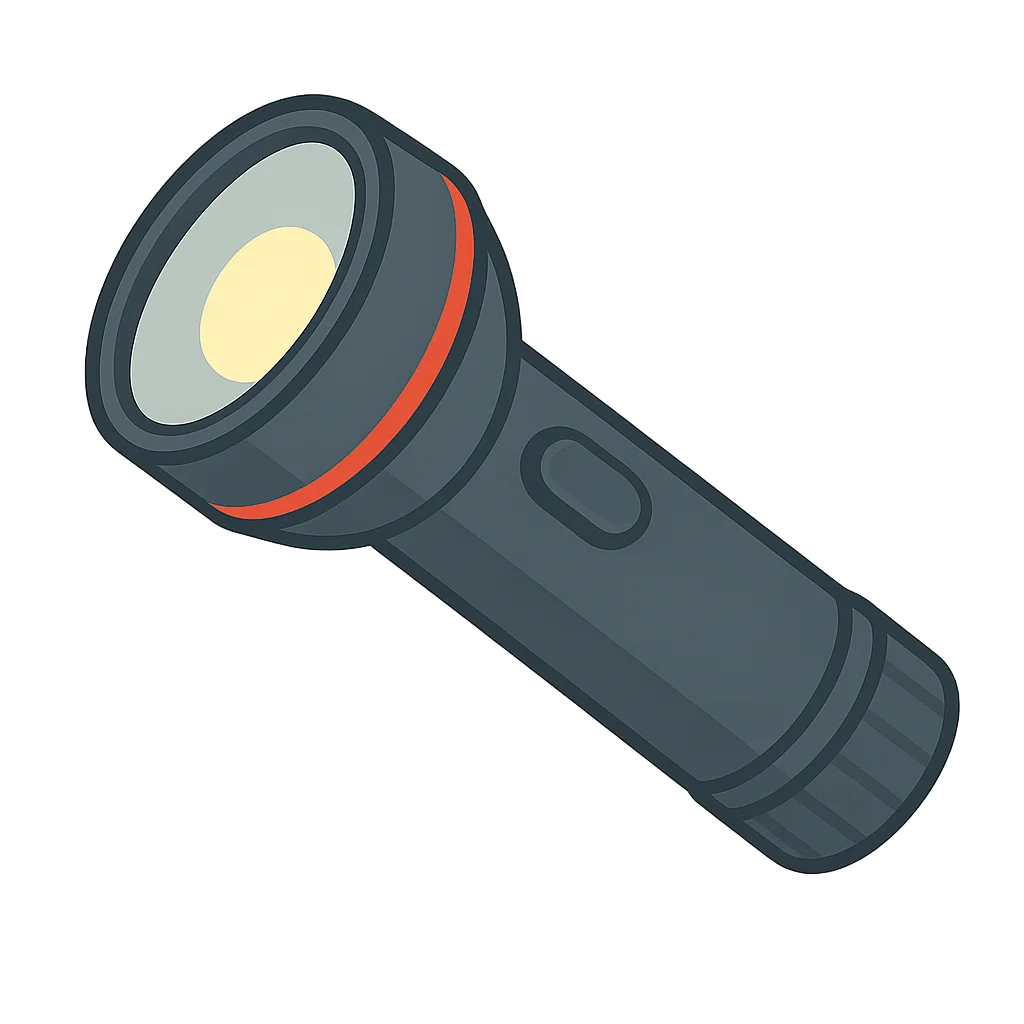
The Story of the Flashlight
Hello there. You might know me as the friend you reach for when the house goes dark during a storm, or the trusty companion you pack for a camping trip. I am the Flashlight, and I'm here to tell you my story. Before I came along, the world at night was a very different place. Imagine trying to find your way in the dark with only a flickering candle flame to guide you. The light danced and jumped, and a clumsy step could send hot wax spilling or, even worse, start a fire. Or perhaps you would use a smelly oil lamp, which filled the air with smoke and was heavy and difficult to carry. The world was waiting for a new kind of light, one that was safe, portable, and didn't need a flame. It was waiting for me. But I couldn't have been born all by myself. I needed help from two of my amazing relatives who had just been invented: the powerful little dry cell battery and the tiny, glowing electric light bulb. They were the sparks of genius that made my own spark possible.
My life truly began in the late 1890s, thanks to a very clever man named David Misell. He was an inventor working for the American Electrical Novelty and Manufacturing Company, which was owned by a man named Conrad Hubert. David saw the potential in my relatives, the battery and the bulb, and he had a brilliant idea. He took a few D-sized batteries and carefully lined them up inside a simple tube made of paper. It might not sound very fancy, but it was the perfect home for my power source. At one end of the tube, he attached a small metal contact and a reflector, with a tiny light bulb nestled in the center. At the other end, he created a simple switch. I remember the feeling of all my parts coming together, the sense of purpose building inside me. However, those first batteries were not as strong as the ones you use today. They couldn't provide power for very long. When David first used my switch, I could only shine for a brief moment before the batteries needed to rest. It was more of a quick flash of light than a steady beam. And that is exactly how I got my name. I was a light that flashed. I was a flashlight. I felt so proud and official on January 10th, 1899. That was the day my patent was granted, my official birthday, when the world recognized me as a brand-new invention ready to make a difference.
While David Misell gave me my first flash of life, it was his boss, Conrad Hubert, who saw my bright future. He knew that with some improvements, I could become more than just a novelty. He helped me get stronger, more reliable batteries that could produce a steady beam of light. My paper tube was replaced with stronger materials like metal and plastic. I was growing up, and soon I was ready for adventure. Police officers began to carry me on their nightly patrols, my beam of light cutting through dark alleys and making their jobs safer. When powerful storms knocked out the electricity, I became a hero in the dark, offering a comforting glow that made families feel secure. I started going on camping trips, lighting up trails and helping people read maps under the stars. And I’ll tell you a secret, I have been the loyal friend to countless children who wanted to read just one more chapter of a book under their blankets after bedtime. Over the years, I have continued to change. My simple bulb has often been replaced by powerful, energy-saving LED lights. But my purpose has always stayed the same. From my first flash to my steady glow today, I am here to chase away the shadows, to bring safety and comfort, and to light the way for your next great adventure.
Activities
Take a Quiz
Test what you learned with a fun quiz!
Get creative with colors!
Print a coloring book page of this topic.













 Free for Educators