

 English

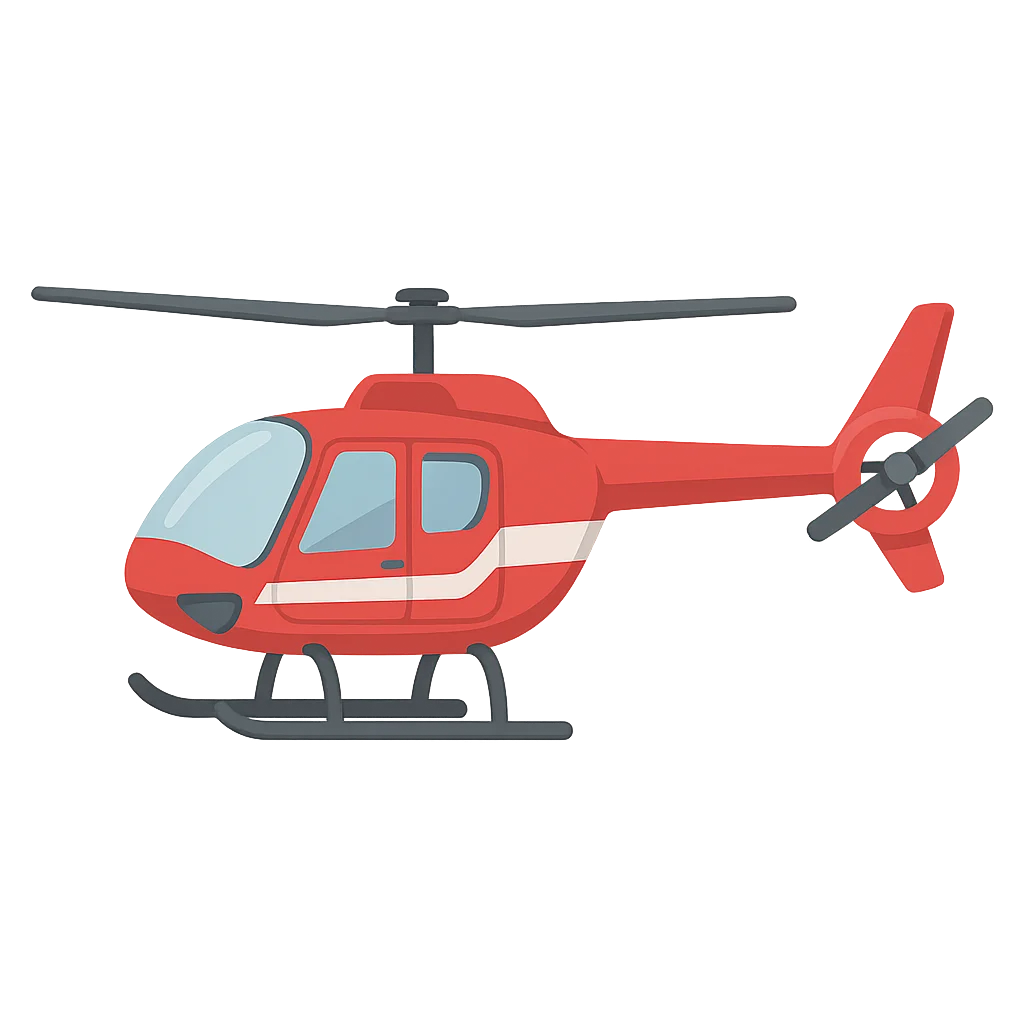
The Helicopter's Tale: A Dream That Learned to Fly
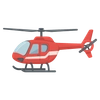
Hello there. You might have seen me buzzing through the sky, a busy dragonfly made of metal and glass. My name is Helicopter, and I am a very special kind of flying machine. Unlike my cousins, the airplanes, who need long stretches of flat ground to run and leap into the air, I can do something that feels like magic. I can lift straight up from where I stand, rising into the sky like a bubble. I can fly forwards, of course, but I can also zip backwards and slide sideways. My favorite trick is to hover, staying perfectly still in mid-air, my rotor blades above me spinning into a blurry circle, like a hummingbird tasting the sweet nectar from a flower. My story, however, didn't begin with loud engines and spinning blades. It started as a tiny seed of an idea, a quiet dream in the mind of a brilliant man named Leonardo da Vinci, more than five hundred years ago. He was a famous artist and inventor who imagined all sorts of wonderful things. On a piece of paper, he drew a picture of what he called an 'aerial screw.' It looked a bit like a giant, spiraling top that he believed could screw itself right up into the sky. It was only a drawing, a whisper of what I could one day become, but it was the very first dream of me. That dream slept for centuries, waiting patiently for the right people and the right tools to come along and finally wake me up.
Waking up from that long, quiet dream was not easy. My first steps—or rather, my first hops—were full of wobbles, shaky rattles, and clumsy jumps. For many years, clever inventors tried to build me, to give me wings that spun in a circle instead of stretching out to the sides. They knew the secret to my flight was in the spin. One of the very first to get me off the ground was a French inventor named Paul Cornu. On a chilly day, November 13th, 1907, he sat in a strange-looking machine with two spinning rotors. It managed to lift him off the ground for about twenty seconds. It was more of a wild hop than a graceful flight, and he couldn't steer it at all, but it was a beginning. It was a tiny spark of proof that lifting straight up wasn't just a fantasy. But the person who truly became my best friend, the one who saw the dream and refused to let it go, was a man named Igor Sikorsky. He had dreamed of me ever since he was a little boy in Russia. His mother told him stories about Leonardo da Vinci's flying screw, and the idea captured his imagination. He built his first models when he was just a teenager. They were made of wood and fabric and powered by small engines, but they shook and shuddered and couldn't even lift their own weight. Igor was disappointed, but he wasn't defeated. He learned from every single mistake. For a while, he had to put his dream on hold and became famous for designing big, beautiful airplanes instead. But he never forgot about me, the machine that could dance in the sky. Later, Igor moved to America and started his own company. Even when times were tough and money was scarce, the idea of me stayed in his heart. He and his dedicated team worked tirelessly in a factory in Stratford, Connecticut. They tinkered with engines, adjusted the angle of my spinning blades—my rotors—and tried to solve the difficult puzzle of how to control me. My first real body, the VS-300, looked like a skeleton of metal tubes with a pilot's seat perched right out in the open. I wasn't pretty, but I was humming with hope. Then came the unforgettable day: September 14th, 1939. Igor, wearing his signature fedora hat, climbed into my pilot's seat himself. The engine roared to life, and my main rotor began to spin, faster and faster, beating the air into submission. I felt a tremble, a powerful shudder, and then… lightness. I lifted off the ground. I only went up a few feet, and I was tied down with ropes so I wouldn't fly away wildly, but I was flying. And most importantly, Igor could control me. He could make me go up, down, and hover. He had solved the puzzle. After centuries of being just a dream on paper, I was finally alive and soaring, all because one person refused to give up.
That first shaky, tethered flight was just the beginning of my incredible life. Once Igor and his team perfected my design, I grew stronger, more stable, and more confident. I quickly discovered I had a special purpose in the world: to be a helper in the sky, going where others could not. I am the one they call when the situation seems impossible. When a hiker is lost on a high, windy mountain ledge, I can fly right up to them and hover steadily while a rescuer is lowered down on a rope. When a ship is in trouble on a stormy, churning sea, I can fly through the powerful wind and rain to lift the crew to safety. My airplane cousins are wonderful, but they can't do that; they need a long, flat place to land, but I can make my own landing spot right in the air. My work isn't always so dramatic and dangerous. I am also a builder, carefully lifting heavy steel beams and air conditioning units to the tops of skyscrapers in crowded cities. I am a doctor's assistant, delivering life-saving medicine and supplies to small villages hidden deep in the jungle or on remote islands. I can even be a firefighter, scooping up huge buckets of water from a lake and dropping them precisely on a raging forest fire. Sometimes, I'm just a tour guide, giving people a breathtaking bird's-eye view of sparkling city lights or the deep, winding cuts of a grand canyon. So, when you look up and see me buzzing across the sky, remember my long journey. I started as a simple drawing, a wild idea that many people thought was impossible. It took hundreds of years of dreaming and one person's incredible determination to bring me to life. I am proof that with persistence and imagination, even the biggest dreams can take flight and change the world for the better.
Activities
Take a Quiz
Test what you learned with a fun quiz!
Get creative with colors!
Print a coloring book page of this topic.









 Free for Educators