

 English

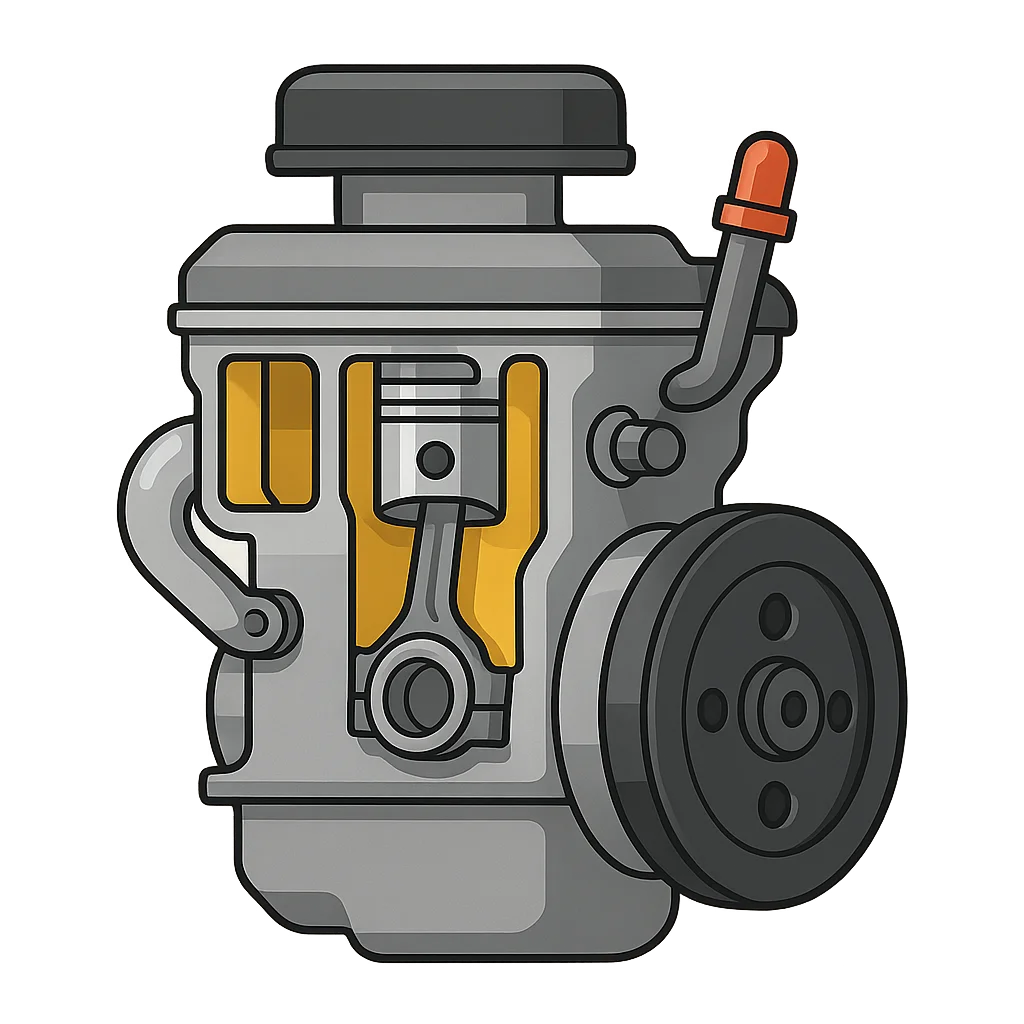
I Am the Spark: The Story of the Internal Combustion Engine
Before I was a rumble, I was a dream. Hello, I am the Internal Combustion Engine. Before I arrived, the world moved at a much different pace. The loudest sounds on city streets were the clip-clop of horses' hooves and the shouts of their drivers. For bigger jobs, there were my older cousins, the steam engines. They were powerful, true, but they were enormous, slow-starting giants, hissing and clanking as they took ages to build up enough pressure to move a train or power a factory. They were tied to their rails and their buildings. The idea of personal, go-anywhere power was just a fantasy. People looked out at the long, dusty roads and distant horizons and felt a deep yearning. They longed for a new kind of power, a heart that was small but mighty, quick to awaken, and able to grant them the freedom to explore their world on their own terms. The world was brimming with potential, just waiting for a new kind of spark to set it in motion. I was that spark, an idea flickering in the minds of brilliant inventors who imagined a future where a family could decide on a whim to visit relatives in another town, or a farmer could cultivate a field without relying solely on animal strength. This wasn't just about speed; it was about independence and connection.
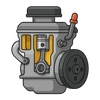
My magic lies in containing a fire within myself. Unlike a steam engine, which boils water with an external fire, my power comes from tiny, controlled explosions happening deep inside my metal body. My family tree is long, with many brilliant minds contributing to my design over decades. An early, important step came in 1860 from a Belgian-French inventor named Étienne Lenoir. He created the first version of me that was sold commercially. I was a bit rough back then, running on coal gas and not very efficient, but I proved that internal combustion was a practical idea. I was a beginning, a single spark showing that a great fire was possible. Then, in 1876, everything changed. A German engineer, Nicolaus Otto, gave me the steady, powerful rhythm I am famous for. He perfected what is called the four-stroke cycle, a beautiful and efficient dance that most of my kind still perform today. You can think of it as 'suck, squeeze, bang, blow.' First, my piston moves down, sucking in a fine mist of fuel and air. Second, it rushes back up, squeezing that mixture into a tiny space, making it incredibly volatile. Third is the most exciting part: the 'bang.'. A tiny spark ignites the compressed mixture, causing a powerful explosion that slams the piston down with immense force. This is the moment I create motion. Finally, the piston pushes back up one last time, blowing the used gases out through the exhaust. Suck, squeeze, bang, blow. Over and over, hundreds of times a minute. This cycle made me reliable and strong. The final piece of the puzzle fell into place thanks to a man with a vision, Karl Benz. On January 29th, 1886, he took a lightweight, one-cylinder version of my Otto-cycle design and placed me onto a three-wheeled carriage he called the Patent-Motorwagen. On that day, I wasn't just an engine anymore; I was the heart of the world's first true automobile.
From that moment on, my destiny was sealed. I became the pulse of the 20th century. I powered the first cars that turned dusty tracks into highways, connecting towns and families. I lifted humanity into the sky with the Wright brothers on December 17th, 1903, giving people wings. I helped farmers feed the growing world by powering tractors that could plow fields faster and more efficiently than ever before. I crossed vast oceans inside great ships and helped build towering cities by powering generators and construction equipment. The world began to feel smaller, more connected. However, my journey has not been without its challenges. The very 'blow' in my cycle that releases used gases also releases pollutants into the air. For a long time, no one understood the harm this could cause. It is a heavy thought, knowing that the source of my strength also creates a problem for the planet. But the same spirit of innovation that created me is now working to make me better. Clever engineers are designing me to be more efficient, to run on cleaner fuels, and to work alongside new partners like electric motors in hybrid vehicles. My story is not over; it is evolving. I am a testament to human creativity and the relentless drive to solve problems, proving that with imagination and perseverance, we can continue to power a better, cleaner future.
Activities
Take a Quiz
Test what you learned with a fun quiz!
Get creative with colors!
Print a coloring book page of this topic.












 Free for Educators