

 English

The Accidental Superhero: My Story as Kevlar
My name is Kevlar, and my story begins not with a grand plan, but with a puzzle. Before I was a material known for saving lives, I was just a cloudy, strange-looking liquid in a beaker. It was 1965, inside the bustling DuPont laboratories in Wilmington, Delaware. My creator, a brilliant chemist named Stephanie Kwolek, was working on a very important problem. At the time, there was a growing concern about a possible gasoline shortage, and car companies needed a way to make vehicles more fuel-efficient. Stephanie’s challenge was to invent a new fiber for car tires—one that was lightweight but much stronger than the steel used at the time. She spent countless hours mixing chemicals, hoping to create a new liquid polymer that could be spun into a super-fiber. Most successful polymer solutions were clear and thick, like molasses. But I was different. When I came into existence, I was thin and cloudy, with an odd, pearly sheen. I looked like a mistake. In the world of chemistry, unexpected results are often failures. I could feel the doubt in the air as people looked at me. I was not what they were looking for, and the standard procedure was to throw away such failed experiments. My journey was almost over before it had even begun, destined for a laboratory waste bin.
But Stephanie Kwolek was not a standard chemist; she was driven by a deep curiosity. While others saw a failure, she saw a mystery. Something about my strange appearance made her pause. Instead of discarding me, she decided to test me. This was a challenge, because the technician who operated the spinneret, a machine that spins liquid into fiber, was convinced I would clog its delicate, hair-sized nozzles. He refused at first, fearing I would break his expensive equipment. But Stephanie persisted, using her quiet determination to convince him to give me a chance. I felt a nervous energy as I was poured into the machine. This was my moment of truth. As I was pushed through the tiny holes, a strange and wonderful transformation happened. I emerged not as a weak, clumpy mess, but as a fiber of astonishing strength. When we tested it, everyone was stunned. I was five times stronger than steel of the same weight. My secret lies in my internal structure. Imagine millions of microscopic ropes, all lying perfectly straight and parallel, linked together by incredibly powerful bonds. This perfect alignment is what gives me my legendary strength. My discovery in 1965 was just the beginning, though. It took many more years of hard work by the entire DuPont team to refine and perfect me. Finally, in the early 1970s, I was officially introduced to the world, ready to begin my life of service.
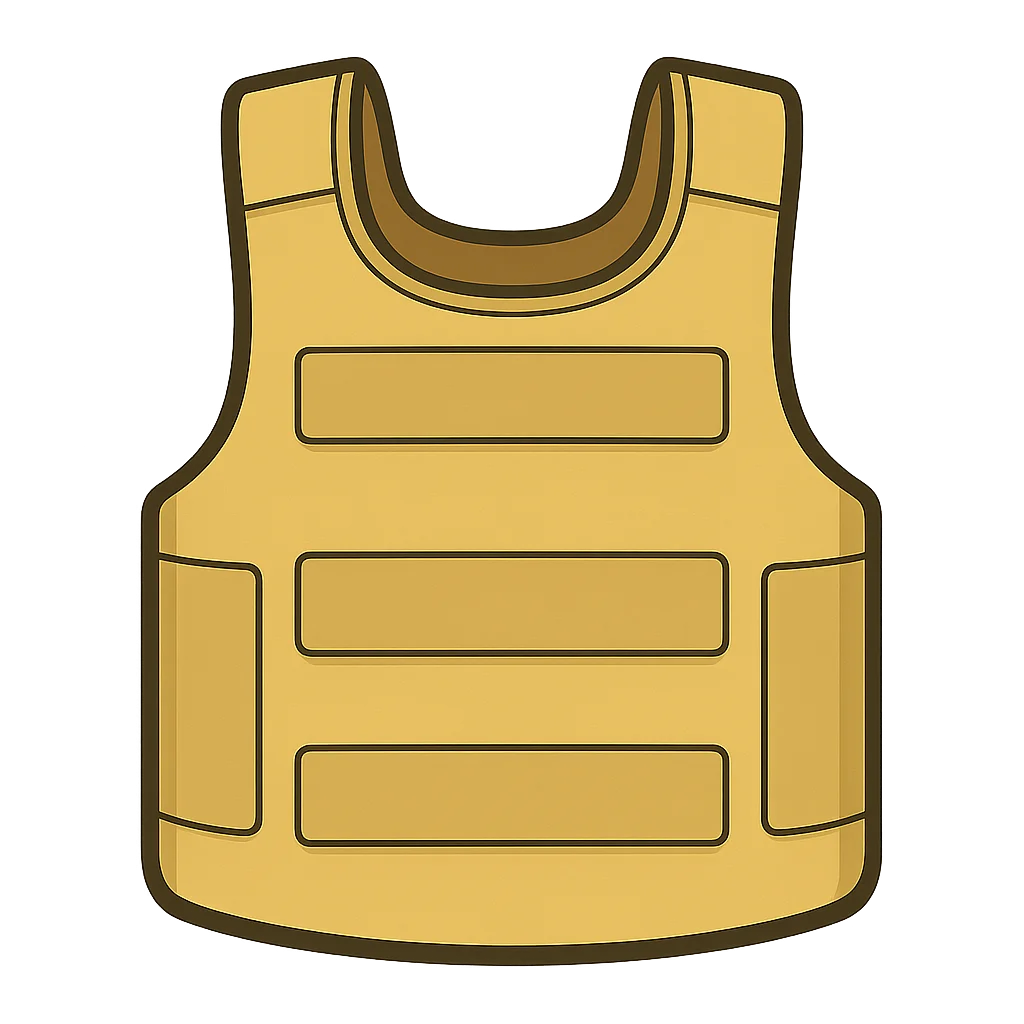
My first job was the one I was originally imagined for: reinforcing racing tires, making them tougher and lighter for the demanding world of motorsports. But my true calling was far more important. Soon, designers realized that if I could be woven into a dense fabric, I could act like a super-strong net. This led to my most famous role: becoming the heart of bullet-resistant vests. When a projectile hits a vest made from me, my tightly woven fibers absorb and spread the impact energy, stopping it before it can cause harm. It is my greatest honor to know that I have protected the lives of countless police officers, soldiers, and security personnel around the globe. But my work doesn't stop there. I am incredibly versatile. I protect firefighters from intense heat, I am spun into ropes strong enough to moor massive ships, and my fibers strengthen the suspension cables of bridges. You can find me in spacecraft, protecting them from debris in orbit, and in sports equipment like tennis rackets and skis, making them both lighter and more powerful. My life began as an unexpected accident, a cloudy liquid that was nearly thrown away. But thanks to the curiosity and persistence of a thoughtful scientist, I was given the chance to show my true strength. I am a reminder that sometimes, the most extraordinary discoveries are hiding where we least expect them, waiting for someone to look closer.
Activities
Take a Quiz
Test what you learned with a fun quiz!
Get creative with colors!
Print a coloring book page of this topic.












 Free for Educators