English

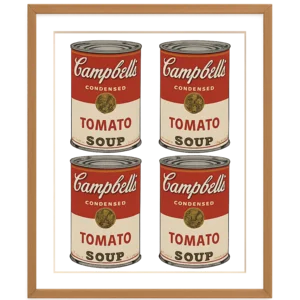
Campbell’s Soup Cans
A seminal work of Pop Art created by Andy Warhol in 1962, consisting of thirty-two canvases…
Reads at Grades 3–5 Listens at Grades 1–5
Print & create
Answer keys·No prep·Free with an account
28 worksheets · answer keys · full story · quiz · Ages 8-10 · CEFR B1
Plus adds 280,000+ more stories in 27 languages, audio for every one, and printables for all of them.
Just want Campbell’s Soup Cans?
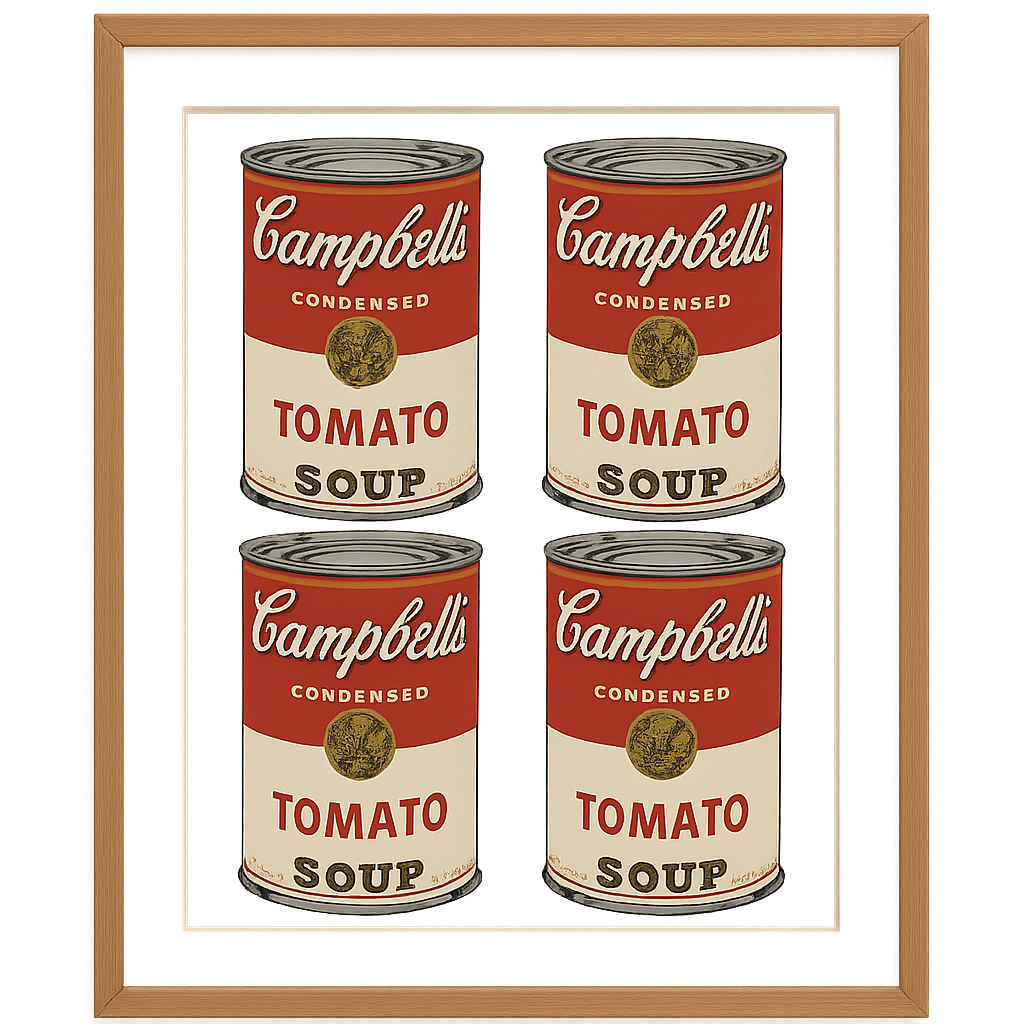
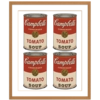
Imagine walking into a bright, quiet room and seeing… me. Not just one of me, but thirty-two of me, all lined up on a shelf, facing you. Each canvas is the same size, with the same bold, familiar label. You see the brilliant red on the top half and the clean, bright white on the bottom. In the very center of each one is a shiny gold circle, like a medal, with the word “Soup” written inside. I might look like something you’d find in your kitchen cupboard, stacked neatly in the pantry waiting for lunchtime. But here I am, hanging proudly on a gallery wall, looking important. Have you seen me before? I bet you have. I am Campbell's Soup Cans.
My creator was a quiet, observant artist with famous white-blond hair named Andy Warhol. He lived in the buzzing, roaring, humming city of New York in the 1960s, a place filled with flashing lights, giant advertisements, movie stars, and endless products to buy. Andy saw art everywhere, not just in old paintings of kings and queens. He wanted to create art that looked and felt just like the world around him. So, why did he choose to paint me, a simple can of soup? The reason is actually quite funny and very simple: he ate Campbell's soup for lunch almost every single day for twenty years! To him, I was as familiar as his own reflection. In 1962, he decided to turn his daily lunch into a famous masterpiece. He didn’t use a paintbrush in the usual way. Instead, he used a new method called screen printing. It was like using a very precise and detailed stencil. He would press ink through a mesh screen onto the canvas below, creating a perfect, clean image of me each time. He did this thirty-two times, once for every flavor of soup Campbell's made back then, from Tomato to Chicken Noodle. This process made me look machine-made and identical, not handmade, just like the real cans stacked high in the supermarket. Andy wanted his art to be for everyone, just like soup.
I Am Campbell's Soup Cans
Imagine walking into a bright, quiet room and seeing… me. Not just one of me, but thirty-two of me, all lined up on a shelf, facing you. Each canvas is the same size, with the same bold, familiar label. You see the brilliant red on the top half and the clean, bright white on the bottom. In the very center of each one is a shiny gold circle, like a medal, with the word “Soup” written inside. I might look like something you’d find in your kitchen cupboard, stacked neatly in the pantry waiting for lunchtime. But here I am, hanging proudly on a gallery wall, looking important. Have you seen me before? I bet you have. I am Campbell's Soup Cans.
My creator was a quiet, observant artist with famous white-blond hair named Andy Warhol. He lived in the buzzing, roaring, humming city of New York in the 1960s, a place filled with flashing lights, giant advertisements, movie stars, and endless products to buy. Andy saw art everywhere, not just in old paintings of kings and queens. He wanted to create art that looked and felt just like the world around him. So, why did he choose to paint me, a simple can of soup? The reason is actually quite funny and very simple: he ate Campbell's soup for lunch almost every single day for twenty years! To him, I was as familiar as his own reflection. In 1962, he decided to turn his daily lunch into a famous masterpiece. He didn’t use a paintbrush in the usual way. Instead, he used a new method called screen printing. It was like using a very precise and detailed stencil. He would press ink through a mesh screen onto the canvas below, creating a perfect, clean image of me each time. He did this thirty-two times, once for every flavor of soup Campbell's made back then, from Tomato to Chicken Noodle. This process made me look machine-made and identical, not handmade, just like the real cans stacked high in the supermarket. Andy wanted his art to be for everyone, just like soup.
When I was first shown to the world in a gallery in Los Angeles in 1962, people were completely puzzled. Some were even a little bit angry. Can you imagine their surprise? They walked in expecting to see grand paintings of historical battles or beautiful, dreamy landscapes. Instead, they saw me—thirty-two paintings of soup cans, lined up like they were on a grocery store shelf. “Is this a joke?” some people whispered. “That’s not art! I have that in my kitchen!” others complained. I was so different from what they thought art was supposed to be. But that was the whole point. I was a question mark hanging on the wall, challenging everyone to think differently. I helped start a whole new art movement called Pop Art. ‘Pop’ is short for ‘popular,’ and Pop artists like Andy Warhol celebrated the popular, everyday things in life. I made people see that even a simple soup can could be a subject for art, just as worthy of being looked at as a fancy portrait or a dramatic sunset. I turned the ordinary into the extraordinary.
Today, I live in a very famous museum in New York City called the Museum of Modern Art. People from all over the world still line up to see me, thirty-two identical faces staring back at them. I am no longer just a picture of lunch; I am a piece of history. I show them that art isn’t just about old, fancy things from long ago. Art is about our lives, right here and right now. It can be colorful, fun, surprising, and even a little bit silly. I am a reminder from Andy to look closely at the world around you. Art and inspiration can be found anywhere, even in the simplest things. I hope I make you wonder about the beauty in the everyday.
Wow facts
About
A seminal work of Pop Art created by Andy Warhol in 1962, consisting of thirty-two canvases, each depicting a different variety of Campbell's canned soup. The piece challenges traditional definitions of art by elevating a mass-produced, everyday object to the status of high art.
Take a Quiz
Question 1 of 5
In the story, I say people were 'puzzled' when they first saw me. What does the word 'puzzled' mean, and why did people feel that way?
Explore next





Want to do even more?
Go beyond exploring. Unlock tools that turn every story into real learning.

Storypie Plus for families
Full stories, quizzes, and printables. Nights and car rides, sorted.
- Unlimited audio stories
- Create Mode: your child stars in the story
- Offline downloads
- Printable worksheets & coloring pages

Why Storypie for Schools
Students engaged. Prep in seconds. Evenings back to you.
- Worksheets & Quizzes
- Classroom Management
- Formative Assessment
- Custom Curriculum & Lesson Plans
- 27 Languages

Why Storypie for Homeschool
Curriculum done. They'll ask for more. Hours back in your day.
- Worksheet Generator
- First-Person Audio Stories
- Built-in Comprehension Quizzes
- Custom Curriculum & Lesson Plans
- Print & Go Activities