

 English

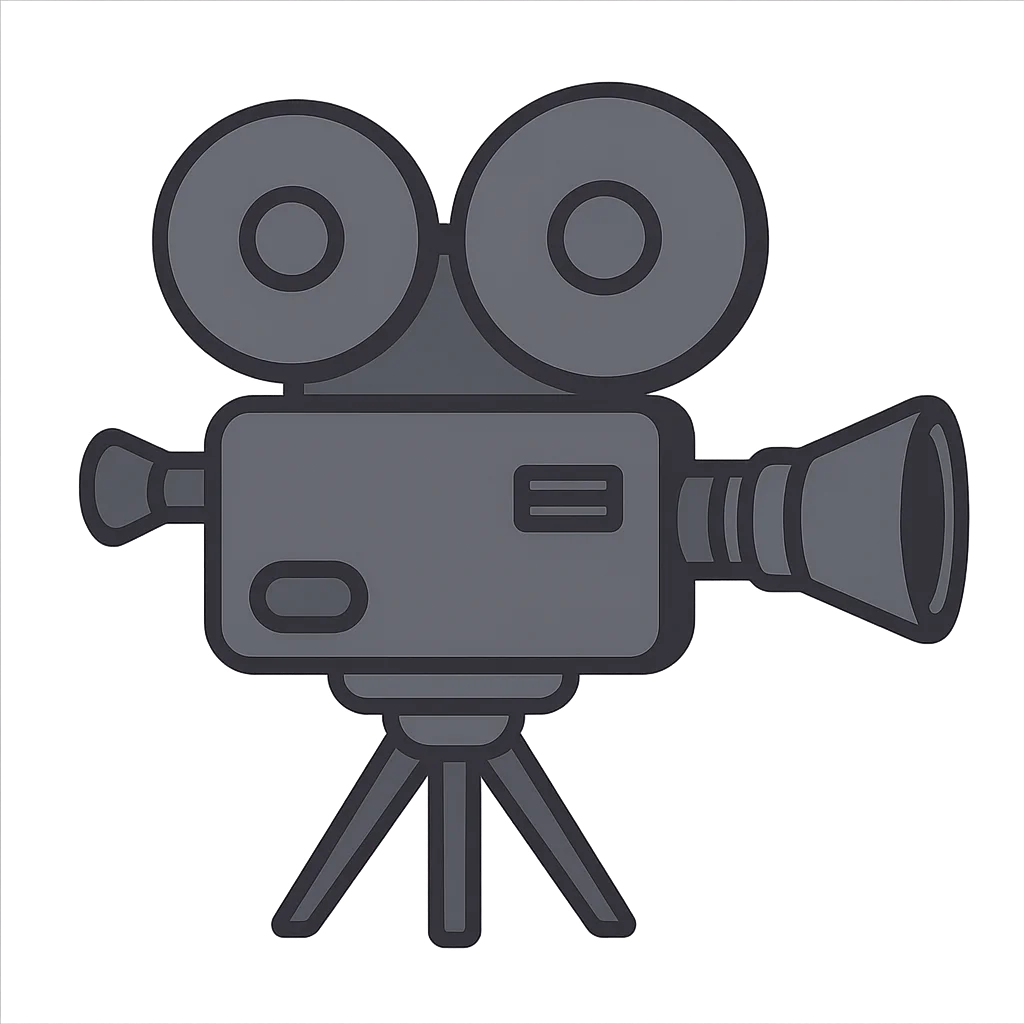
The Camera That Made Pictures Move
Before I was born, the world was a collection of frozen moments. People had photographs, beautiful still images that captured a single instant in time, but they dreamed of more. They wanted to see a horse gallop, a baby laugh, or a wave crash upon the shore, not just as a single picture, but as it truly happened. You might have seen little flipbooks, where pictures on each page change slightly, and when you flip them fast, they seem to move. That was the dream that brought me to life. I am the Motion Picture Camera. The first real spark of my existence came from a man named Eadweard Muybridge in 1878. He set up a whole line of cameras to take pictures of a horse as it ran by. When he showed the pictures one after another, in quick succession, the horse looked like it was alive and galloping across the screen. That amazing experiment proved that a series of still images could trick our eyes into seeing movement. That was the moment inventors around the world knew that creating me was not just a dream, but a real possibility.
My creation story is a bit like a tale of two twins, born at nearly the same time but in different places and with different personalities. In America, in the busy workshop of the great inventor Thomas Edison, one version of me was born around 1891. Mr. Edison's talented assistant, William K.L. Dickson, did much of the work. They called me the Kinetograph, and I was a large, heavy machine that had to stay in one place inside a studio. My secret was a long, flexible strip of celluloid film. Mr. Dickson cleverly punched little rectangular holes, called sprocket holes, all along the sides of the film. Inside my body, gears would catch these holes and pull the film steadily past my lens, capturing one picture after another at a very high speed. At the same time, across the Atlantic Ocean in France, two brilliant brothers named Auguste and Louis Lumière were working on their own version of me. Their creation, born in 1895, was called the Cinématographe. I was much lighter and smaller than my American cousin. I was portable. The Lumière brothers designed me to be a true marvel; I could not only record the images on film, but I could also be used to develop that film and then project the finished movie onto a screen for everyone to see. I was an all-in-one studio, camera, and movie projector.
My most magical moment, the day I truly showed the world what I could do, was on December 28th, 1895. The Lumière brothers invited a small group of people to a room in the basement of a café in Paris. The air was filled with curiosity and excitement. The lights were dimmed, and a bright beam shot out from my lens, painting a flickering square of light on a white screen. And then, it happened. An image of a train appeared, and it was moving. It was chugging into a station, steam puffing from its chimney, getting closer and closer. The audience gasped. Some people screamed and jumped from their seats, truly believing a real train was about to burst through the screen. That day, they also watched workers leaving the Lumière factory and a father feeding his baby. These were simple, everyday scenes, but on the screen, they were pure magic. In that dark room, I helped create a new kind of storytelling, a shared experience where strangers could laugh, gasp, and dream together. That was the birth of the cinema.
From that first flickering show in Paris, my journey has been incredible. In the beginning, I could only capture the world in black and white, and I could not hear a thing. The movies I made were silent, with music played by a live pianist in the theater. But as the years went on, I learned and grew. I learned how to capture every color of the rainbow, from the deep red of a sunset to the bright blue of an eye. Then, I learned how to record sound, allowing audiences to hear actors speak, cars roar, and orchestras play beautiful music. I helped filmmakers create incredible special effects, taking people on adventures to distant planets, ancient kingdoms, and worlds full of magic. Looking back, I see that my purpose has always been to be a storyteller. I am a keeper of memories and a window into dreams. From the giant screens in movie palaces to the small screens you carry in your pockets, my spirit lives on, connecting us all through the unforgettable magic of movies.
Activities
Take a Quiz
Test what you learned with a fun quiz!
Get creative with colors!
Print a coloring book page of this topic.















 Free for Educators