English

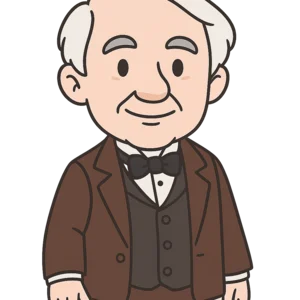
Thomas Edison
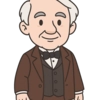
Thomas Edison was an American inventor and businessman who developed many devices that greatly influenced…
Reads at Grades 3–5 Listens at Grades 1–5
Print & create
Answer keys·No prep·Free with an account
28 worksheets · answer keys · full story · quiz · Ages 8-10 · CEFR B1
Plus adds 280,000+ more stories in 27 languages, audio for every one, and printables for all of them.
Just want Thomas Edison?
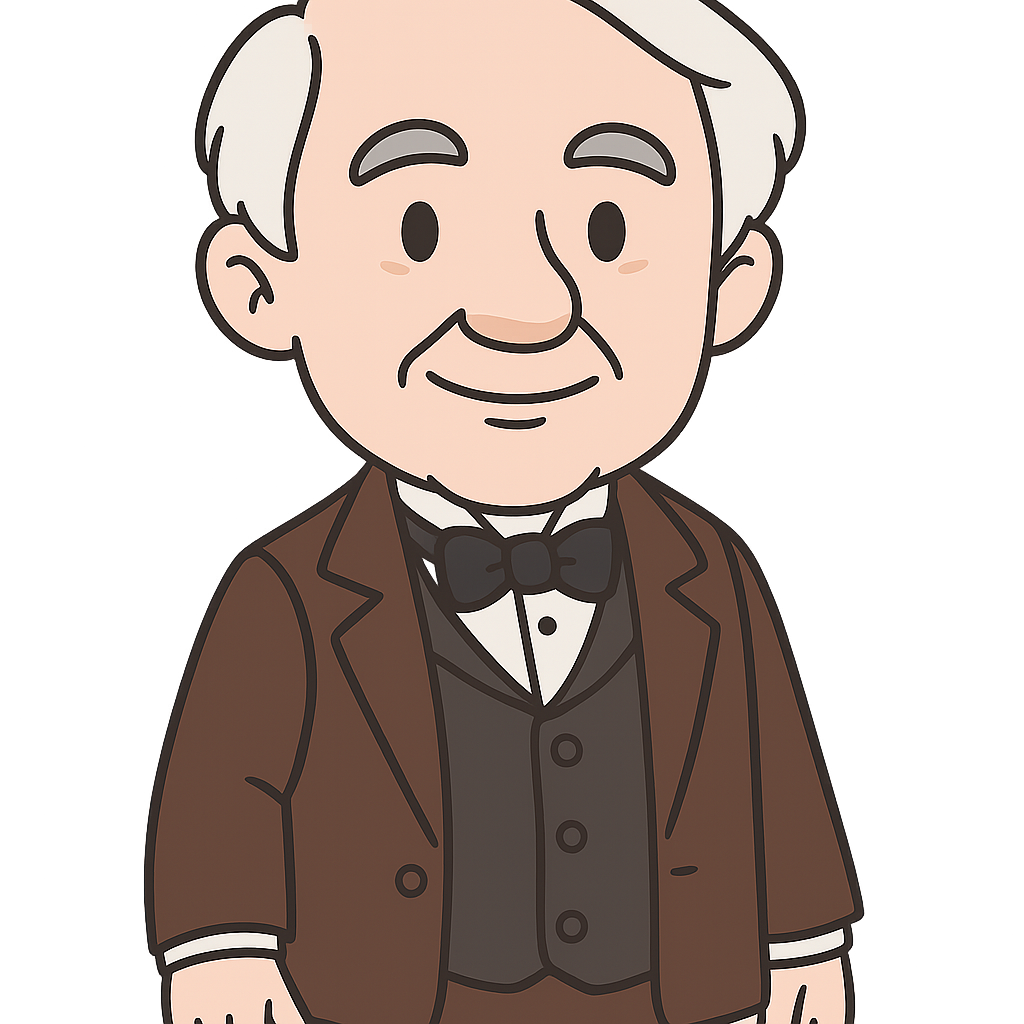
Hello there. My name is Thomas Alva Edison, and I was an inventor. You might know me best for creating the electric light bulb, but my story started long before that, with a whole lot of questions. I was born on February 11th, 1847, in Milan, Ohio. From the moment I could talk, my favorite word was 'Why?'. Why is the sky blue? Why do birds fly? Why does a fire feel hot? My mind was like a spinning top, always buzzing with curiosity. This wasn't always a good thing at school. My teacher thought I was a distraction, so after only a few months, my wonderful mother, Nancy, decided she would teach me at home. It was the best thing that could have happened. Our home became my school, and the world became my classroom. My mother let my curiosity run wild. She filled our house with books, and I read every single one I could get my hands on. When I was just ten years old, I turned our basement into my very own science laboratory. I saved every penny I earned to buy chemicals and batteries. I loved the smells and sounds of my experiments, even when they fizzled or popped unexpectedly. When I got a little older, I got a job selling newspapers and candy on the trains. But I couldn't leave my experiments behind. I convinced the conductor to let me set up a small lab in an empty baggage car. I was doing chemistry experiments while the train rumbled down the tracks.
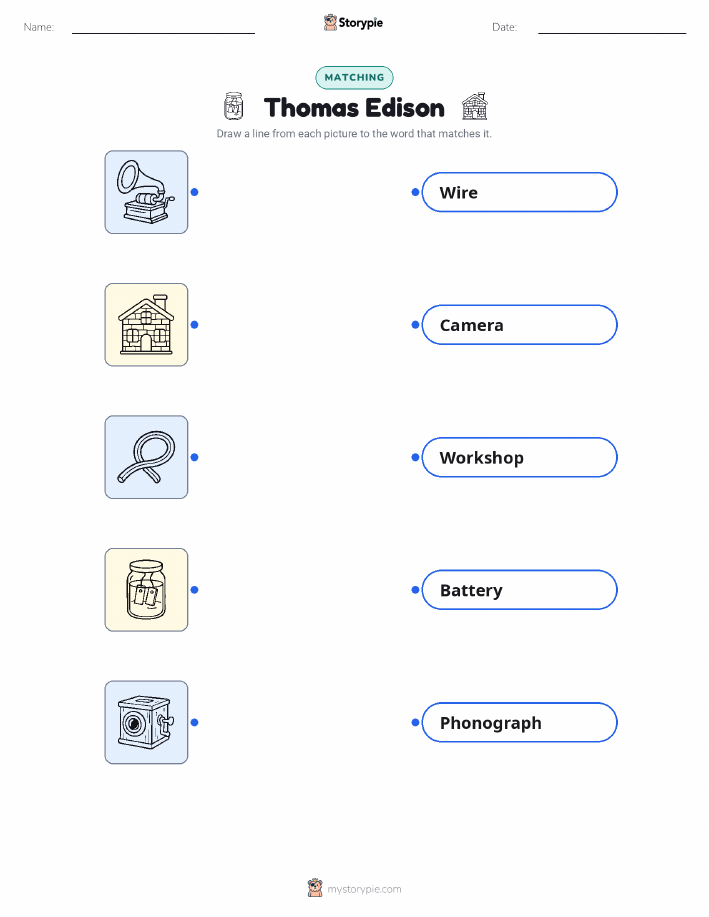
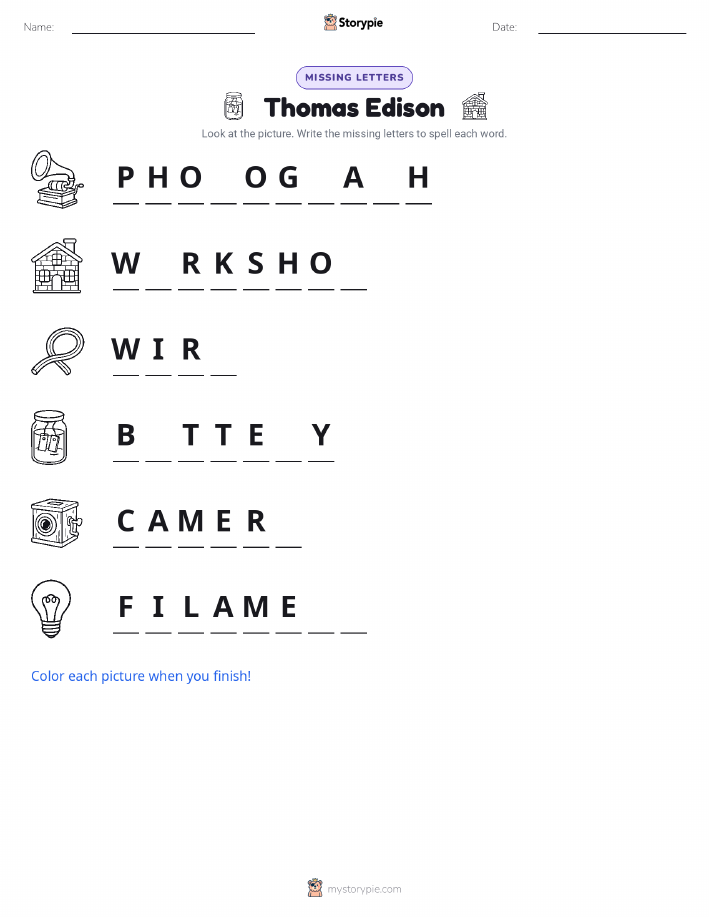
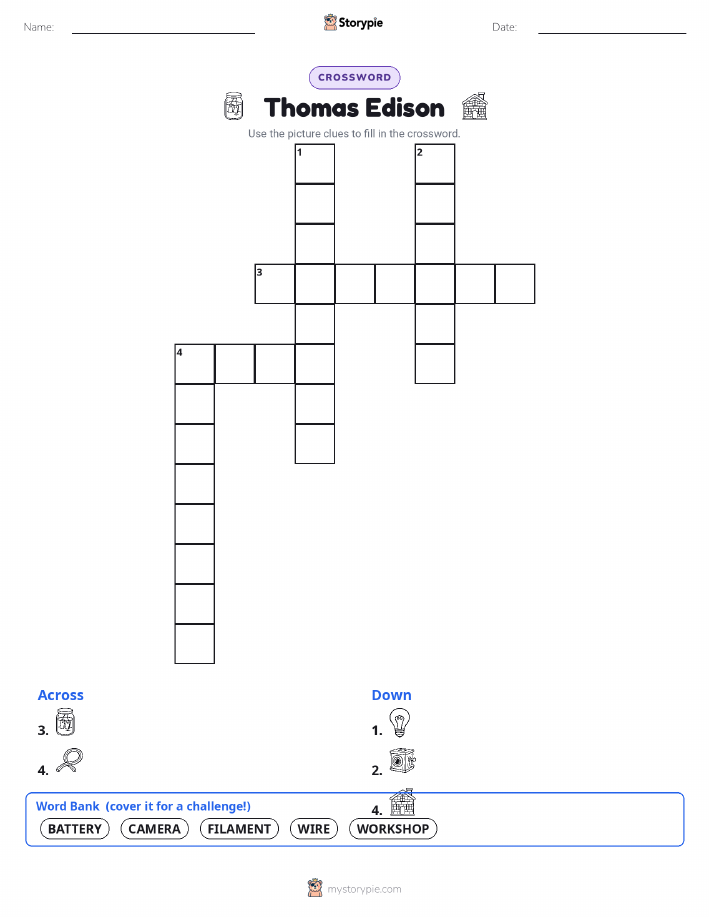
As I grew up, my little experiments turned into big ideas. I knew I wanted to spend my whole life inventing things that would help people. So, in 1876, I built a special place in Menlo Park, New Jersey. It wasn't just a laboratory; it was an 'invention factory'. It was a place where imagination came to life. My team and I worked day and night, sometimes sleeping on benches right there in the lab because we were too excited to go home. We called ourselves the 'muckers', because we weren't afraid to get our hands dirty to solve a problem. One day in 1877, I was working on a machine that could record sound. I wrapped a thin sheet of tinfoil around a cylinder, attached a needle, and shouted the first thing that came to my mind into a horn: 'Mary had a little lamb'. I turned a crank, and to my astonishment, a tiny, scratchy voice played my words right back to me. It was my own voice. It felt like pure magic. We had invented the phonograph. But my biggest challenge was still ahead. People used gas lamps and candles to light their homes, which were dangerous and dim. I dreamed of a safe, bright electric light. For over a year, my team and I worked tirelessly. The problem was finding the right material, called a filament, that would glow for a long time without burning out. We tested everything we could think of—over six thousand different materials, from cotton thread to a friend's beard hair. Finally, on October 22nd, 1879, we tried a piece of carbonized bamboo fiber. We turned on the power, and it began to glow. We watched and waited. It glowed for an hour, then two, then thirteen hours straight. We had done it.
Thomas Edison: The Boy Who Lit Up the World
Hello there. My name is Thomas Alva Edison, and I was an inventor. You might know me best for creating the electric light bulb, but my story started long before that, with a whole lot of questions. I was born on February 11th, 1847, in Milan, Ohio. From the moment I could talk, my favorite word was 'Why?'. Why is the sky blue? Why do birds fly? Why does a fire feel hot? My mind was like a spinning top, always buzzing with curiosity. This wasn't always a good thing at school. My teacher thought I was a distraction, so after only a few months, my wonderful mother, Nancy, decided she would teach me at home. It was the best thing that could have happened. Our home became my school, and the world became my classroom. My mother let my curiosity run wild. She filled our house with books, and I read every single one I could get my hands on. When I was just ten years old, I turned our basement into my very own science laboratory. I saved every penny I earned to buy chemicals and batteries. I loved the smells and sounds of my experiments, even when they fizzled or popped unexpectedly. When I got a little older, I got a job selling newspapers and candy on the trains. But I couldn't leave my experiments behind. I convinced the conductor to let me set up a small lab in an empty baggage car. I was doing chemistry experiments while the train rumbled down the tracks.
As I grew up, my little experiments turned into big ideas. I knew I wanted to spend my whole life inventing things that would help people. So, in 1876, I built a special place in Menlo Park, New Jersey. It wasn't just a laboratory; it was an 'invention factory'. It was a place where imagination came to life. My team and I worked day and night, sometimes sleeping on benches right there in the lab because we were too excited to go home. We called ourselves the 'muckers', because we weren't afraid to get our hands dirty to solve a problem. One day in 1877, I was working on a machine that could record sound. I wrapped a thin sheet of tinfoil around a cylinder, attached a needle, and shouted the first thing that came to my mind into a horn: 'Mary had a little lamb'. I turned a crank, and to my astonishment, a tiny, scratchy voice played my words right back to me. It was my own voice. It felt like pure magic. We had invented the phonograph. But my biggest challenge was still ahead. People used gas lamps and candles to light their homes, which were dangerous and dim. I dreamed of a safe, bright electric light. For over a year, my team and I worked tirelessly. The problem was finding the right material, called a filament, that would glow for a long time without burning out. We tested everything we could think of—over six thousand different materials, from cotton thread to a friend's beard hair. Finally, on October 22nd, 1879, we tried a piece of carbonized bamboo fiber. We turned on the power, and it began to glow. We watched and waited. It glowed for an hour, then two, then thirteen hours straight. We had done it.
Inventing a single light bulb that worked was a huge success, but it was only the beginning of the story. After all, what good is a light bulb without electricity to power it? My next big idea was to create an entire system that could deliver electricity right into people's homes, just like water came through pipes. It was a massive challenge that no one had ever attempted before. My team and I had to invent everything from scratch: generators to make the electricity, wires to carry it, and even switches to turn the lights on and off. In 1882, we were finally ready. We built the world’s first central power station on Pearl Street in New York City. On September 4th, I flipped a switch, and an entire neighborhood lit up with the bright, steady glow of electric light. It was a breathtaking sight that changed the world forever. Of course, I didn't stop there. My mind was always moving on to the next problem. I invented a machine called the Kinetoscope, which was one of the first ways people could watch moving pictures. Over my lifetime, my life, which ended in 1931, I was granted 1,093 patents for my inventions. People often asked me how I came up with so many ideas. I always told them my secret: 'Genius is one percent inspiration and ninety-nine percent perspiration.' That means a good idea is just the start; the real work is trying, failing, and trying again until you succeed. So, I hope you remember to always ask 'Why?', to not be afraid of hard work, and to never, ever give up on your bright ideas.
Wow facts
About
Thomas Edison was an American inventor and businessman who developed many devices that greatly influenced life around the world, including the phonograph, the motion picture camera, and a long-lasting, practical electric light bulb.
Take a Quiz
Question 1 of 5
In the story, I say my curiosity could 'run wild.' What does the phrase 'run wild' mean here?
Explore next



Want to do even more?
Go beyond exploring. Unlock tools that turn every story into real learning.

Storypie Plus for families
Full stories, quizzes, and printables. Nights and car rides, sorted.
- Unlimited audio stories
- Create Mode: your child stars in the story
- Offline downloads
- Printable worksheets & coloring pages

Why Storypie for Schools
Students engaged. Prep in seconds. Evenings back to you.
- Worksheets & Quizzes
- Classroom Management
- Formative Assessment
- Custom Curriculum & Lesson Plans
- 27 Languages

Why Storypie for Homeschool
Curriculum done. They'll ask for more. Hours back in your day.
- Worksheet Generator
- First-Person Audio Stories
- Built-in Comprehension Quizzes
- Custom Curriculum & Lesson Plans
- Print & Go Activities