

 English

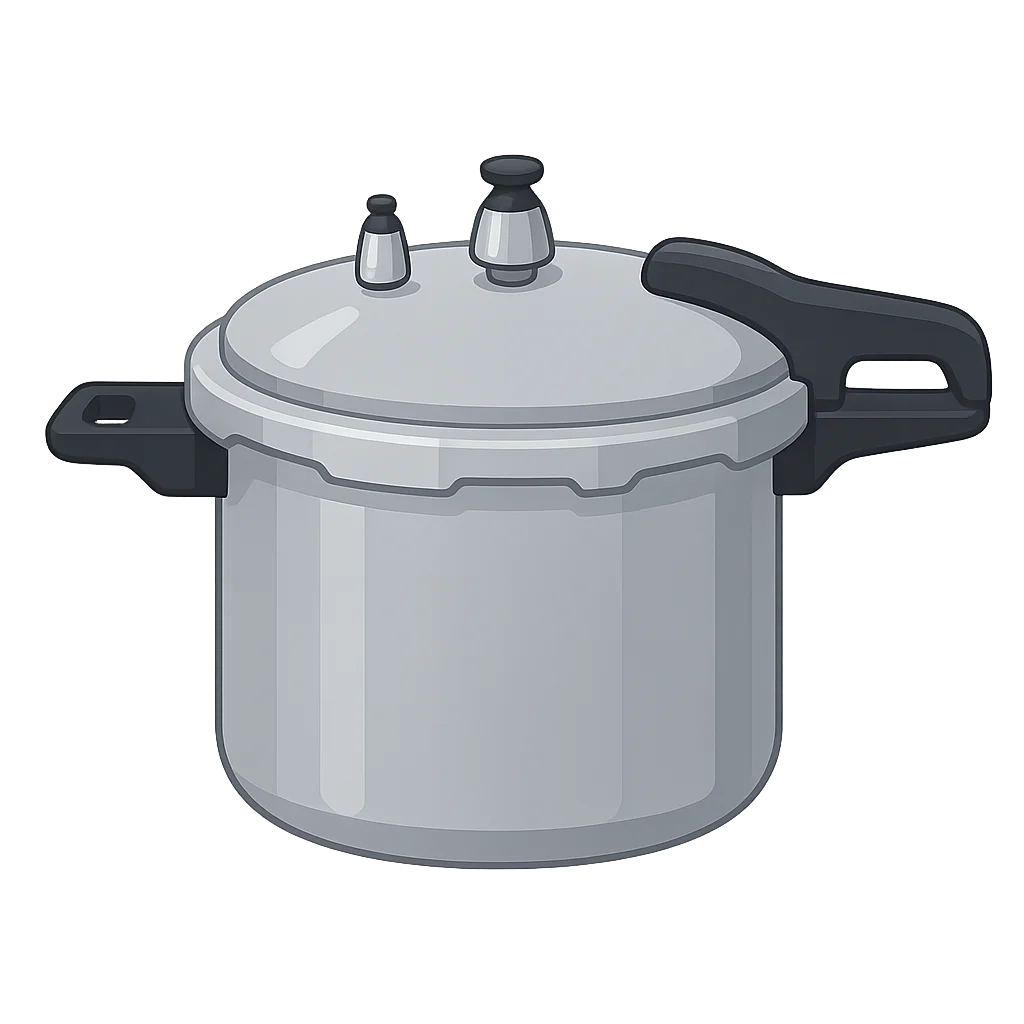
The Story of the Pressure Cooker
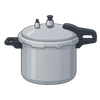
Hello there. You might see me as just a shiny metal pot with a heavy, locking lid, but I am so much more. I am a pressure cooker, and I hold a powerful secret. Before I came along, making dinner could take a very, very long time. Imagine your family wanting a hearty beef stew or soft, creamy beans. Your ancestors would have to let a pot bubble on a fire for hours and hours, slowly trying to make the tough food tender. The kitchen would get hot and steamy, and someone always had to watch the pot. It was even harder for people who lived high up in the mountains. Up there, the air is thinner, which means water starts to boil when it's not quite as hot. This cooler boiling water meant their food took even longer to cook through. They needed a new way to cook, a faster way. They needed to harness a special kind of power, the mighty, hissing power of steam.
My story truly begins with my inventor, a very clever French scientist named Denis Papin. This was way back in the 1600s, a time filled with new ideas. Denis wasn't a chef, but he was fascinated by the world around him, especially by the power of steam. He would watch it puff out of a kettle and see how it could lift the lid. He thought about that pushing force and wondered, 'What if I could trap that steam and put its power to work?'. That question led to his brilliant idea. He imagined a pot so strong, made of thick iron, that it could be sealed completely shut. He realized that if you heated water inside this sealed pot, the steam would have nowhere to go. It would get trapped, and as more steam was created, it would build up pressure inside. This intense pressure does something amazing to water. It stops it from boiling at its normal temperature. Instead, the water gets hotter, and hotter, and hotter—way past the boiling point you see in a regular pot. And super-hot water means food that cooks in a flash. On a winter day in 1679, he was ready to show me to the world. He called me the 'Steam Digester,' a fancy name that meant I could break down the toughest foods. He took me to the Royal Society of London, a famous club for scientists, and cooked a meal for them. They watched in disbelief as I turned tough, stringy bones and meat into a tender, delicious meal in a surprisingly short time. But Denis knew that all that powerful, trapped steam could be dangerous. He was not only brilliant but also very careful. So, he gave me the most important part of my design: the safety valve. It was a little weighted peg on my lid. If the pressure inside me ever got too high, the peg would start to jiggle and dance, lifting up just enough to let out a little hiss of steam. This let out just enough pressure to keep me from becoming a danger. That little hissing sound became my song, a happy tune that let everyone know I was working safely.
For many years, I was mostly a scientific wonder, something to be marveled at in a laboratory. But slowly, people began to understand how useful I could be in a regular home. My design was improved over the decades, making me smaller, safer, and easier to use. I traveled from the science labs of Europe to kitchens all around the world. I became a trusted helper for busy families. I could cook a whole chicken in minutes, not hours. I saved families time, and I saved them money on fuel for their stoves. People grew to love my happy, hissing song, knowing it meant a warm, delicious dinner was not far away. Today, my great-great-grandchildren are the sleek, electric cookers you might see on your kitchen counter. They have digital timers and many different buttons, but deep down, they work using the exact same scientific idea Denis Papin discovered more than three hundred years ago. Looking back, I am so proud of my journey. I began as a 'Steam Digester' in a scientist's lab, and now I am a friend in the kitchen, still using the incredible power of science to bring families together for a wonderful meal.
Activities
Take a Quiz
Test what you learned with a fun quiz!
Get creative with colors!
Print a coloring book page of this topic.












 Free for Educators