English
 For Schools
 For Homeschool

A Helper on Your Wrist
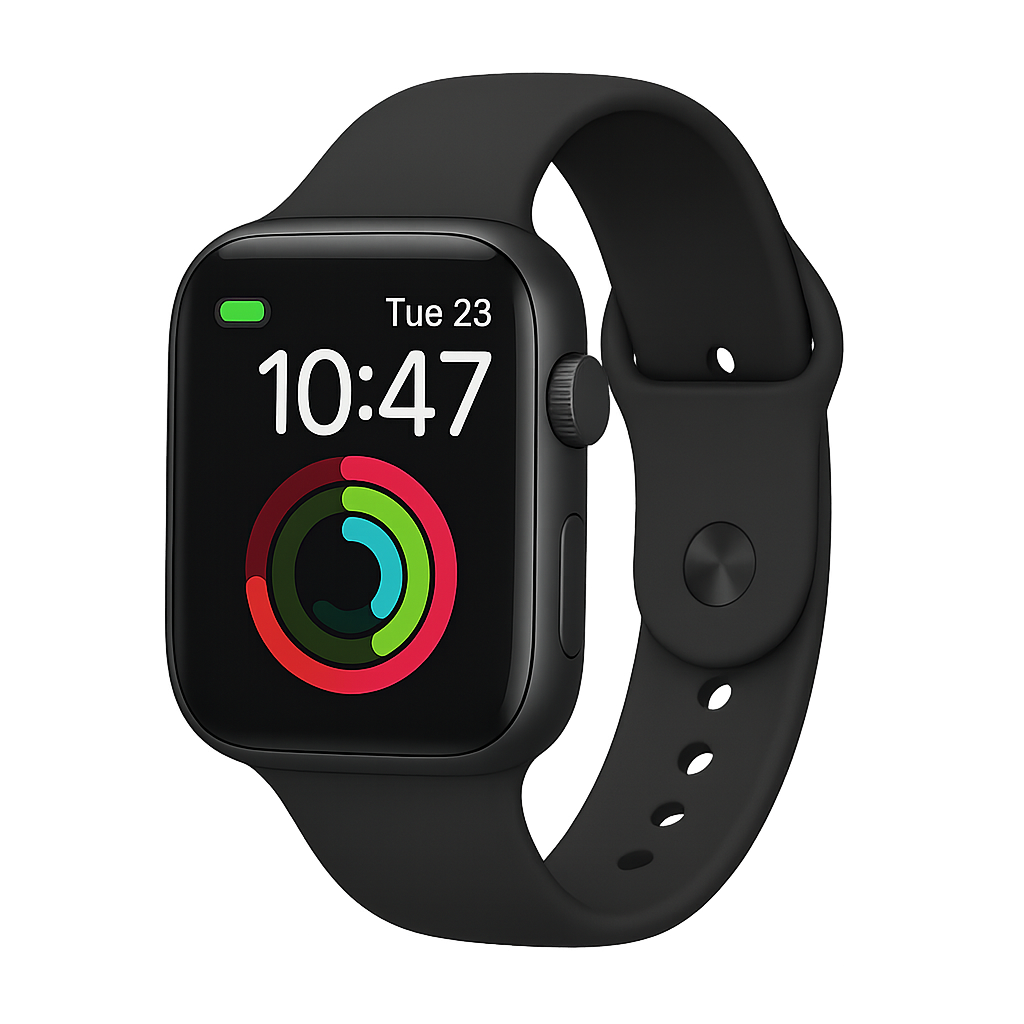
Hello there. You might see me on your parent’s wrist, or maybe even your own. I am a Smartwatch. At first glance, I look like a regular watch, with a face that tells you the time. But I am so much more than that. I am a tiny, powerful computer that lives right on your arm. I can count your steps, show you messages from your friends, and even help you find your way if you get lost. I feel the gentle tap of your finger as you wake me up, and I light up, ready to help. But I wasn't always this clever. My story started a long time ago, with ancestors who could only dream of doing the amazing things I can do today. My family history is full of bright ideas and big dreams, long before I learned to track a heartbeat or play a song.
Let’s travel back in time, to a world where watches just told time. It was an exciting era, full of new electronics and big ideas. My very first digital heartbeats began in the 1980s with some of my earliest relatives. One of them was called the Pulsar NL C01, born in 1982. It was one of the very first watches that could actually remember things. It could store a small amount of information, like a phone number or a special date. It was a simple memory, but for a watch, it was revolutionary. Then, just a year later in 1983, my cousin the Seiko Data 2000 arrived. This one was truly special. It came with a small keyboard that attached with a wire. You could type tiny notes and save them right on your wrist. Imagine that. It was like having a secret diary that only you could access. These early pioneers were the start of a big dream: the dream of making a watch not just a time-teller, but a true helper.
For that dream to come true, it needed brilliant minds and a lot of support. One of those minds belonged to a man named Steve Mann. Way back in 1998, long before I existed in my current form, he was already imagining a world where people wore their computers. He built his own wearable devices to see the world in new ways. He believed that technology could be a part of us, helping us in our daily lives. His ideas were like planting a seed for the future. That seed truly began to sprout in 2012 with the arrival of the Pebble watch. A clever inventor named Eric Migicovsky had an idea for a watch that could connect to your phone and show you notifications. Instead of asking a big company for money, he asked regular people online. So many people loved the idea that they gave their own money to help make it happen. The Pebble made a big splash. It showed the world that people were finally ready for me. The excitement from that community of believers was the energy that brought me to life.
Today, I am the result of all those dreams. I am a friend that sits on your wrist, ready to help you throughout your day. I can feel the rhythm of your feet as I count your steps, encouraging you to be active and healthy. I can show you a map when you’re exploring a new place, making sure you always know where you are. When you want to listen to your favorite song, I can play it for you. I connect you to your family and friends, lighting up with their messages and calls so you never feel alone. Looking back, I see how far I’ve come from my simple ancestors. I am a tiny piece of technology that makes a big difference in people's lives. And the best part is, I’m always learning new tricks. Like you, I am growing and changing, ready for whatever adventures tomorrow will bring.
Activities
Take a Quiz
Test what you learned with a fun quiz!
Get creative with colors!
Print a coloring book page of this topic.