

 English

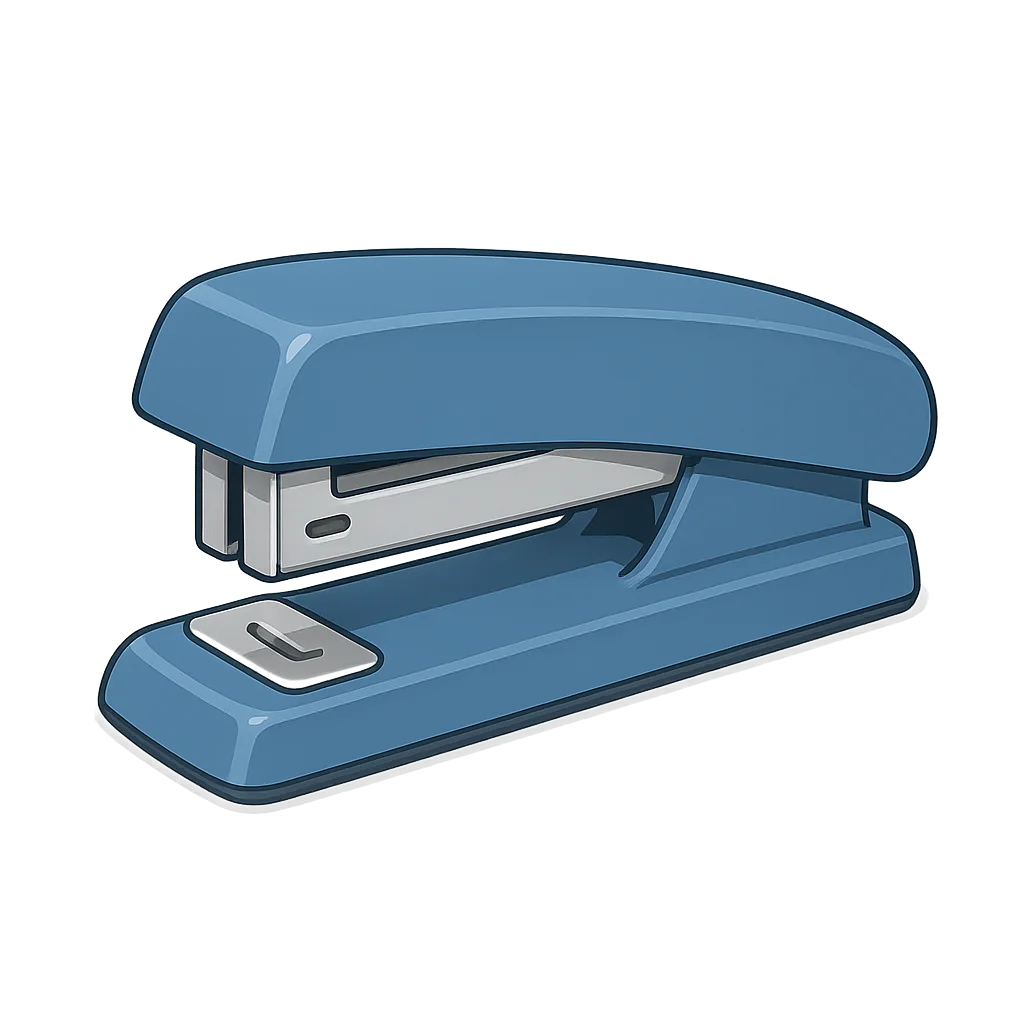
The Story of the Stapler
Hello there. You’ve probably seen me on a desk, in a classroom, or maybe even in your own home. I am the Stapler, and my job is to hold things together. Before I came along, the world was a very messy place, full of loose papers. Imagine a sudden gust of wind blowing a poet’s masterpiece all over the street, or a student’s important history report getting all mixed up before it could be turned in. People tried their best to keep their pages in order. Some would carefully sew the edges together with a needle and thread, while others used messy, melty wax and a special stamp to seal them. It was slow, clumsy, and often frustrating. The world was crying out for a simple, quick way to keep important papers from flying away, and I was just waiting to be invented.
My story begins in a very fancy place, long before I was a common sight. My earliest known ancestor was not a simple office tool, but a royal treasure created in the 1700s for a king. This special device was made just for King Louis XV of France. It wasn't mass-produced in a factory; it was carefully crafted by hand, a true work of art. And the staples. Oh, the staples were not plain silver metal. Each one was made of gold and stamped with the king’s own royal insignia, a symbol of his court. Can you imagine using golden staples to hold your book report together? In those days, I was an exclusive luxury item, a sign of power and wealth. I helped the king keep his royal decrees and important court documents in perfect order, but my journey to help everyone else was just beginning.
Many years passed, and the world changed. The need for organization grew beyond palaces and royal courts. In the 19th century, an American inventor named George McGill saw the chaos of loose papers and knew he could help. He was a clever man, always thinking of ways to solve everyday problems. In 1866, he received a patent for a small paper fastener, a little metal clip that was a step in the right direction. But his biggest idea, the one that truly brought me to life, came a bit later. On February 18th, 1879, he patented the first commercially successful machine that could do the whole job in one motion. It could push a metal staple through a stack of papers and then cleverly bend, or clinch, its little legs on the other side to hold them tight. This was my real birthday. I was no longer just a fancy toy for a king; I was a practical tool, ready to bring order to the world.
From that moment on, my design began to evolve. I needed to be stronger, easier to use, and available for everyone. In the 1930s, companies like Swingline helped make me the dependable friend you know today. My body became sleeker, designed to fit comfortably in a hand. My inner workings became a smooth, spring-loaded mechanism, ready to act with a simple press. And then there was my sound. That satisfying ka-chunk that tells you the job is done. That sound became famous. Suddenly, I was everywhere. I sat proudly on the desks of busy executives, in the tote bags of hardworking teachers, and in the drawers of kitchens in homes all across the country. I was no longer a luxury; I was a necessity, an accessible tool for all.
Looking back, I am proud of the journey I’ve made. From the golden courts of a French king to the top of your homework pile, I have always had one very important job: holding things together. I keep the pages of your creative stories in the right order. I fasten business reports that can change a company, and I secure the sheets of music a musician needs to play a beautiful song. I am proof that even a small, simple invention can make a huge difference in the world. By keeping papers from scattering, I help keep ideas and stories together, ensuring that important thoughts are never lost to a gust of wind. I am the Stapler, and I’m here to help you keep it all together.
Activities
Take a Quiz
Test what you learned with a fun quiz!
Get creative with colors!
Print a coloring book page of this topic.














 Free for Educators