

 English

A Story on the Wind
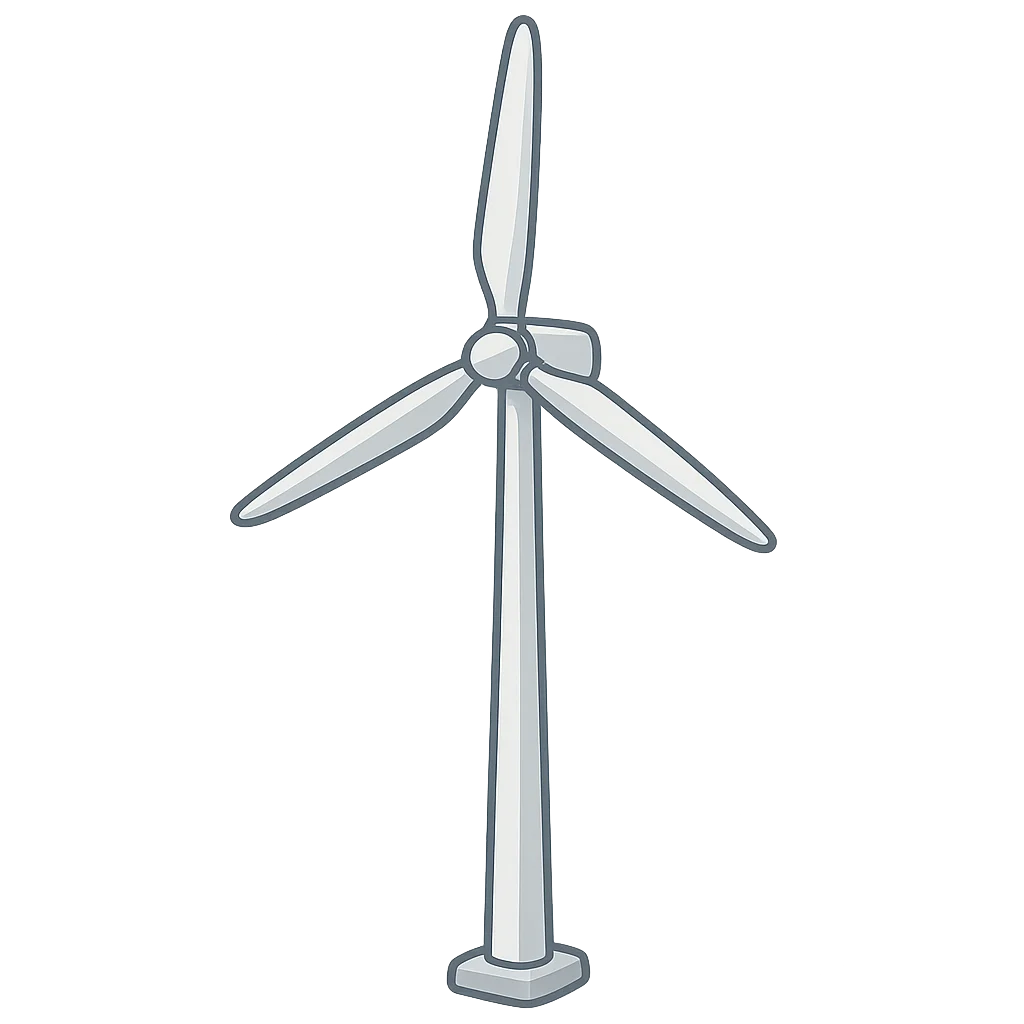
If you ever travel through the countryside, you might see me standing tall against the horizon, a graceful giant with long, slender arms turning slowly in the breeze. My name is the Wind Turbine, and while I may look modern, my family history is ancient, stretching back more than a thousand years. I love the feeling of the wind as it rushes past, a constant whisper that tells me I have a job to do. But I wasn't always a maker of electricity. My earliest ancestors were born in Persia around the 9th century. They were sturdy, hardworking windmills made of wood and cloth, and their job was to catch the wind to grind grain into flour for bread. Centuries later, my Dutch cousins became famous, their iconic shapes dotting the landscape. They were master water-pumpers, tirelessly working to drain flooded lands to create fertile fields for farming. They were the mechanical hearts of their communities, powered by nothing but the air around them, long before the first electric light ever flickered to life.
My life changed forever during the late 19th century, a time buzzing with new ideas about a magical force called electricity. An American inventor from Cleveland, Ohio, named Charles F. Brush, dreamed of using the wind to power this new magic. In the winter of 1887, he built the first version of me designed specifically to generate electricity. I was enormous, a true giant for my time. My rotor was 17 meters in diameter and I had 144 blades made of cedar wood, making me look more like a massive, spinning flower than the sleek turbine you see today. I was a complex machine, with intricate gears and belts, but I proudly lit up his entire mansion with bright, clean light. My creation was a monumental step, but my design wasn't yet perfect. A few years later, across the ocean in Denmark, a brilliant scientist named Poul la Cour began studying me closely. He conducted experiments in the 1890s and made a groundbreaking discovery: fewer blades moving at a higher speed were far more efficient at capturing the wind's energy. His research proved that three fast, aerodynamic blades were better than over a hundred slow ones. It was his genius that gave me my modern, elegant shape and unlocked my true potential to become a powerful source of energy for the world.
Despite the brilliant progress made by inventors like Brush and la Cour, my journey wasn't a straight line to success. In the early 20th century, humanity discovered that burning fossil fuels like coal and oil could produce huge amounts of electricity very cheaply. Power plants sprung up everywhere, and soon, the sky began to fill with their smoke. For many decades, I was mostly forgotten. It was a quiet, lonely time for me. I stood on windy hillsides, watching the world race by, powered by energy that was slowly harming the planet. I felt like a solution waiting for a problem that no one could see yet. That all changed on October 17th, 1973, with an event known as the oil crisis. Suddenly, the world realized that its supply of oil was not endless and could be easily disrupted. People and governments grew worried. They started searching for other ways to power their lives, for sources of energy that were clean, reliable, and would never run out. Scientists and engineers, even brilliant minds at NASA, turned their attention back to me. They saw my potential. They began experimenting with new, lightweight materials like fiberglass and carbon fiber, and they used computers to design longer, more aerodynamic blades to catch even the slightest breeze, making me more powerful than ever before.
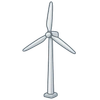
Today, I am no longer a lonely giant. I live and work in large families called wind farms, standing together in neat rows across rolling hills or far out at sea where the winds are strong and constant. My job is simple but profoundly important. The wind, a gift from nature, pushes against my blades and makes them spin. This spinning motion turns a generator housed inside my head, which is called a nacelle. Inside that generator, my spinning motion is converted into clean electricity. This electricity then travels through wires to power homes, schools, and even entire cities, all without burning any fuel or releasing harmful pollution into the air we breathe. I am a quiet partner to humanity, working day and night to help build a cleaner, healthier future. Every time my blades turn, it is a promise—a promise to protect our beautiful planet, ensuring that generations to come will have clean air to breathe and a healthy world to call home. My story is one of perseverance, a reminder that sometimes the oldest ideas, powered by the simplest forces of nature, hold the key to a brighter tomorrow.
Activities
Take a Quiz
Test what you learned with a fun quiz!
Get creative with colors!
Print a coloring book page of this topic.








 Free for Educators