

 English

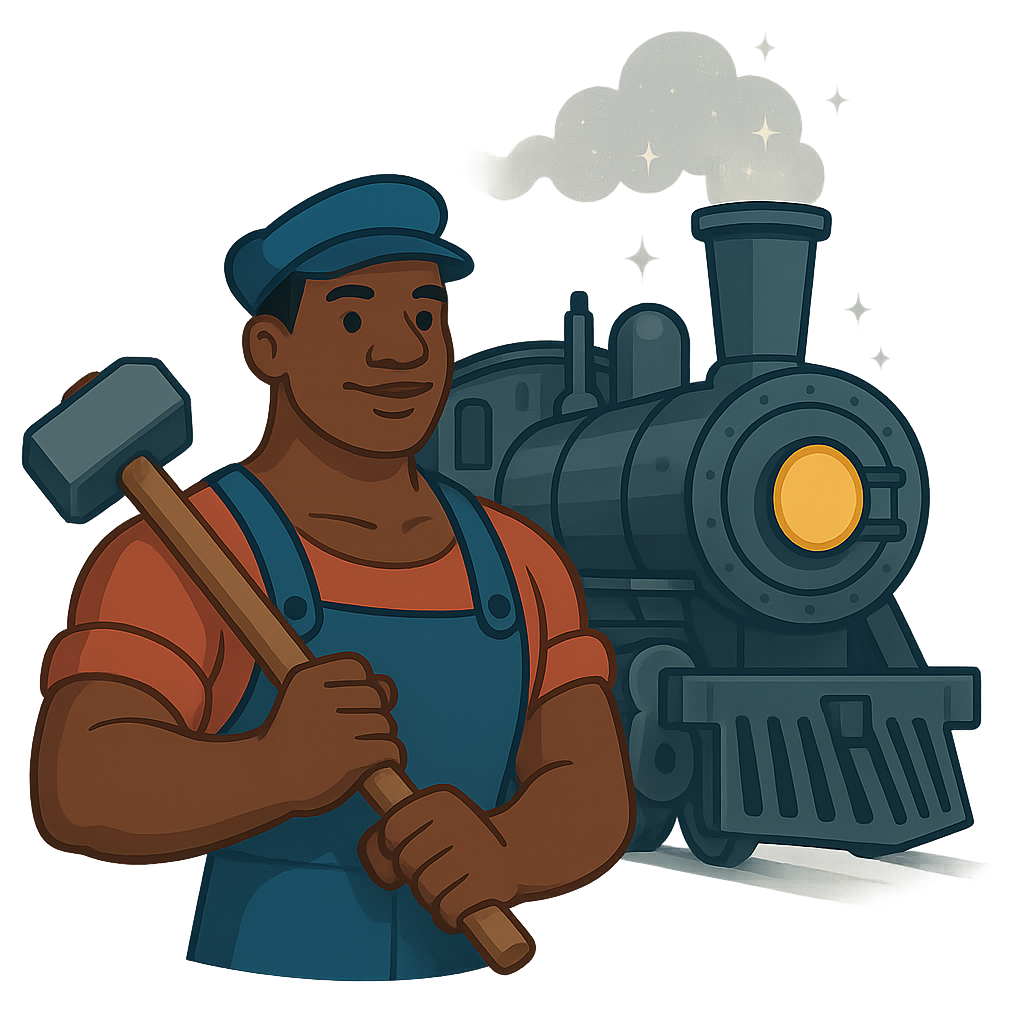
The Legend of John Henry, the Steel-Driving Man
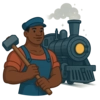
The air in these Appalachian mountains always tasted of coal dust and determination, a scent I knew better than any other. My name is John Henry, and the story they tell about me was forged right here, in the heart of the Big Bend Tunnel, with the ring of steel on rock as its music. Back in the years after the Civil War, around 1870, America was stretching its limbs, laying down thousands of miles of railroad track to connect a healing nation. My job, my calling, was to be a 'steel-driving man.' With a twenty-pound hammer in each hand and a song in my heart, I’d drive steel drills into solid rock to make way for dynamite, blasting tunnels through mountains that stood in the way of progress. We were a brotherhood of muscle and sweat, our rhythms echoing through the valleys. But a new sound was coming, a hiss and a chug that threatened to silence our hammers for good. This is the story of how I stood against that machine, the tale that became the legend of John Henry.
One day, a salesman arrived at our work camp near Talcott, West Virginia, with a strange contraption on a wagon. It was a steam-powered rock drill, a beast of iron and pipes that hissed and shuddered like an angry dragon. The salesman boasted it could drill faster than a dozen men, that it never tired, and that it was the future of railroad work. I saw the look on my friends' faces—the fear of losing their jobs, their way of life. To them, this machine wasn't just progress; it was an end to the dignity of their labor. The railroad captain, intrigued by the promise of saving money and time, was ready to buy it. I couldn't let that happen without a fight. I stepped forward, my hammers feeling heavy in my hands. I told the captain I could beat his machine. It wasn't about pride, not really. It was about proving that the human heart and spirit, the will to provide for one's family, was more powerful than any collection of gears and steam. A wager was made. We would race, side-by-side, for a stretch of fifteen feet into the mountain's rock face. The winner would prove which was mightier: man or machine.
The day of the contest was hot and still, the air thick with anticipation. On one side, the steam drill was fired up, its engine chugging and spewing smoke. On the other, I stood with my two mighty hammers, my shaker, Polly Ann, ready to clear the dust from the holes I drilled. When the captain gave the signal, the world exploded in a contest of sounds. The machine roared to life with a deafening, monotonous rhythm—CHUNK-CHUNK-CHUNK. But my hammers sang a different tune. They flew in a blur, striking the steel drill with a ringing, rhythmic CLANG-CLANG that echoed like a powerful song through the mountain. Sweat poured down my face, and my muscles burned, but I focused on the rhythm, the song of my labor that I had perfected over thousands of hours. The crowd of workers cheered with every strike, their voices fueling my strength. The machine never tired, but it also had no heart. It only knew how to break rock. I knew how to build a nation. For over an hour we battled, the dust so thick you could barely see. The machine began to sputter and grind, its gears overheating from the strain. But I kept on, my rhythm steady, my spirit unbroken. Then, with a final, mighty swing, my drill broke through the fifteen-foot mark. A roar went up from the men as I stumbled back, victorious. The machine had broken down, defeated.
I had won. I had proven that a man, filled with purpose, was mightier than the machine. But the effort had asked for everything I had. As the cheering continued, I laid down my hammers, and my heart, which had beaten like a drum throughout the contest, simply gave out. I collapsed right there on the ground. My body was broken, but my spirit wasn't. The story of that day didn't die with me. The men I worked with, the ones whose jobs I fought for, carried it with them. They turned it into a song, a ballad sung by railroad workers, miners, and laborers all across the country. They sang it to keep their spirits up during long days of back-breaking work. The song traveled from the mountains of West Virginia to the cotton fields of the South and the factories of the North. It became a story passed down from parents to children, a true American folktale about the power of determination and the dignity of hard work. My story became a symbol of the everyday hero, the common person standing up against seemingly unbeatable forces.
Today, you won't hear my hammers ringing in the mountains, but you can still hear the echo of my story. It lives on in books, movies, and the music of artists who sing about strength and perseverance. My legend isn't just about a man fighting a machine. It’s a story that asks us to think about progress and what we value as human beings. It reminds us that technology should help people, not replace their spirit and worth. Every time someone chooses to put their heart into their work, to face a great challenge with courage, or to stand up for their community, they are swinging a hammer just like I did. The legend of John Henry is a reminder that inside every person, there is a strength that no machine can ever measure, a will that can, and sometimes does, move mountains.
Activities
Take a Quiz
Test what you learned with a fun quiz!
Get creative with colors!
Print a coloring book page of this topic.











 Free for Educators