

 English

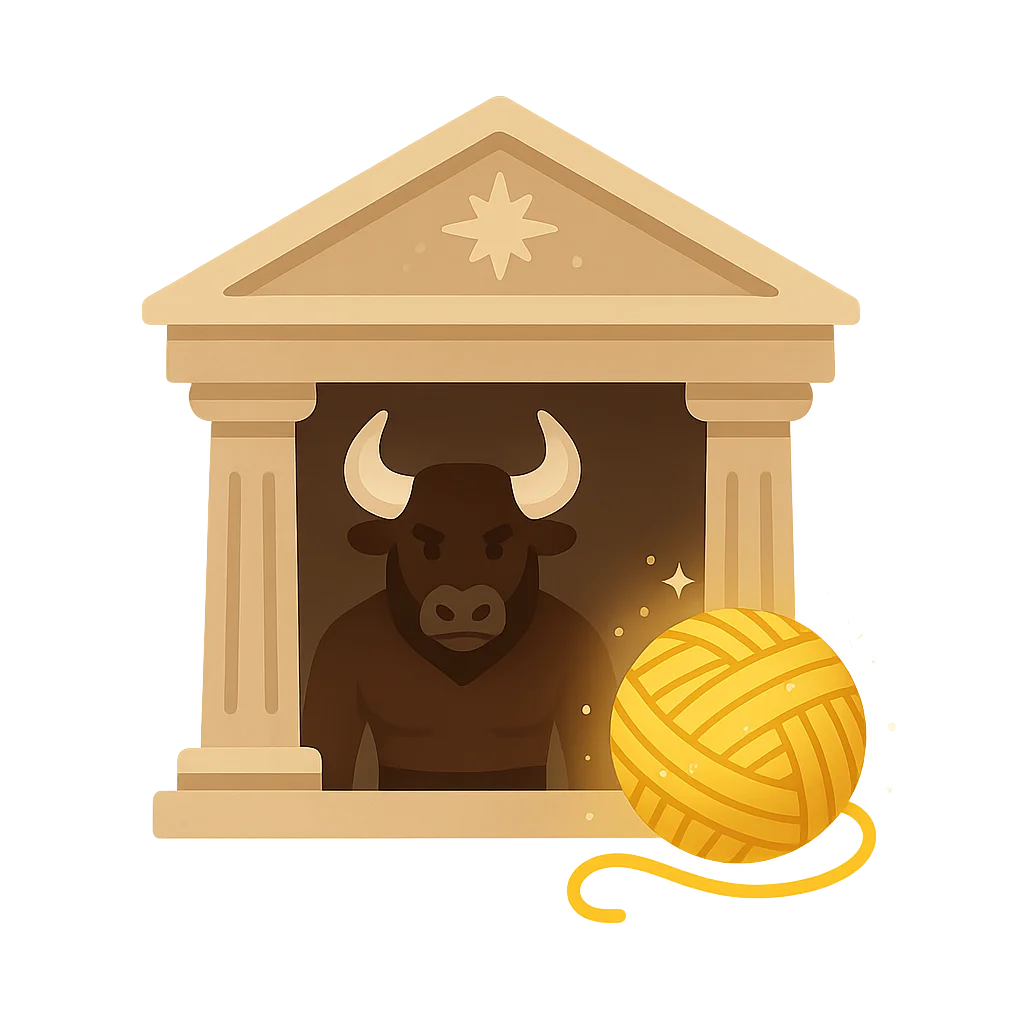
The Shadow of the Labyrinth
My world was one of sun-bleached stone and the endless blue of the sea, but a shadow always lingered beneath the brightness. My name is Ariadne, and I am the princess of Crete, daughter of the powerful King Minos. Our grand palace at Knossos was a marvel of colorful frescoes and winding corridors, but deep beneath it lay a secret of my father's making: a twisting, impossible maze called the Labyrinth. And within that maze lived my half-brother, a creature of terrible sadness and fury, the Minotaur. Every nine years, a ship with black sails would arrive from Athens, carrying a tribute of seven young men and seven young women, a price they paid for a long-lost war. They were sent into the Labyrinth, never to be seen again. My heart ached for them, and I felt trapped, just as they were, by my father's cruel decree. Then, one year, everything changed. A new hero arrived with the Athenians, a prince named Theseus who looked at the palace not with fear, but with a fire of determination in his eyes. He declared he would enter the Labyrinth and slay the Minotaur, and when I saw his courage, a spark of hope ignited within me. I knew then that our fates were intertwined, and this was the story of Theseus and the Minotaur.
I couldn't stand by and watch another hero be lost to the darkness. That night, under the silver light of a Cretan moon, I sought out Theseus. I told him that killing the Minotaur was only half the battle; no one, not even its creator Daedalus, could escape the Labyrinth's confusing paths. My father held the only secret, but I had a plan of my own. I pressed two gifts into his hands: a sharp sword, hidden from the palace guards, and a simple ball of golden thread. 'Unwind this as you go,' I whispered, 'and it will lead you back to the light. Promise me you will take me with you when you escape.' He looked at me, his eyes full of gratitude and resolve, and he promised. I waited by the stone entrance, my heart pounding with every passing moment. The silence from the Labyrinth was terrifying. I imagined him navigating the endless, shifting corridors, the path illuminated only by the faint glow of his torch. I thought of the lonely monster within, a creature born of a curse, and felt a pang of sorrow for them both. After what felt like an eternity, I felt a tug on the thread. I began to pull, my hands trembling. Soon, a figure emerged from the darkness, weary but victorious. It was Theseus. He had done the impossible. Without a moment to spare, we gathered the other Athenians and fled to his ship, sailing away from Crete as the sun began to rise. I looked back at my home, a place of both splendor and sorrow, and felt the thrill of a new beginning. I had betrayed my father and my kingdom, all for the hope of a future built on courage, not cruelty.
Our journey across the sea was filled with celebration, but fate is a path with as many twists as the Labyrinth itself. We stopped on the island of Naxos to rest. When I awoke, the ship was gone. Theseus had sailed away, leaving me alone on the shore. Why he did this, the stories offer different reasons—some say a god commanded it, others say he was careless, or even cruel. My heart broke, and I wept for my lost future. But my story did not end in sorrow. The god of celebration and wine, Dionysus, found me there and was captivated by my spirit. He made me his wife, and I found a new life of joy and honor among the gods. Meanwhile, Theseus sailed for Athens. In his haste or his grief over leaving me, he forgot the most important promise he had made to his father, King Aegeus. He had sworn that if he survived, he would replace the ship's black sail of mourning with a white sail of victory. His father stood on the cliffs day after day, scanning the horizon. When he saw the black sail approaching, he was overcome with grief and, believing his only son was dead, he threw himself into the sea below. From that day on, that body of water has been known as the Aegean Sea. Theseus returned a hero, but his victory was forever marked by a great personal tragedy, a reminder that even the greatest triumphs can have unforeseen consequences.
The story of Theseus and the Minotaur was told for centuries around hearths and in the grand amphitheaters of ancient Greece. It was a thrilling adventure, but also a lesson. It taught that true heroism requires not just strength, but also intelligence and help from others. My thread represents the cleverness needed to solve a difficult problem, while Theseus's forgotten sail warns us that our actions, or lack thereof, can have powerful ripple effects. Today, this myth continues to fascinate us. The idea of the Labyrinth has inspired countless books, movies, and even video games. It has become a powerful symbol for any complex challenge we face in life—a journey into the unknown where we must find our own 'thread' to guide us. Artists paint the dramatic scenes, and writers reimagine our story, exploring themes of love, betrayal, and what it truly means to face the 'monsters' within ourselves. This ancient tale is more than just a story; it's a map of human courage and complexity. It reminds us that with a little bravery and a clever plan, we can find our way through any darkness, and that the threads of these old myths still connect us, sparking our imagination and helping us navigate the labyrinths of our own lives.
Activities
Take a Quiz
Test what you learned with a fun quiz!
Get creative with colors!
Print a coloring book page of this topic.













 Free for Educators