

 English

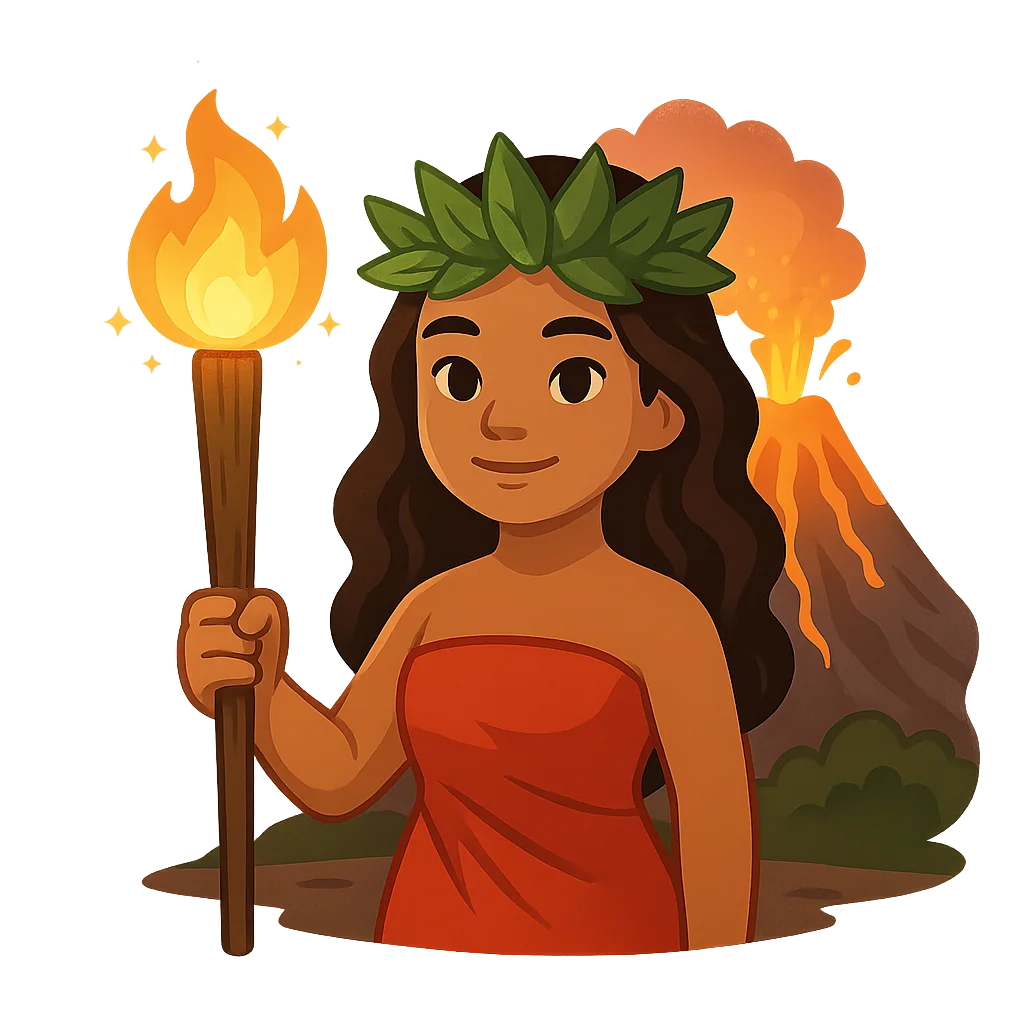
Pele Finds a Home
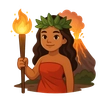
My voice is the rumble deep within the earth, and my breath is the warm steam that rises from the cracks in the land. I am Pele, and my home is here, in the glowing heart of Kīlauea volcano on the beautiful island of Hawaiʻi. From my crater, I watch the clouds drift over the green mountains and see the endless blue ocean that stretches to the horizon. But this peaceful home was not easily won; it was found at the end of a long and difficult journey, a chase between fire and water. This is the story of how I found my place in the world, a tale known as The Migration of Pele.
My journey began in a distant land, maybe a place you know as Tahiti. I was a goddess of fire, and I loved creating new things with my passionate flames. But my older sister, Nāmakaokahaʻi, was a mighty goddess of the sea, and she grew jealous of my power. Our arguments were like thunderstorms clashing with volcanic eruptions. Her watery anger threatened to extinguish my very spirit. I knew I had to leave. I gathered my loyal brothers and sisters, including my youngest sister Hiʻiaka, who was still just a precious egg I carried with the utmost care. We climbed into my great canoe, Honuaiākea, and set off across the ocean, searching for a safe harbor for my fire. After a long voyage, we saw the green shores of the Hawaiian Islands. On the island of Kauaʻi, I took my sacred digging stick, Pāoa, and struck the earth. I dug a great fire pit, hoping to create my new home, a place where my flames could burn bright. But my sister had followed me. Can you imagine a wave so big it could put out a volcano's fire? Nāmaka sent colossal waves crashing onto the shore, flooding my pit and quenching my sacred flames. My heart ached, but my fiery spirit refused to be defeated.
I fled to the next island, Oʻahu, and then to Molokaʻi, and then Maui. Each time, I would find a perfect spot and begin to dig. I would feel the earth tremble with my power as fire sprang from the ground, a spectacular sight of orange and red against the blue sky. But my victory was always short-lived. Each time, Nāmaka would find me. She would call upon her ocean, and its powerful waves would surge inland, drowning my flames in a hiss of steam and sorrow. Our great battle of fire against water moved across the entire archipelago. I was getting tired, but I could not give up. Finally, I arrived at the largest island of all, the island of Hawaiʻi. I looked up and saw the immense mountains of Mauna Kea and Mauna Loa, their peaks so high they touched the clouds. Here, I sensed a deep, powerful source of fire, stronger than any I had felt before. I traveled to the summit of a younger, more active volcano called Kīlauea. On its peak, I dug my greatest and final fire pit, Halemaʻumaʻu. It was so high and so far from the sea that Nāmaka’s waves could not reach it. My fire was finally safe. From this crater, my lava flowed not in anger, but with purpose, creating new land and making the island bigger and more fertile.
I had found my permanent home. My long journey taught me that even when you face enormous challenges, you can find a place where you belong if you are persistent. I became a symbol of the incredible power of nature, a force that can seem destructive but is also wonderfully creative. The people of Hawaiʻi have always respected me, calling me 'Ka wahine ʻai honua,' the woman who shapes the sacred land. They see my work in every eruption that creates a new black-sand beach and in the rich, dark soil that grows from the cooled lava, allowing new life to flourish. My story is now shared not just in books, but through the sacred chants and beautiful hula dances that have been passed down for generations. When visitors see the magnificent glow of lava from Kīlauea at night, they are seeing my spirit, a living connection to the history and culture of these islands. My tale is a reminder that the earth is alive and always changing, creating new beauty from fiery beginnings and inspiring courage in all of us.
Activities
Take a Quiz
Test what you learned with a fun quiz!
Get creative with colors!
Print a coloring book page of this topic.











 Free for Educators