
 English

Volcanoes
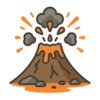
Volcanoes are vents in the Earth's crust where molten rock, ash, and gas erupt.
Reads at Grades 3–5 Listens at Grades 1–5
 Screen-free speaker. Built for your kids.
No card, no commitment. One email when there is real news, and one click to stop.
Print & create
Answer keys·No prep·Free with an account
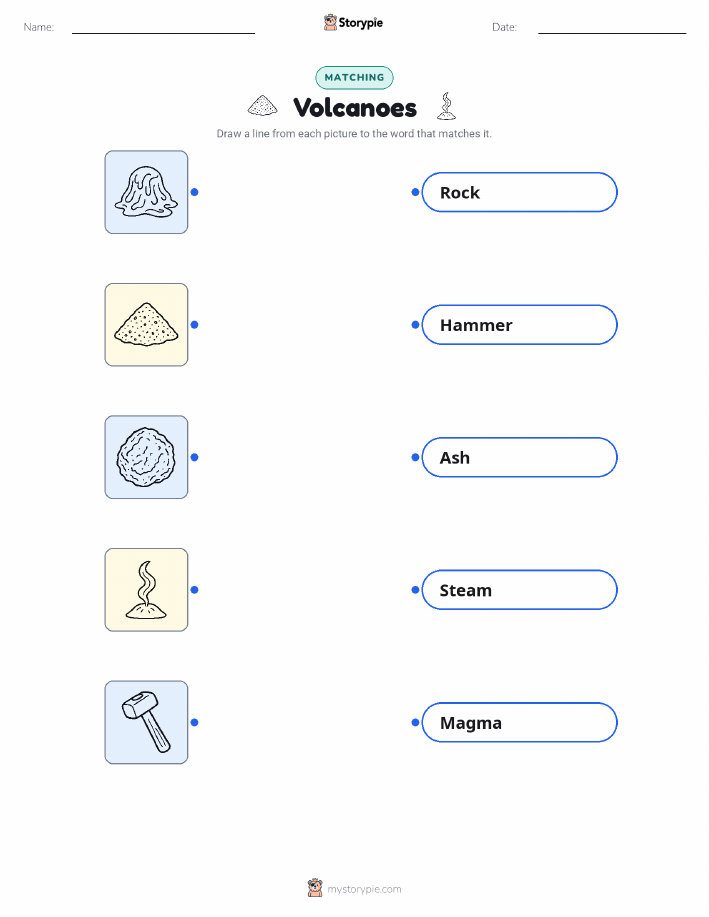
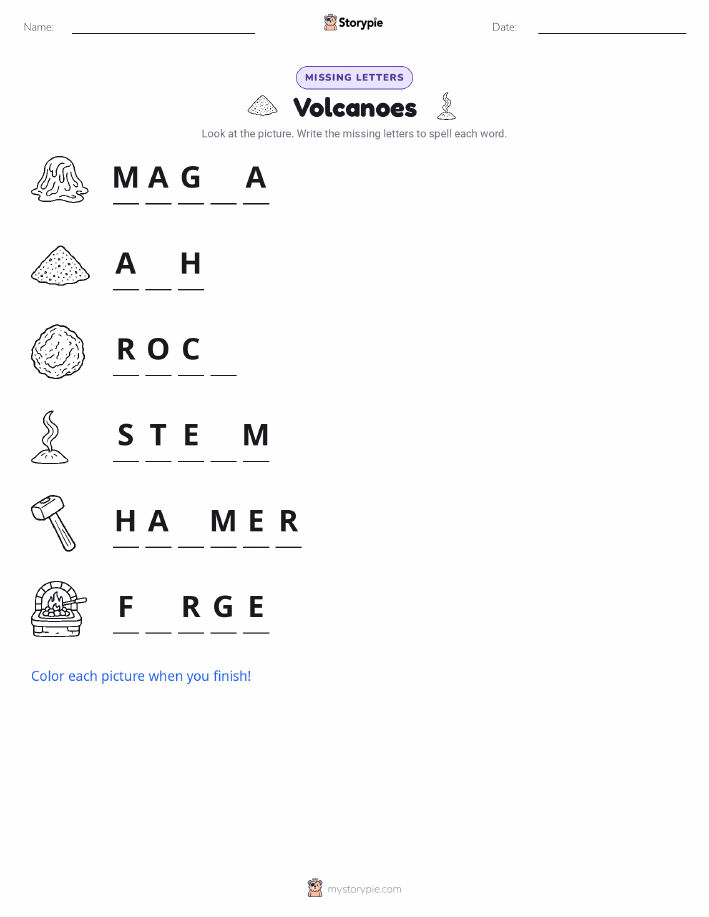
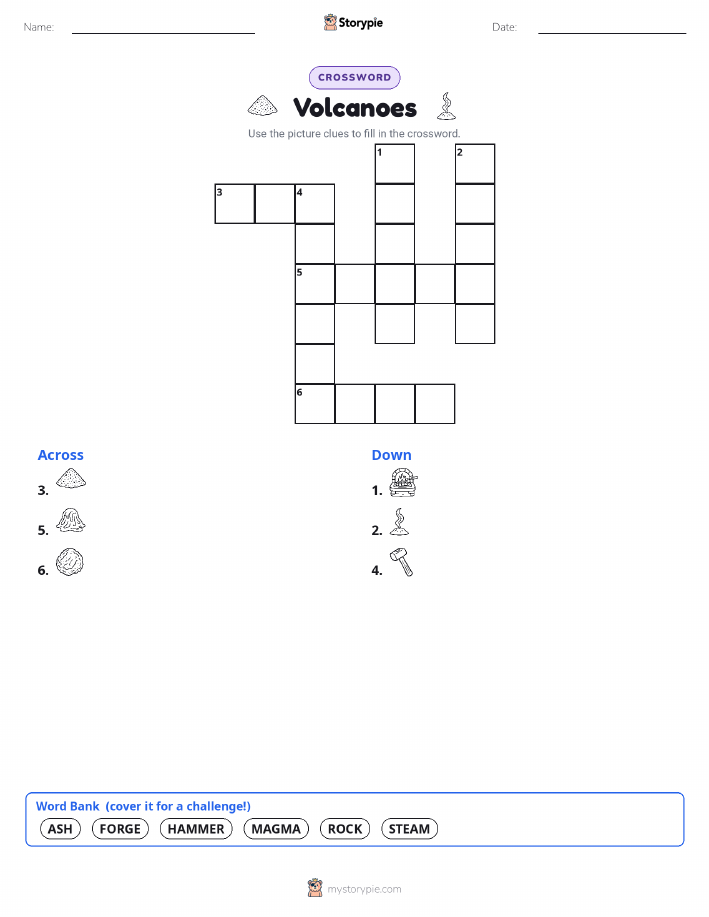
28 worksheets · answer keys · full story · quiz · Ages 8-10 · CEFR B1
Plus adds 102,000+ more stories in 27 languages, audio for every one, and printables for all of them.
Just want Volcanoes?
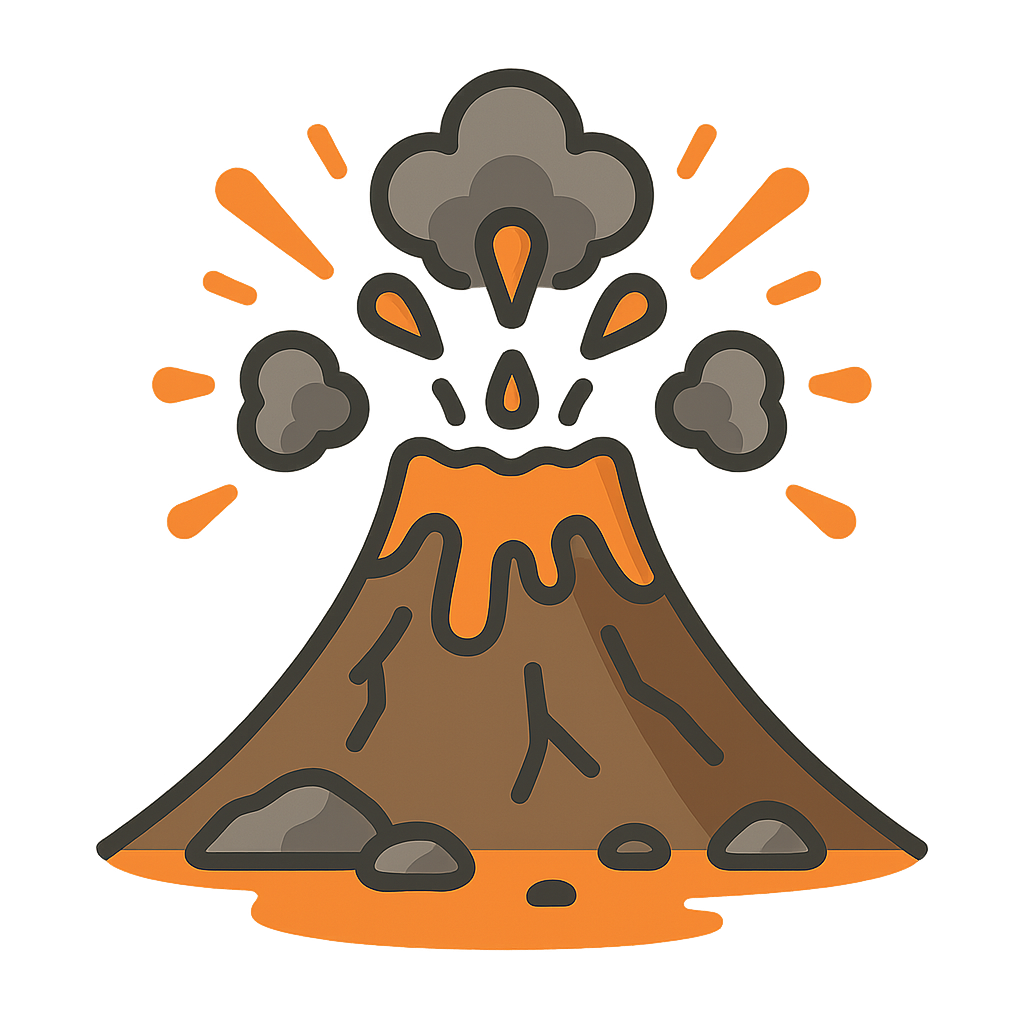
Have you ever felt a deep, rumbly grumble in your tummy. Imagine that feeling, but a million times bigger and slower, deep inside the Earth. For years, even centuries, I can feel a pressure building, a slow and mighty ache in my rocky belly. It’s a secret I keep buried far beneath my stony slopes. Sometimes, the ground around me shivers with a gentle little shake, a hiccup from the power growing within. Other times, I let out quiet sighs of steam from my peak, like little white clouds telling a secret to the sky. People who live nearby might see these signs and wonder what’s happening inside me. They feel the warmth under their feet and see the puffs of smoke, and they know something powerful is stirring. I am a mountain with a fiery heart. Hello, I am a Volcano.
Long before people had fancy tools to study me, they told amazing stories to explain my fiery temper. The ancient Romans, for instance, were sure that a mighty god lived inside me. They called him Vulcan, and he was the blacksmith for all the other gods. They believed his workshop was deep inside a mountain on an island called Vulcano, and that’s how I got my name. They thought the sparks and smoke from my peak were from his forge as he hammered out thunderbolts and armor. One of my most famous siblings, Mount Vesuvius, woke up with a giant roar on August 24th, 79 CE. It sent a massive cloud of ash and rock into the sky, which then fell and covered the entire Roman city of Pompeii. It happened so fast that it preserved the city perfectly, like a snapshot in time. A young boy named Pliny the Younger watched the whole thing from across a bay. He wasn't scared; he was curious. He wrote down everything he saw—the dark cloud shaped like a pine tree, the falling ash, and the shaking ground. His letters became one of the very first scientific descriptions of an eruption, helping people begin to understand my true nature.
A Mountain with a Fiery Heart
Have you ever felt a deep, rumbly grumble in your tummy. Imagine that feeling, but a million times bigger and slower, deep inside the Earth. For years, even centuries, I can feel a pressure building, a slow and mighty ache in my rocky belly. It’s a secret I keep buried far beneath my stony slopes. Sometimes, the ground around me shivers with a gentle little shake, a hiccup from the power growing within. Other times, I let out quiet sighs of steam from my peak, like little white clouds telling a secret to the sky. People who live nearby might see these signs and wonder what’s happening inside me. They feel the warmth under their feet and see the puffs of smoke, and they know something powerful is stirring. I am a mountain with a fiery heart. Hello, I am a Volcano.
Long before people had fancy tools to study me, they told amazing stories to explain my fiery temper. The ancient Romans, for instance, were sure that a mighty god lived inside me. They called him Vulcan, and he was the blacksmith for all the other gods. They believed his workshop was deep inside a mountain on an island called Vulcano, and that’s how I got my name. They thought the sparks and smoke from my peak were from his forge as he hammered out thunderbolts and armor. One of my most famous siblings, Mount Vesuvius, woke up with a giant roar on August 24th, 79 CE. It sent a massive cloud of ash and rock into the sky, which then fell and covered the entire Roman city of Pompeii. It happened so fast that it preserved the city perfectly, like a snapshot in time. A young boy named Pliny the Younger watched the whole thing from across a bay. He wasn't scared; he was curious. He wrote down everything he saw—the dark cloud shaped like a pine tree, the falling ash, and the shaking ground. His letters became one of the very first scientific descriptions of an eruption, helping people begin to understand my true nature.
As time went on, people realized I wasn’t an angry god’s workshop, but a fascinating part of how our planet works. The Earth’s surface is like a giant puzzle made of huge pieces called tectonic plates. These plates are always moving, crashing into each other or pulling apart. I usually appear where these plates meet. There’s a huge circle around the Pacific Ocean called the ‘Ring of Fire,’ and that’s where you can find most of my family members, all rumbling and grumbling together. What’s all that rumbling about. It’s melted rock, super hot and gooey. When it’s still deep inside me, it's called magma. But once I erupt and it spills out, flowing down my sides, it’s called lava. Today, brave scientists called volcanologists study me. They use special tools to listen to my deep rumbles and measure my temperature. By watching me closely, they can sometimes predict when I’m about to wake up, just like they did with Mount St. Helens in the United States in 1980, helping to keep people safe.
While my eruptions can seem messy and scary, I am also a creator. I am a world-builder. When my hot lava flows into the ocean, it cools and hardens into new rock. Over thousands of years, these layers of rock can build up from the bottom of the sea until they poke out of the water, forming brand new islands. That’s how the beautiful Hawaiian Islands were born, built one lava flow at a time. And the ash that I puff into the sky. It might look like just a cloud of dust, but when it settles on the ground, it makes the soil incredibly rich and full of nutrients. This fertile soil is perfect for growing delicious fruits and vegetables. So you see, I am more than just a destructive force. I am a powerful reminder that our planet is alive, breathing, and always changing. I build new lands and enrich the old ones, showing the incredible, creative power of the Earth.
Wow facts
About
Volcanoes are vents in the Earth's crust where molten rock, ash, and gas erupt. They are powerful geological features that shape landscapes by creating new land and enriching soil.
Take a Quiz
Question 1 of 5
In the story, the volcano says it preserved Pompeii 'like a snapshot in time.' What does the phrase 'snapshot in time' mean here?
Explore next




Want to do even more?
Go beyond exploring. Unlock tools that turn every story into real learning.

Storypie Plus for families
Full stories, quizzes, and printables. Nights and car rides, sorted.
- Unlimited audio stories
- Create Mode: your child stars in the story
- Offline downloads
- Printable worksheets & coloring pages

Why Storypie for Schools
Students engaged. Prep in seconds. Evenings back to you.
- Worksheets & Quizzes
- Classroom Management
- Formative Assessment
- Custom Curriculum & Lesson Plans
- 27 Languages

Why Storypie for Homeschool
Curriculum done. They'll ask for more. Hours back in your day.
- Worksheet Generator
- First-Person Audio Stories
- Built-in Comprehension Quizzes
- Custom Curriculum & Lesson Plans
- Print & Go Activities