

 English

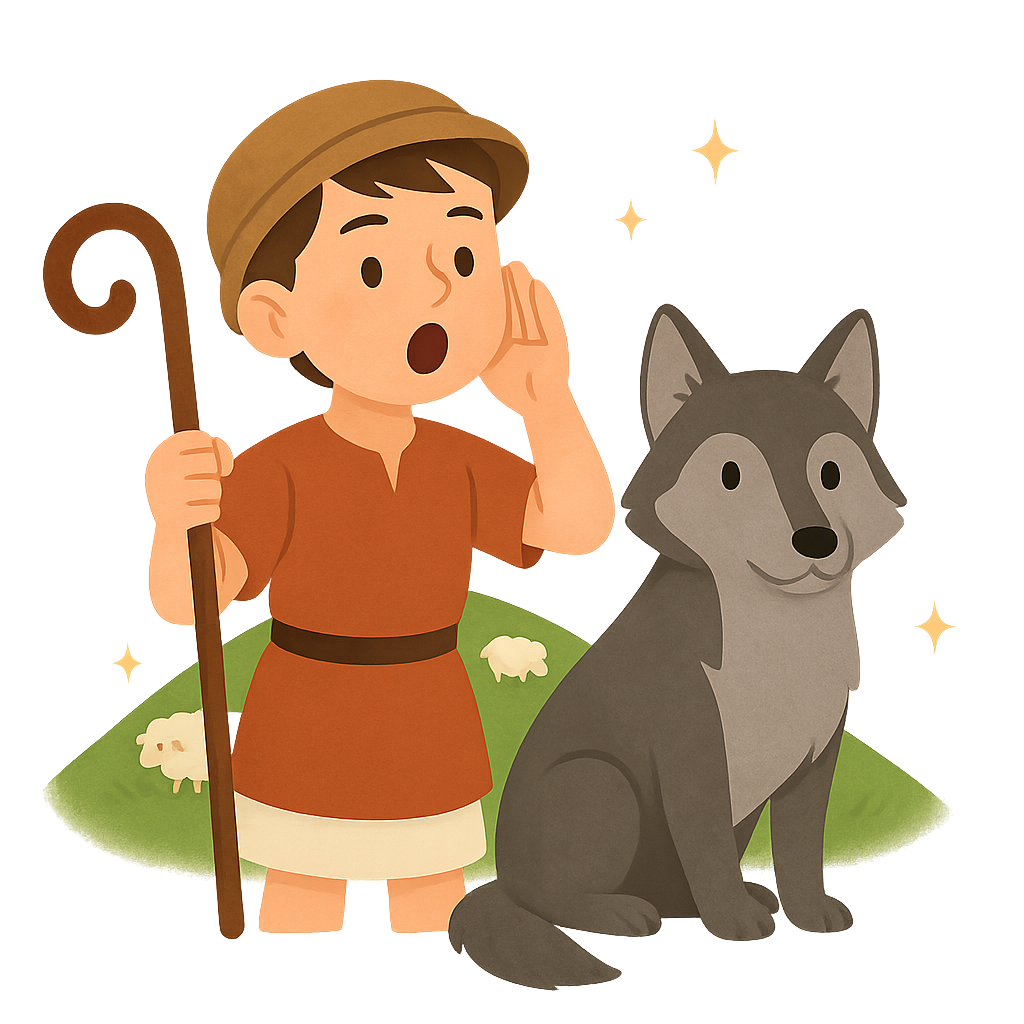
The Boy Who Cried Wolf
My name is Lycomedes, and the sun on these Greek hills has weathered my face for many seasons, wrinkling the corners of my eyes from years of squinting into the bright sky. Long ago, life here was simple; the bleating of our sheep was the loudest sound for miles, and the biggest worry was keeping them safe from harm. In our village lived a young shepherd boy named Damon who found our peaceful days dreadfully boring and longed for excitement. I remember watching him from my own pasture, seeing the mischief glinting in his eyes as he stared down at the village below, probably imagining heroic battles and grand adventures. He didn't know it then, but his craving for a little fun would become a story told for thousands of years, a cautionary tale people now call The Boy Who Cried Wolf. This is the story of how we all learned a hard lesson about the power of our words and the precious, fragile nature of trust. It was a lesson etched not in stone, but in our hearts, a reminder that echoes through the hills even today. Damon's desire for a moment of thrilling attention would change our quiet village forever, teaching us that some games have consequences far greater than we can ever imagine. He wanted to be the center of a dramatic story, and he soon would be, just not in the way he had hoped.
The first time it happened, the afternoon was warm and lazy, with bees humming in the wildflowers and the sheep grazing peacefully. Suddenly, a panicked shout echoed from the hills, sharp and sudden. 'Wolf. Wolf.' It was Damon. My heart leaped into my throat. We all dropped our tools—spades fell from gardens, looms were abandoned mid-thread—and grabbed pitchforks and sturdy staffs. We scrambled up the rocky path, our feet pounding against the dry earth, kicking up little clouds of dust. Can you imagine the scene? Farmers, weavers, and blacksmiths all running together, our faces grim with determination, ready to face a dangerous beast. We expected a fight, a terrible struggle to save the flock. Instead, we found Damon, leaning on his crook and laughing until tears streamed down his cheeks. He pointed at our serious faces and our makeshift weapons, howling with glee. There was no wolf, only our frightened faces and his misplaced amusement. We were angry, but we were also relieved. 'Damon,' I said sternly, my voice rough, 'that is not a joke to be made. Our flock is our life.' We warned him not to play such a cruel trick again. A few weeks later, on a cool Tuesday, August 2nd, the cry came again, just as piercing and desperate. 'Wolf. Please, help. The wolf is here.' We hesitated this time. I looked at my neighbor, his brow furrowed, and he looked at me, a flicker of doubt in our eyes. Was it another game? Still, the fear of losing the village's flock was too great. We ran up the hill again, our hearts thumping with a mix of dread and annoyance. And once again, we found Damon laughing at our expense. This time, our anger was cold and hard. 'You have cried wolf one too many times,' another villager scolded. 'We will not be fooled again.' He had used up all our trust, like water spilled on the thirsty ground, gone forever.
Then came the day we will never forget, a day that began on September 14th of that year. The sun was beginning to set, painting the sky in shades of orange and purple, when we heard the cry. 'WOLF. WOLF. A REAL WOLF. HELP.' The terror in Damon's voice was different this time, sharp and raw with genuine fear. But we didn't move. We looked at one another, shook our heads, and went back to our chores, convinced it was his most convincing performance yet. 'The boy is just seeking attention again,' someone muttered, and a wave of agreement passed through the village square. We ignored the desperate pleas that slowly faded into silence, swallowed by the evening air. It was only when Damon didn't return with his flock at the usual hour that a heavy sense of dread, cold and unsettling, settled over the village. We climbed the hill in the quiet twilight, our lanterns casting long, dancing shadows. What we saw filled us with a deep and lasting sorrow. The great grey wolf had come, and Damon's cries for help had been real. He had told the truth, but his past lies had silenced our ears. We learned that day that a liar will not be believed, even when he speaks the truth. This story, born from our village's sadness, has been passed down from parents to children for centuries. It reminds us that trust is a treasure that, once broken, is incredibly hard to mend. It's a tale that lives on, not to scare, but to teach us to be honest, so that when we truly need help, our voices will be heard. It connects us through time, a simple shepherd's story that helps us build a world where words have meaning and people can count on one another.
Activities
Take a Quiz
Test what you learned with a fun quiz!
Get creative with colors!
Print a coloring book page of this topic.















 Free for Educators