

 English

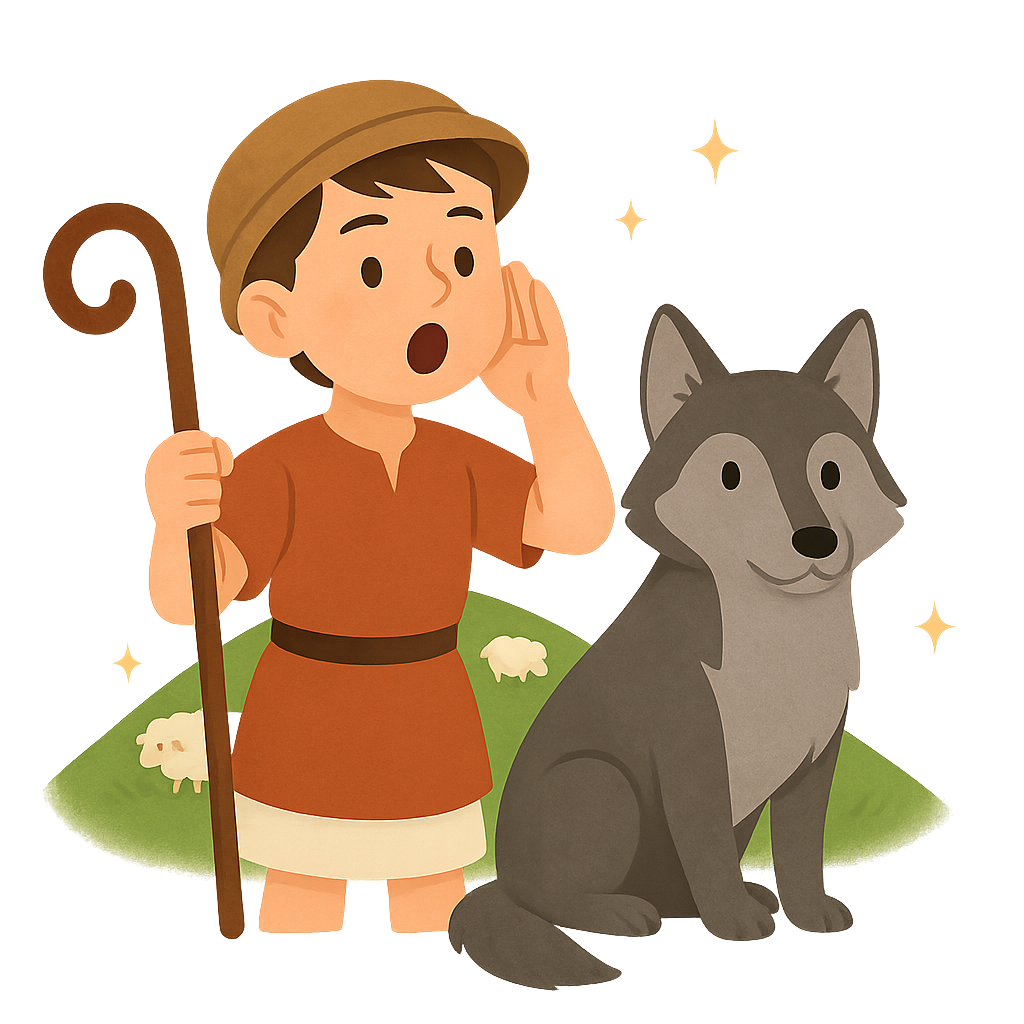
The Boy Who Cried Wolf
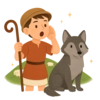
My name is Lycomedes, and I’ve lived my whole life in this small village nestled in the green hills of ancient Greece. The days here are long and peaceful, measured by the sun's journey across the sky and the gentle bleating of sheep. It was my job, like many others, to work the fields, and from there I could always see the young shepherd boy, Lycaon, watching his flock on the hillside. He was a good boy, but restless, and the silence of the hills often seemed too heavy for his energetic spirit. His imagination was a wild, untamed thing, and with no one but sheep to talk to, it often ran away with him. I often wondered what he thought about all day, with only the buzzing of bees and the rustle of olive leaves for company. He seemed to yearn for something more, a bit of excitement to break the monotony of his solitary watch. The other villagers and I would sometimes wave to him from the valley below, and he would wave back with a vigor that spoke of his deep-seated boredom. This is the story of how his loneliness and boredom taught us all a hard lesson, a tale you might know as The Boy Who Cried Wolf.
One afternoon, a frantic shout echoed down from the ridge: 'Wolf. Wolf.' Panic seized us like a sudden storm. We dropped our tools, our hearts leaping into our throats. 'The flock. The boy.' I yelled to my neighbor, grabbing a sturdy farming tool. We scrambled up the steep incline, our legs burning and our breaths coming in ragged gasps. The thought of a wolf preying on our livelihood, and on a young boy, spurred us on. When we reached the top, panting and ready for a fight, we found Lycaon doubled over, not in fear, but in uncontrollable laughter. The sheep were grazing peacefully, completely unbothered. There was no wolf. 'You should have seen your faces.' he giggled, wiping tears of mirth from his eyes. We were furious, our relief quickly curdling into annoyance. 'That is not a game, Lycaon.' an elder warned, his voice stern. 'Our trust is not your toy.' We grumbled our way back down the hill, the boy's laughter echoing behind us. A week later, it happened again. The same desperate cry, the same frantic rush up the hill. And the same result: Lycaon, laughing at our gullibility. This time, our patience was gone. 'We will not come again if you are truly in trouble.' I told him, my voice low and serious. 'A lie is a heavy stone, boy. It may be easy to throw, but you cannot control where it lands.' He just shrugged, the gravity of our words failing to penetrate his amusement.
Then came the day it truly happened. The sun was beginning to set, painting the sky in shades of orange and purple and casting long shadows across the valley. We were gathering our tools when we heard the cry again. 'Wolf. Wolf.' But this time, it was different. There was a raw terror in Lycaon’s voice, a genuine, blood-curdling plea for help that was unlike his previous pranks. We stopped and looked at each other, our faces hard and set. We remembered his tricks, the laughter, and our wasted effort. Was this just a more convincing performance? We shook our heads and returned to our work, our hearts hardened by his deceit. We ignored his increasingly desperate screams until they faded into an awful, chilling silence. Later that evening, a weeping, scratched, and terrified Lycaon stumbled into the village, his clothes torn. Through his sobs, he told a tale of a real wolf, large and gray, that had scattered his flock. We found the grim evidence the next morning. There was no joy in being right; there was only a shared sadness for the boy and the flock, and the heavy weight of a lesson learned at a terrible price. The story of what happened that day spread from our village across the land, a fable told by a wise storyteller named Aesop. It serves as a timeless reminder that honesty is a precious treasure; once lost, it is incredibly difficult to get back. Even today, thousands of years later, this story lives on, not just as a warning, but as a way to understand the importance of trust in holding a community together. It reminds us that our words have power, and the truth they carry is the foundation of everything.
Activities
Take a Quiz
Test what you learned with a fun quiz!
Get creative with colors!
Print a coloring book page of this topic.










 Free for Educators