

 English

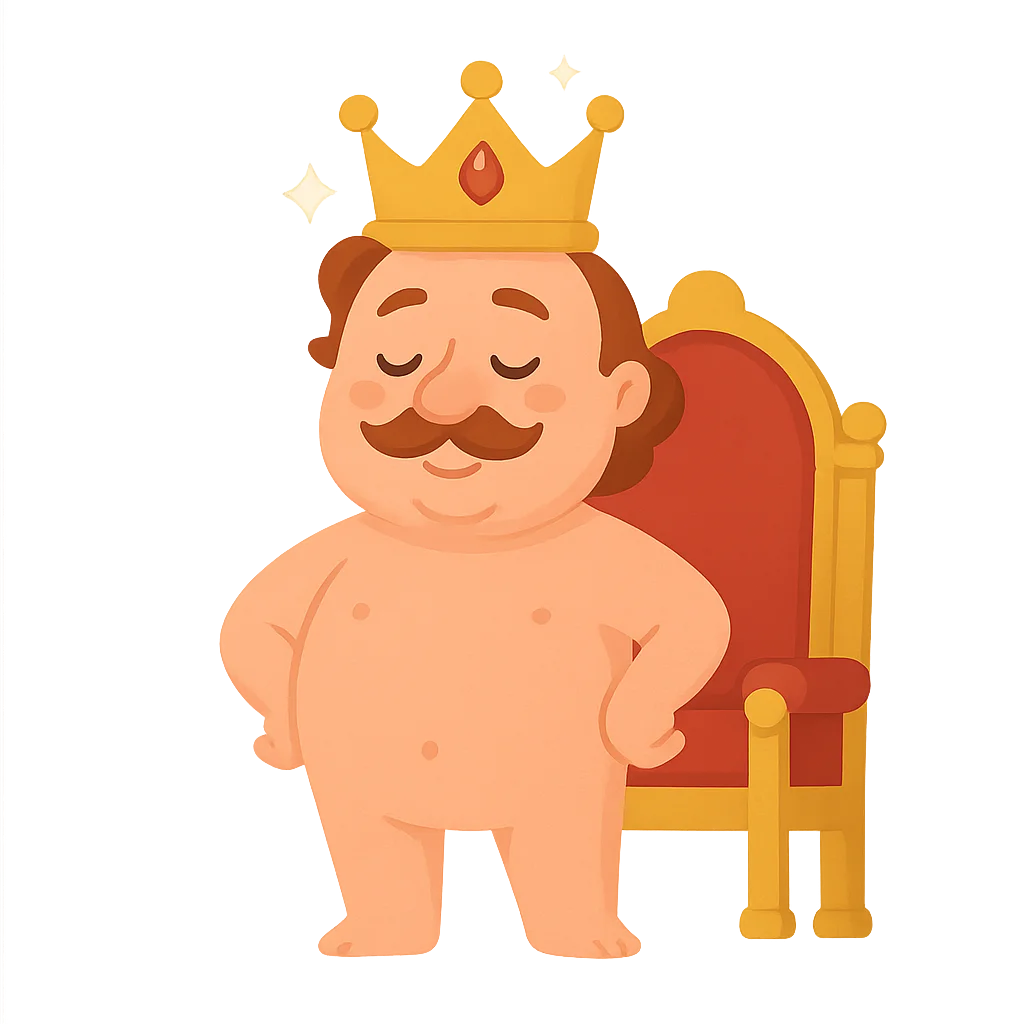
The Emperor's New Clothes
My name is Elara, and on most days, I was just a small girl who helped my mother sell bread in the market square. But on this day, the whole city was buzzing like a beehive, because our Emperor, who loved new clothes more than anything, was about to hold a grand parade. Two strangers had come to town, claiming they could weave the most magnificent fabric in the world—a fabric so special it was invisible to anyone who was unfit for their job or hopelessly silly. I remember hearing the grown-ups whispering about it, their eyes wide with wonder and a little bit of worry. This is the story of what happened next, a tale that people now call 'The Emperor's New Clothes.'
The two strangers, who were actually clever swindlers, were given a room in the palace and piles of gold thread and fine silk. They set up two empty looms and pretended to work day and night. Soon, the Emperor grew curious and sent his most honest old minister to see the fabric. I saw the minister walk into the palace looking proud, but when he came out, his face was pale. He couldn't see a thing on the looms. But he was terrified of being called unfit for his job, so he told everyone how beautiful the patterns were and how vibrant the colors were. Then another official went, and the same thing happened. He praised the invisible cloth, too. The news spread through the city like wildfire. Everyone talked about the magical clothes, and everyone was afraid they might be the only one who couldn't see them.
Finally, the Emperor himself went to see his new clothes. He walked into the room with all his courtiers, and his heart sank. The looms were completely bare. He panicked. 'Could it be that I am unfit to be Emperor?' he thought. But he couldn't let anyone know. So, he smiled broadly and exclaimed, 'It is magnificent. Absolutely splendid.' His followers all agreed, even though they saw nothing. The swindlers pretended to work even harder, cutting the air with scissors and sewing with needle-less thread. They 'worked' all night before the parade, and the Emperor gave them even more gold. The next day, they pretended to dress him in the invisible shirt, trousers, and long royal robe. The whole court admired his 'outfit' as he stood in front of the mirror, turning this way and that.
The parade began. Trumpets blared, and people lined the streets, cheering. The Emperor walked proudly under his grand canopy. Everyone in the crowd shouted, 'Oh, how beautiful the Emperor's new clothes are. What a perfect fit.' No one wanted to admit they couldn't see anything. I was standing near the front with my mother, craning my neck to see. And then I saw him. The Emperor. And he wasn't wearing anything at all. I didn't understand why everyone was pretending. It didn't make sense. Before I could stop myself, I pointed and shouted, 'But he hasn't got anything on.' A hush fell over the crowd. Then a man next to me whispered it. Then another person. Soon, the whole city was shouting, 'He hasn't got anything on.' The Emperor shivered. He knew they were right. But he held his head high and kept walking until the parade was over.
That day, we all learned something important about telling the truth, even when it's hard. The story of the Emperor's invisible clothes has been told for hundreds of years to remind us that it’s better to be honest than to pretend just to fit in. Today, when people say 'the emperor has no clothes,' they mean that someone is pointing out a truth that everyone else is ignoring. This old Danish tale reminds us to trust our own eyes and have the courage to speak up, proving that sometimes, the simplest and most honest voice can change the way everyone sees the world.
Activities
Take a Quiz
Test what you learned with a fun quiz!
Get creative with colors!
Print a coloring book page of this topic.
















 Free for Educators