

 English

The Frog Prince
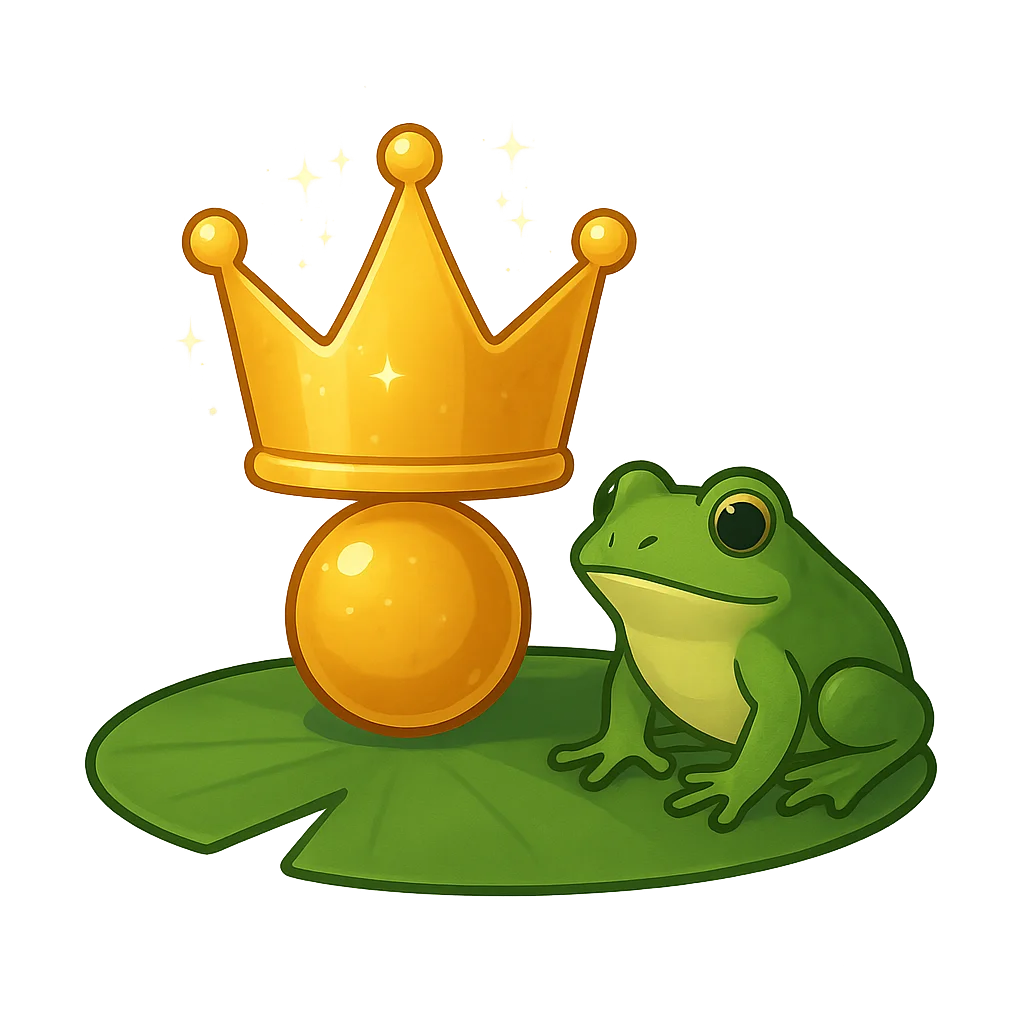
My world was once cool, dark, and damp, the mossy stones of a well my only kingdom. You may think you know me, but you probably know me as a frog, not a prince. My name is Naveen, though some just call me the Frog Prince, and my story begins with a splash—the sound of a golden ball dropping into my lonely home. For years, I'd been trapped by a witch's curse, waiting for a chance to be free, and that golden toy was my first glimmer of hope. I saw a young princess weeping at the edge of the well, her tears as bright as the jewels on her gown. She was spoiled and cared only for her beautiful things, but I saw something else: a key. I hopped to the edge of the water, my croak startling her. "Why do you weep, Princess?" I asked, my voice a gravelly rumble. She explained her plight, mourning the loss of her favorite toy. Seeing my opportunity, I offered her a deal. I, a simple frog, would retrieve her precious ball if she would promise me her friendship—to let me eat from her plate, drink from her cup, and sleep in her palace. She agreed so quickly, so carelessly, that I knew she never intended to keep her word. But a desperate, enchanted prince will take any chance he gets. This is the story of The Frog Prince, and it’s about a promise she almost broke and a lesson we both had to learn.
After I dived deep into the murky water and returned her gleaming ball, the princess snatched it with a triumphant cry and ran back toward her castle, completely forgetting me. She left me alone in the encroaching twilight of the woods, my croak of protest lost in the distance. But a prince, even one enchanted to look like a frog, does not give up so easily. The next evening, as the royal family sat for their grand dinner, I made my way to the palace. I hopped up the marble steps and knocked on the grand castle door with my webbed foot. A servant opened it, looked down, and nearly slammed it shut before the princess appeared. When she saw me, her face turned as pale as fresh cream. "What is this creature?" her father, the king, asked. I looked directly at the princess and reminded her of her promise in front of everyone. The king, a man of honor, was stern. "A promise, once given, must never be broken," he declared, his voice echoing in the vast hall. Reluctantly, she let me in. I hopped onto the table and ate from her golden plate, though she shuddered with every bite she took, filled with disgust for her slimy little guest. When it was time for bed, she was horrified at the thought of me in her silken room. She tried to leave me on the cold floor, but the king's words followed her. She had to fulfill her promise completely. It was in that moment of final, frustrated acceptance—when she finally picked me up, intending to toss me into a corner—that the magic of her fulfilled promise broke the spell. Some later storytellers say it was a kiss, but in the oldest tales, like the one collected by the Brothers Grimm on December 20th, 1812, it was the act of keeping her word, however unwillingly, that held the true power.
In a flash of brilliant green light, I was no longer a frog but a prince once more, standing before her in my own form, dressed in fine clothes. The princess gasped, stunned into silence, but for the first time, she truly saw me—the real me. She learned that day that true character isn't about what you look like on the outside, but about the kindness in your heart and the honor of your word. Just then, a carriage arrived, and my loyal servant, Heinrich, rushed to greet me. His heart had been bound with three iron bands to keep it from breaking in sorrow over my curse. As we rode away from the palace together, the bands snapped one by one with a great noise, his joy at my return was so immense and overwhelming. Our story, first shared around hearths in Germany, became a favorite fairy tale for a reason. It reminds us not to judge others by their appearance and shows that keeping a promise can create magic more powerful than any witch's curse. Today, this tale still inspires us to look deeper, to find the prince hidden within the frog, and to remember that an act of integrity, of doing the right thing even when it's hard, can change everything.
Activities
Take a Quiz
Test what you learned with a fun quiz!
Get creative with colors!
Print a coloring book page of this topic.
















 Free for Educators