

 English

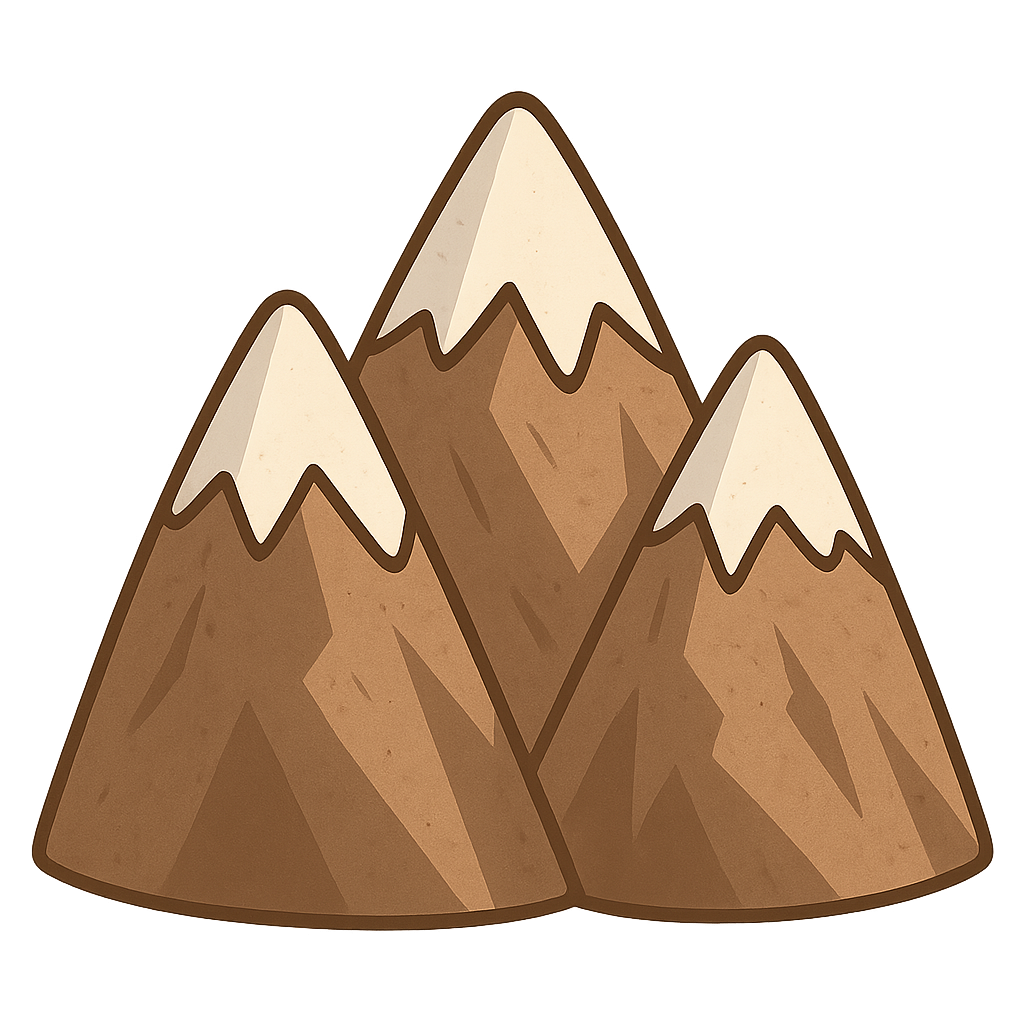
The Story of the Alps
The wind whispers secrets across my highest points, a constant song that has played for millions of years. From my jagged, snow-covered peaks, I watch the world unfold in the green valleys far below. I am a great crown of rock and ice stretching across the heart of a continent, a natural wall that touches eight different countries. In the summer, I wear a coat of emerald green dotted with wildflowers, and clear streams rush down my sides, born from melting snow. But when winter arrives, I pull on a silent, heavy blanket of white, and the world seems to hold its breath under the glittering stars. For centuries, people looked up at me with a mix of fear and wonder, a formidable barrier of stone that reached for the heavens. I have been a challenge, a pathway, and a home. I am the Alps, the great stone spine of Europe.
My story began long before the first humans walked the Earth, in a time of immense, slow-motion power. I was born from a colossal collision between two of the planet’s giant tectonic plates, the African and Eurasian plates. For millions of years, they pushed against each other with unimaginable force. This great push wrinkled and folded the Earth’s crust, lifting layers of rock higher and higher until they broke through the clouds. My peaks were rough and wild then, but my final shape was carved by ice. During the last Ice Age, which ended about 12,000 years ago, enormous glaciers, like rivers of solid ice, flowed down my slopes. They were nature’s giant chisels, grinding and scraping away at the rock. They carved out the deep, U-shaped valleys you see today, sharpened my ridges into knife-edges, and sculpted some of my most famous peaks, like the majestic Matterhorn, into their iconic pyramid shapes. I am a monument built by the Earth's power and sculpted by the patient hand of ice.
For thousands of years, I was seen as a mighty barrier, but for the brave and determined, I was also a bridge. My winding passes became pathways for history itself. More than 5,300 years ago, a man now called Ötzi the Iceman walked my high trails, leaving behind clues to a life lived long ago. His discovery in 1991 gave the world a window into the ancient past. Then, in 218 BCE, one of history’s most daring journeys took place across my slopes. A Carthaginian general named Hannibal Barca led his entire army, including dozens of war elephants, over my treacherous western passes to surprise his enemies in Italy. It was a feat of incredible determination against snow, ice, and rock. Centuries later, the Romans, masters of engineering, saw me not just as an obstacle but as a territory to be managed. They built paved roads through my passes, allowing their legions and merchants to move swiftly, connecting their vast empire. During the Middle Ages, these same routes were traveled by pilgrims on their way to holy sites and traders carrying silk, spices, and ideas, weaving the cultures of Europe together.
For most of history, people viewed my heights with caution and fear. My summits were considered dangerous, desolate places. But as the world changed, so did people’s perspectives. A new kind of curiosity and courage began to grow. During the 18th century, a spirit of scientific inquiry and adventure swept across Europe, and people began to look at my peaks not as places to avoid, but as challenges to be conquered. This was the birth of 'Alpinism,' the sport of mountaineering. The ultimate prize was my highest peak, Mont Blanc. For years, climbers tried and failed to reach its summit. Then, on August 8th, 1786, two local men, a crystal hunter named Jacques Balmat and a doctor named Michel-Gabriel Paccard, achieved the impossible. Their successful ascent marked a turning point. It sparked a new relationship between people and mountains, one built on respect, resilience, and a profound sense of wonder.
Today, my heartbeat is a rhythm of wild nature and human ingenuity. While my peaks remain untamed, people have learned to live with me in remarkable ways. They built railways that cling to my cliffs and drilled incredible tunnels deep through my stone heart. One of the first, the Mont Cenis Tunnel, opened on September 17th, 1871, connecting France and Italy by rail and changing travel in Europe forever. Now, I am a home to millions, and my glaciers and snows are a vital source of fresh water for the rivers that flow through the continent. I am a playground where hikers explore my trails in summer and skiers glide down my slopes in winter. I am also a crucial laboratory, where scientists study my shrinking glaciers to understand climate change. I am a living reminder of nature’s power and enduring beauty. I connect people across borders, and I will always be here to inspire a spirit of adventure and awe in all who look up and dream of the sky.
Activities
Take a Quiz
Test what you learned with a fun quiz!
Get creative with colors!
Print a coloring book page of this topic.









 Free for Educators