

 English

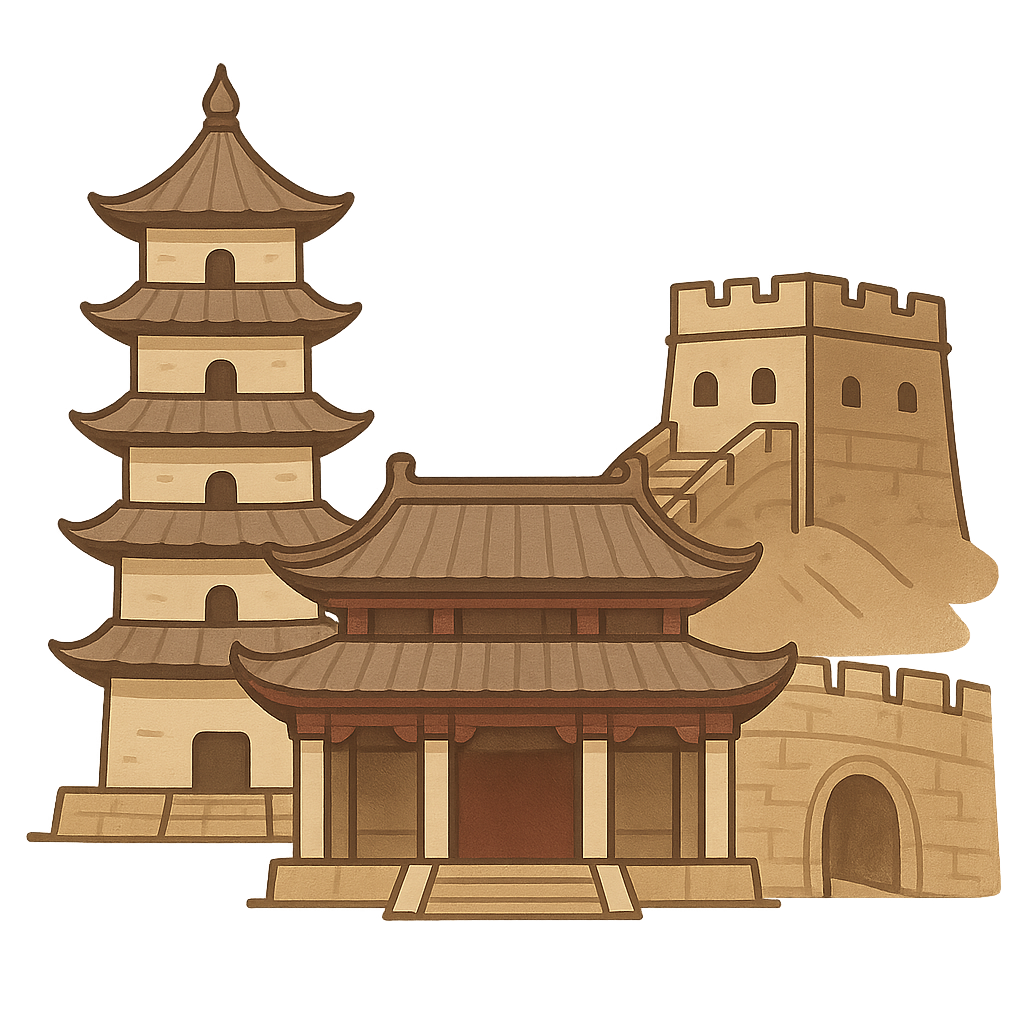
The Land of Dragons and Dynasties
Feel the cool mist that clings to my mountains, where waterfalls paint silver ribbons down ancient cliffs. Listen to the rush of my two great hearts, the Yellow and Yangtze Rivers, as they carve paths through fertile plains and carry stories from the snowy peaks to the wide sea. In my forests, tall green bamboo stalks whisper secrets to one another when the wind blows, their leaves rustling like the turning pages of a thousand books. For thousands of years, my history has been written on polished turtle shells and bones, on delicate scrolls of silk, and on carved wooden tablets. My memories are deeper than the deepest valley and stretch back further than the oldest tree. I have seen empires rise from dust and watched as cities of millions grew from small riverside villages. My people learned to read the stars, to map the earth, and to capture beauty with ink and a single brushstroke. They dreamed of harmony with the world around them and built wonders that still leave people breathless. I am the land of dragons and dynasties, the civilization you call Ancient China.
My long life is told in chapters called dynasties, which were like powerful families who ruled for generations. One of the earliest was the Shang Dynasty, more than three thousand years ago. The Shang kings wanted to know about the future, so they would carve questions onto bones and shells—'Will the harvest be good?' or 'Will we win the next battle?'—and heat them until they cracked. The cracks held the answers, but more importantly, the carved questions became the first letters of my written language. After the Shang came the Zhou Dynasty, a time of great change and sometimes great conflict. It was during this period of questioning that a wise teacher named Confucius was born in the year 551 BCE. He wasn't a king or a general; he was a thinker who traveled my lands sharing his ideas. He taught that the most important things were respect for your family, kindness to others, and a desire to learn. He believed a good society was like a good family, where everyone had a role and cared for one another. His simple, powerful teachings would become a guide for my people for the next two thousand years.
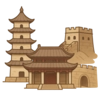
After the Zhou Dynasty, my lands fractured into many warring states. For centuries, conflict was a constant storm. Then, a leader with the strength of a tiger rose from the state of Qin. His name was Qin Shi Huang, and in 221 BCE, he did what no one had ever done before: he conquered all the rival kingdoms and declared himself the very first emperor of a united China. He was a man of immense ambition who wanted to build a legacy that would last ten thousand years. To protect his new empire from northern invaders, he ordered that all the old defensive walls built by the separate states be connected. This created the beginning of the Great Wall, a stone dragon that snaked for thousands of miles over my mountains and deserts. He also standardized everything to bring his people together. He declared that everyone must use the same writing, the same money, and even the same axle widths for their carts, so all roads would be the same. When he died in 210 BCE, he was buried in a tomb of incredible size, guarded by a secret, silent army. For over two thousand years, more than eight thousand life-sized soldiers made of terracotta clay stood watch, each with a unique face, ready to protect their emperor in the afterlife.
After the fierce rule of the first emperor, new dynasties brought about golden ages of peace, art, and discovery. During the Han, Tang, and Song dynasties, my gates opened to the world through a famous path you call the Silk Road. It wasn't just for carrying soft, shimmering silk; it was a great bridge of knowledge that connected me to faraway lands like Persia, India, and even the Roman Empire. Spices, ideas, religions, and stories traveled back and forth along this route, carried by camels across endless deserts. During these centuries of progress, my people created what are known as the Four Great Inventions. Around 105 CE, an official named Cai Lun perfected the process of papermaking, making knowledge cheaper and more accessible than ever before. My sailors developed the compass, a magnetic spoon that always pointed south, allowing them to navigate the vast oceans with confidence. My alchemists, while trying to create a potion for eternal life, accidentally discovered gunpowder, a substance that would change warfare forever. And finally, my artisans developed printing with carved wooden blocks, allowing books and ideas to be copied and shared with incredible speed. These inventions didn't just shape my world; they traveled along the Silk Road and eventually transformed the entire planet.
Though my great dynasties have passed into memory and my emperors now sleep in history, I am not a ghost. My spirit is alive all around you. The paper you write on began as a secret whispered in my ancient workshops. The books you read are possible because of my invention of printing. The idea of a compass guiding a ship across the sea started here. My philosophies about balance and respect still offer wisdom in a busy world, and my art, from delicate porcelain vases to sweeping landscape paintings, still inspires people with its beauty and grace. My story is one of resilience, of creating order from chaos, and of a deep belief that human creativity can change the world. The curiosity that led my people to invent, explore, and build for thousands of years is a legacy that continues to connect and inspire everyone today.
Activities
Take a Quiz
Test what you learned with a fun quiz!
Get creative with colors!
Print a coloring book page of this topic.











 Free for Educators