

 English

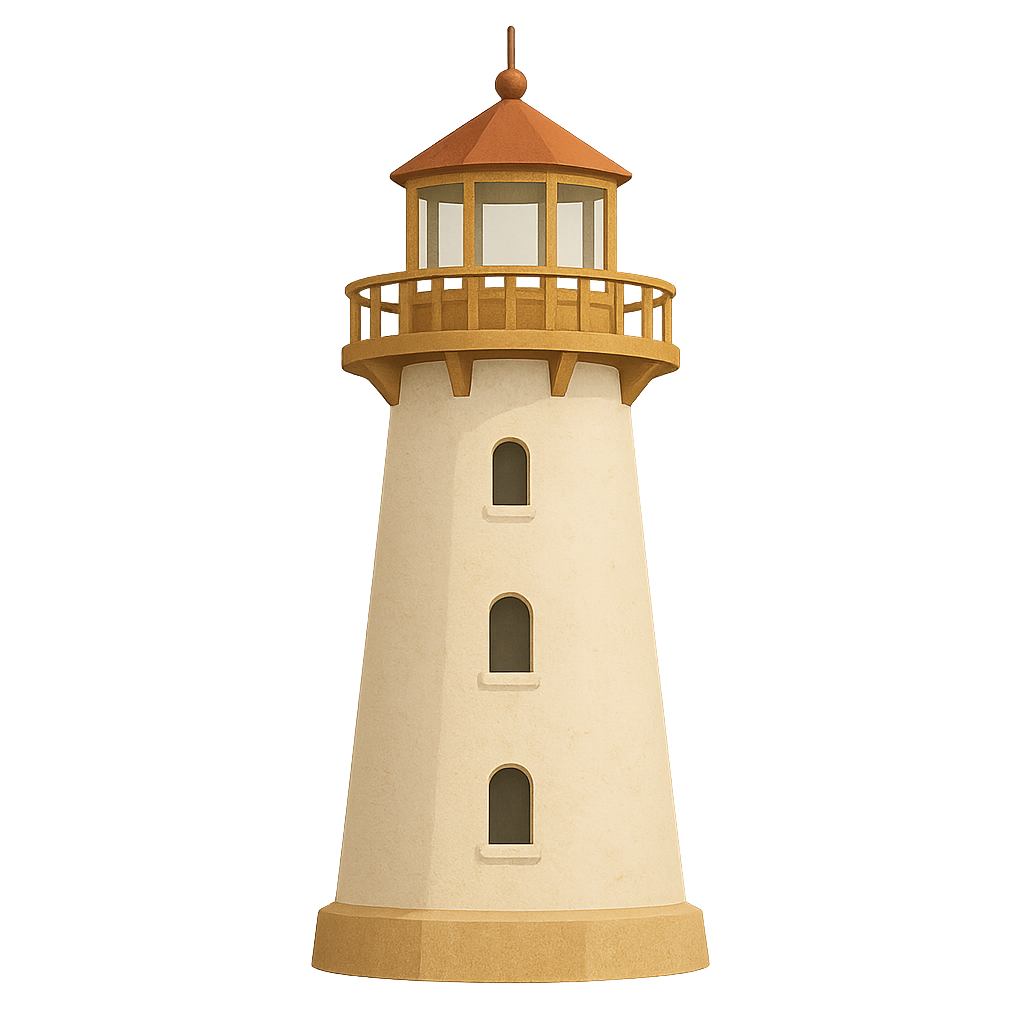
The Ocean That Connected the World
Imagine a giant, shimmering blue blanket stretching farther than your eyes can see. I am so big that I touch the icy cold of the Arctic and the sunny warmth of the tropics all at once. My waves crash onto the shores of four different continents, whispering secrets to the sand. The air above me tastes of salt, and my deep blue waters are home to the tiniest sparkling plankton and the largest, most magnificent blue whales. From the surface, you see an endless horizon where I meet the sky, a puzzle piece connecting worlds. I am the mighty Atlantic Ocean.
My story began a very, very long time ago, long before there were any people at all. All the land on Earth was once joined together in one giant supercontinent called Pangaea. But slowly, over millions of years, the land began to drift apart, like pieces of a giant cookie breaking. I was born in the space that opened up between them. Deep on my floor, there is a long chain of underwater mountains called the Mid-Atlantic Ridge. It’s like my spine, and it’s where new rock is still being made, causing me to grow a tiny bit wider every year. For thousands of years, people looked out at my waters with wonder. Around the year 1000, brave sailors called Vikings, led by an explorer named Leif Erikson, dared to sail across my northern waters in their longships, becoming some of the first people to cross my great expanse.
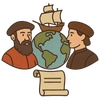
Centuries later, a great age of crossing began. People became curious about what lay beyond the horizon. An Italian explorer named Christopher Columbus believed he could find a new, faster way to Asia by sailing west. On October 12th, 1492, he and his crew set out from Spain in three small wooden ships. They had no idea what they would find. Life on those ships was very hard. The sailors faced powerful storms that tossed their ships like toys, and days when there was no wind at all, leaving them stranded in the middle of my vastness. They had to learn my secrets to survive. I have powerful currents, like the Gulf Stream, which flows like a giant, fast-moving river within me. Brave sailors learned to use these currents as watery highways, letting my own energy help push their ships toward new lands. Columbus’s journey didn’t lead him to Asia, but it connected the worlds of Europe, Africa, and the Americas in a way that changed history forever.
As time marched on, people found new and amazing ways to cross me. Giant steamships with powerful engines made the journey much faster and safer than the old wooden sailing ships. Then, a new kind of adventurer took to the sky. On May 20th, 1932, a courageous pilot named Amelia Earhart flew her small airplane all by herself from North America to Europe, right over my waves. She was the first woman to do it alone, showing the world that nothing was impossible. Today, my work continues in ways you might not even see. Hidden on my dark floor are long cables that carry messages, pictures, and videos across the world in the blink of an eye. Every time you use the internet, you might be sending a message through the deep, quiet parts of me. I am still a home for countless wonderful creatures, a highway for ships carrying food and goods, and a bridge that connects people and cultures. I am a reminder that we all share one beautiful, blue planet.
Activities
Take a Quiz
Test what you learned with a fun quiz!
Get creative with colors!
Print a coloring book page of this topic.








 Free for Educators