

 English

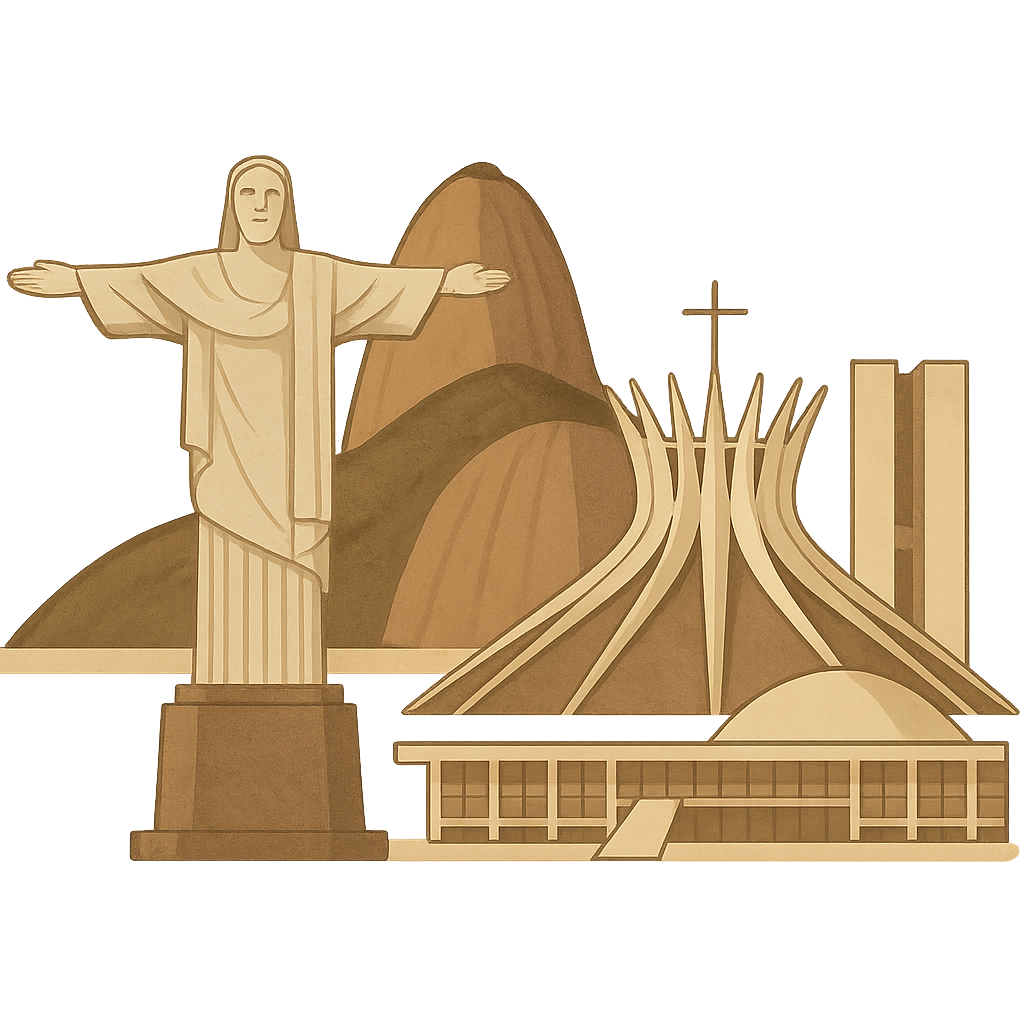
I am the Land of the Samba Sun
Feel the warm sun on your skin and listen closely. Can you hear the chatter of colorful toucans and scarlet macaws deep within my giant green rainforest? Their calls are part of a song that fills my air, a rhythm that travels on the breeze and makes your feet want to tap and dance. This music flows from my bustling cities all the way to my long, sandy coastline, where gentle ocean waves whisper secrets to the shore. I am a place of vibrant energy, deep green mysteries, and golden light. I am a land where life is a celebration, a beautiful, noisy, joyful party. I am Brazil.
For thousands of years before my name was ever spoken by newcomers, I was home to many people who understood my secrets. Indigenous communities, like the Tupi and the Guarani, lived in harmony with my rivers and forests. They knew the best places to find fruit, the quietest streams for fishing, and the stories hidden in the stars. They were my first children, and their spirit is woven into the very soil beneath your feet. But one day, a great change arrived on the ocean winds. On April 22nd, 1500, a fleet of tall wooden ships with giant white sails appeared on the horizon. An explorer from a faraway land called Portugal, named Pedro Álvares Cabral, was leading them. He and his crew were amazed by the endless green they saw. They found a special tree here with wood that glowed like a red ember from a fire. They called it Pau-Brasil, and because there were so many of these trees, they decided to call me Brazil.
For over three hundred years, I was connected to Portugal, like a child living far from its parent's home. But during that time, my heart began to beat with a completely new rhythm. It was a mix of the songs of the Indigenous people, the traditions of the Portuguese settlers, and the powerful spirit of the many African people who were brought here against their will. Their strength, resilience, and rich culture shaped me deeply. Their music, their delicious food, and their incredible stories blended with the others, creating something the world had never seen before. I was no longer just a copy of another place; I was becoming my own unique self. On September 7th, 1822, that new heartbeat grew into a loud cry for freedom. A brave prince named Dom Pedro I stood by a river and declared my independence. On that day, I began my journey as my own country, ready to sing my own song.
Today, that song is louder and more colorful than ever. You can hear it during Carnival, a gigantic party with dazzling costumes, thundering drums, and dancing that fills the streets with pure joy. The whole world stops to watch! You can feel my heartbeat in the roar of the crowd when my football team scores a goal, a passion that unites everyone from the smallest village to the biggest city. I am also the proud guardian of the Amazon Rainforest, my precious 'green lungs' that create so much of the air the entire world needs to breathe. My story is a symphony of life, a beautiful mix of people and cultures from all over the globe who now call me home. My song is always being written, and I invite everyone to listen, to feel the rhythm, and to dance along.
Activities
Take a Quiz
Test what you learned with a fun quiz!
Get creative with colors!
Print a coloring book page of this topic.











 Free for Educators