

 English

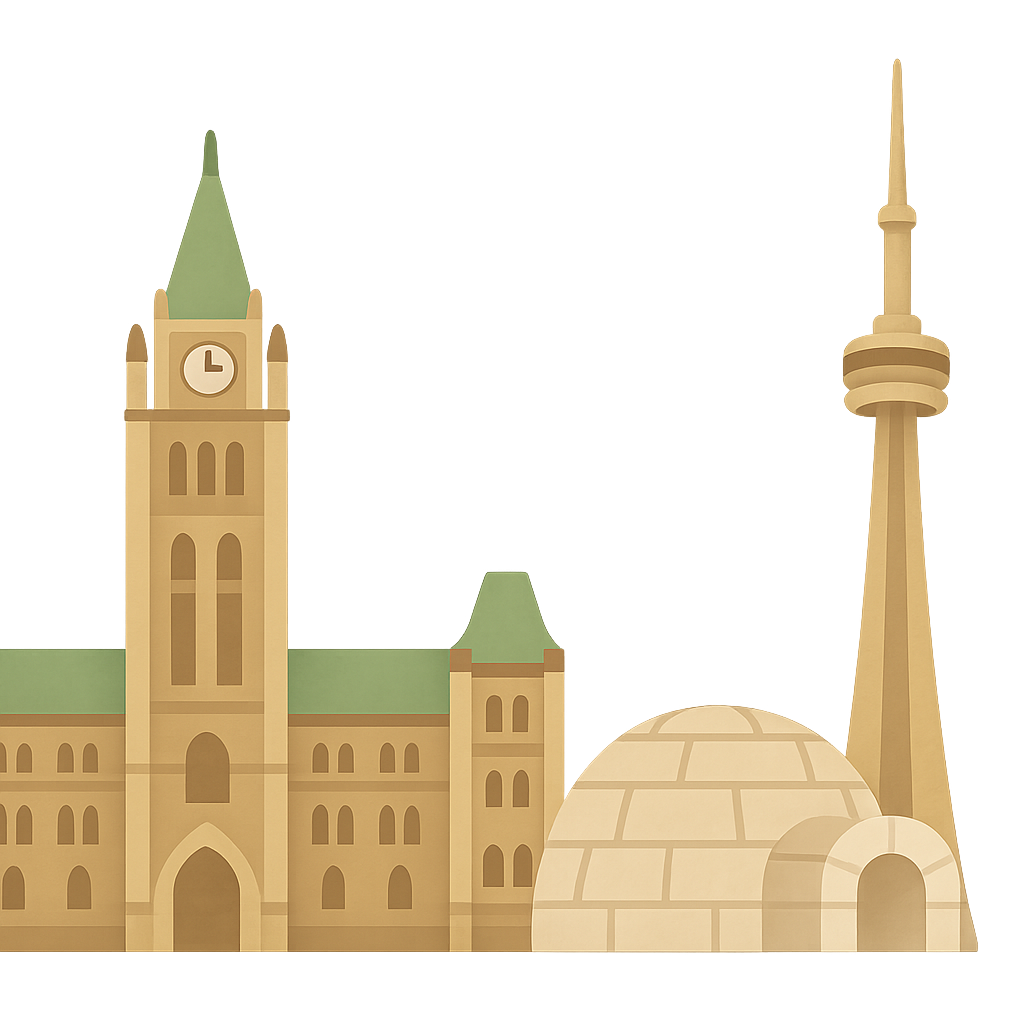
I Am Canada: A Story of Many Footprints
Feel the icy wind that sweeps across my northern tundra, a land of dancing lights in the sky. Smell the deep, clean scent of pine in my forests, where trees stand tall like ancient guardians. See my golden wheat fields, stretching like a sunlit carpet across my prairies, and listen to the mighty roar of waves crashing on my eastern and western shores. I have sparkling cities that glow all night and quiet, wild places where the only sound is the call of a loon across a lake. I am a land of whispers and wonders, of vast spaces and close-knit communities. I am Canada.
My story begins long before any maps were drawn by newcomers. For thousands of years, my first footprints were left by the Indigenous Peoples. They were my first children, and they learned all my secrets. They knew how to paddle birchbark canoes silently down my winding rivers and how to walk on deep snow with clever snowshoes. They listened to my seasons and understood my animals. The Haida carved incredible stories into giant totem poles on my west coast, the Cree hunted caribou across my northern plains, and the Mi’kmaq fished in the rich waters of my eastern shores. Their cultures are as diverse as my landscapes, and their wisdom and stories are woven into my very soil, like the roots of my oldest trees.
One day, something new appeared on my horizon—ships with tall, white sails, carrying people from across the great ocean. Both my first people and the newcomers were filled with curiosity. In 1534, an explorer named Jacques Cartier sailed up my mighty St. Lawrence River. When he asked the Iroquoian people what this place was called, they pointed to their village and said “kanata,” which meant “village.” He thought they were telling him my name, and it stuck. Years later, on July 3rd, 1608, another explorer, Samuel de Champlain, built a fort and a home that grew into Quebec City. A busy fur trade began, connecting Europeans and Indigenous Peoples in new ways. It brought new tools and ideas, but it also created new challenges and changed life here forever.
For a long time, I was a collection of separate colonies, like puzzle pieces that hadn’t been put together. But a big dream began to grow: to unite all these pieces into one large country, stretching from one ocean to another. The biggest challenge was connecting my vast lands. Imagine building a railway, a ribbon of steel, across towering, rocky mountains and endless, flat prairies. It took incredible hard work and perseverance from thousands of people. Finally, on a sunny July 1st, in 1867, the dream came true. Through a peaceful agreement called Confederation, four of my colonies joined together to become a new country. That was my official birthday, the day I truly began my journey as one nation.
Today, I am like a colorful mosaic, a beautiful picture made from millions of tiny, different pieces. People have come from every corner of the world to make their home with me, bringing their music, their food, their stories, and their dreams. My flag has a single red maple leaf on it. That leaf stands for peace, for welcoming others, and for the great natural beauty that I hold. My story is still being written, every single day, by all the people who live here. My greatest strength is not in my size, but in the kindness and diversity of my people, who teach the world that we can all live together and learn from one another.
Activities
Take a Quiz
Test what you learned with a fun quiz!
Get creative with colors!
Print a coloring book page of this topic.








 Free for Educators