

 English

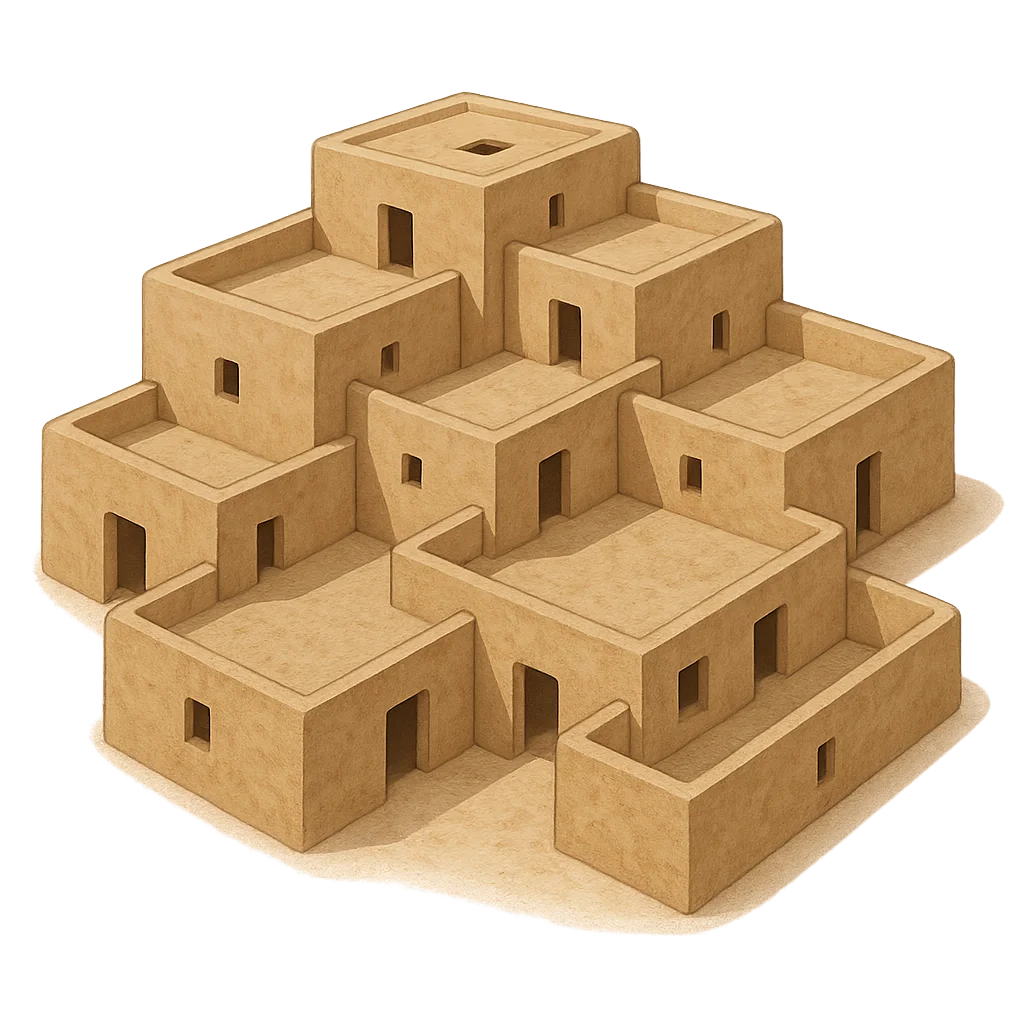
The City with Rooftop Streets
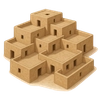
Imagine a wide, flat plain in the land we now call Turkey. On this plain, a strange and wonderful city rises, not with tall towers, but with buildings made of mud-brick, all packed together like the cells of a giant honeycomb. There are no streets winding between the buildings, no grand avenues, and not a single door on the ground. The only way to get inside a home is to climb a wooden ladder to the roof and drop down through a hole in the ceiling. This was the front door, the street, and the playground all in one. I am Çatalhöyük, and my story began more than 9,000 years ago, around 7500 BCE. I am one of the world's very first cities, a place where thousands of people decided to build their lives together in a way no one had ever done before. My walls hold the whispers of the Stone Age, a time of great change and new ideas.
Imagine waking up inside one of my homes. The room is cozy and square, with a clay oven in the corner still warm from baking bread the day before. You sleep on raised platforms, and the smooth plaster walls are covered in amazing paintings. You might see a giant bull with powerful horns, a group of hunters chasing a deer, or beautiful red and black patterns. To go outside, you climb your ladder up into the bright sunlight. The rooftops were my real streets. They were bustling with activity. Children would run and play, skipping from one roof to another. Adults would sit together, weaving baskets, making tools from sharp obsidian stone, or grinding grain. The smell of cooking fires would fill the air. The people who lived here were some of the very first farmers in the world. They learned to grow crops like wheat and barley and to raise sheep and goats. This was a huge change for humanity. Instead of always moving to find food, they could stay in one place, right here with me, and build a community.
What was special about my community was that everyone seemed to be equal. There were no grand palaces for kings or queens, and no giant temples for powerful priests. Each family lived in a house that was about the same size as their neighbor's. This suggests they worked together and shared what they had. They also had a unique way of remembering their loved ones. When someone passed away, they were buried right under the floor of the house. It might seem strange to us, but for them, it was a way to keep their ancestors close, making the house a home for both the living and the spirits of those who came before. My people were also artists. They crafted small, mysterious figurines from clay and stone. Some looked like people, others like animals. No one knows for sure what they were for. For nearly 2,000 years, life thrived here. But then, around the year 5700 BCE, people slowly began to move away. My houses fell silent, and I was left to sleep under layers of wind-blown dirt and dust, keeping all my secrets safe for thousands of years.
I slept for a very, very long time. The world changed completely, but I remained hidden beneath the earth. Then, one day in the year 1958, an archaeologist named James Mellaart rediscovered me. It was like being woken from the longest dream. The first big excavations began in 1961, and for the first time in millennia, my ancient mud-brick houses saw the sun again. Archaeologists carefully brushed away the dirt, uncovering the painted walls and the tools my people left behind. Decades later, in 1993, a new team of scientists led by Ian Hodder arrived. They brought amazing new technology that helped them learn even more about how my families lived. Their careful work helped tell my story to the world. In the year 2012, I was given a great honor. I was named a UNESCO World Heritage Site, meaning I am precious to all of humanity. Today, I teach people from all over the world about how humans first learned to build communities. I am a reminder that the desire to create a home, make art, and share our lives with others is a story that connects us all, from my first families to you.
Activities
Take a Quiz
Test what you learned with a fun quiz!
Get creative with colors!
Print a coloring book page of this topic.






 Free for Educators