English

Mesopotamia
An ancient region in the Middle East, situated between the Tigris and Euphrates rivers…
Reads at Grades 3–5 Listens at Grades 1–5
Print & create
Answer keys·No prep·Free with an account
28 worksheets · answer keys · full story · quiz · Ages 8-10 · CEFR B1
Plus adds 280,000+ more stories in 27 languages, audio for every one, and printables for all of them.
Just want Mesopotamia?
Imagine a place where the sun warms your skin and the earth is rich and dark, a gift from two mighty rivers that flow on either side. All around, the land can be dry and dusty, but here, fields of golden wheat and green barley sway in the breeze. This is a place of beginnings, a gentle lap where new ideas could be born and grow strong. For thousands of years, I have watched people learn and build, dream and create. I am the cradle where some of the world's biggest ideas first opened their eyes. My name is Mesopotamia, and my story is the beginning of many of yours.
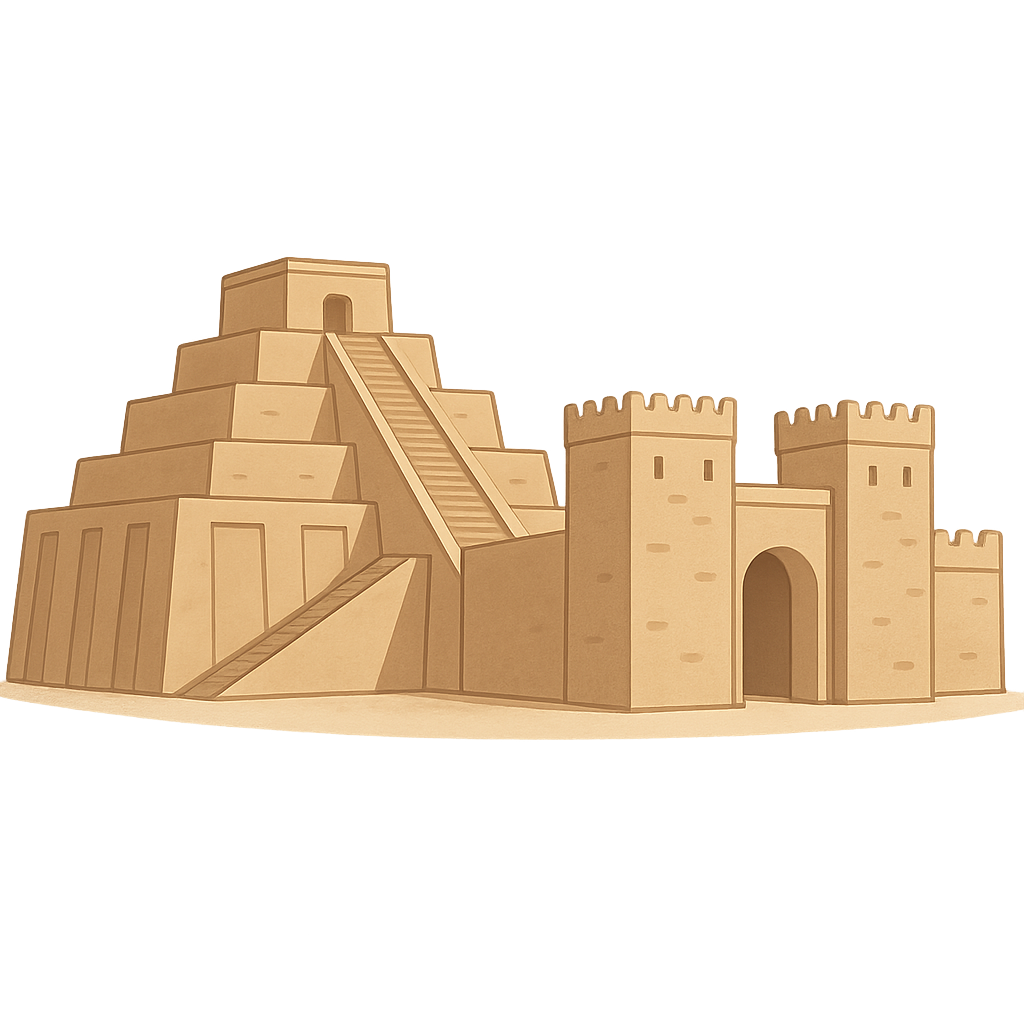
It all started with a group of very clever people called the Sumerians. They were my first true city builders. Instead of living in small villages, they decided to build something grander. Using bricks made from my river mud and dried in the sun, they built towering temples called ziggurats and bustling cities like Uruk, one of the first the world had ever seen. But their biggest idea was something you use every single day. Around 3500 BCE, they invented writing. It wasn't with pencils and paper, but with a reed stylus pressed into soft clay tablets. They made little wedge-shaped marks called cuneiform to keep track of their grain, to write down stories, and to send messages. They also invented the wheel. At first, it helped them spin clay into beautiful pots much faster. Soon, they put wheels on carts to carry goods, changing travel forever. On my rivers, the Tigris and Euphrates, they built the first sailboats, letting the wind carry them to trade with faraway lands. Every new invention was a seed, planted in my fertile soil, that would grow to change the world.
The Land Between the Rivers
Imagine a place where the sun warms your skin and the earth is rich and dark, a gift from two mighty rivers that flow on either side. All around, the land can be dry and dusty, but here, fields of golden wheat and green barley sway in the breeze. This is a place of beginnings, a gentle lap where new ideas could be born and grow strong. For thousands of years, I have watched people learn and build, dream and create. I am the cradle where some of the world's biggest ideas first opened their eyes. My name is Mesopotamia, and my story is the beginning of many of yours.
It all started with a group of very clever people called the Sumerians. They were my first true city builders. Instead of living in small villages, they decided to build something grander. Using bricks made from my river mud and dried in the sun, they built towering temples called ziggurats and bustling cities like Uruk, one of the first the world had ever seen. But their biggest idea was something you use every single day. Around 3500 BCE, they invented writing. It wasn't with pencils and paper, but with a reed stylus pressed into soft clay tablets. They made little wedge-shaped marks called cuneiform to keep track of their grain, to write down stories, and to send messages. They also invented the wheel. At first, it helped them spin clay into beautiful pots much faster. Soon, they put wheels on carts to carry goods, changing travel forever. On my rivers, the Tigris and Euphrates, they built the first sailboats, letting the wind carry them to trade with faraway lands. Every new invention was a seed, planted in my fertile soil, that would grow to change the world.
After the Sumerians, other amazing people called my lands home, like the Babylonians. Their most famous king was a wise ruler named Hammurabi. He saw that as cities grew, people needed clear rules to live together peacefully. So, around 1754 BCE, he created a set of laws for everyone, known as Hammurabi's Code. He had these 282 rules carved onto a giant, dark stone pillar for everyone to see. The rules were about fairness—making sure a doctor took care of his patients and a builder made strong houses. It was one of the first times a leader wrote down laws to protect all people. The Babylonians weren't just thinkers about laws; they were also incredible stargazers. Every night, they would watch the moon and stars move across the sky, creating the first maps of the heavens. From their careful observations, they gave the world a gift of time: the idea of a 60-second minute and a 60-minute hour. That ticking clock you hear is an echo from my ancient sky-watchers.
Today, my great cities of Uruk and Babylon are quiet ruins, and my towering ziggurats have crumbled to dust. But I am not gone. I am alive in your world in so many ways. Every time you write a story, you are using the gift of the Sumerians. Every time you know that there are rules at school to keep things fair, you are hearing the echo of Hammurabi's Code. And every time you look at a clock to see how many minutes are left until recess, you are using the time told by my Babylonian astronomers. I was the cradle of civilization, and the ideas born here have grown up and traveled all over the world, connecting my past to your present. They prove that a good idea, planted long ago, can grow forever.
Wow facts
About
An ancient region in the Middle East, situated between the Tigris and Euphrates rivers, known as the 'Cradle of Civilization' for its many innovations.
Take a Quiz
Question 1 of 5
The story says Mesopotamia was a 'cradle for new things.' What does the word 'cradle' mean here?
Explore next


Want to do even more?
Go beyond exploring. Unlock tools that turn every story into real learning.

Storypie Plus for families
Full stories, quizzes, and printables. Nights and car rides, sorted.
- Unlimited audio stories
- Create Mode: your child stars in the story
- Offline downloads
- Printable worksheets & coloring pages

Why Storypie for Schools
Students engaged. Prep in seconds. Evenings back to you.
- Worksheets & Quizzes
- Classroom Management
- Formative Assessment
- Custom Curriculum & Lesson Plans
- 27 Languages

Why Storypie for Homeschool
Curriculum done. They'll ask for more. Hours back in your day.
- Worksheet Generator
- First-Person Audio Stories
- Built-in Comprehension Quizzes
- Custom Curriculum & Lesson Plans
- Print & Go Activities