

 English

The City That Waited
For thousands of years, my only companion was the wind. It whispered over the endless dunes of southern Iraq, carrying grains of sand that settled over my sleeping streets like a soft, golden blanket. Beneath this heavy silence, I dreamed of a time when I was awake. I dreamed of the murmur of crowds, the rhythm of hammers on copper, and the scent of cedarwood from faraway mountains. I remembered the weight of a magnificent brick mountain that once reached toward the heavens, a stairway for the gods. The world forgot my name for centuries, but I never forgot who I was. I waited patiently under the sand, a secret history waiting to be told. I am Ur, one of the world's very first cities.
My story truly began with the Sumerians, a clever and creative people who lived over four thousand years ago. They chose to build me beside the mighty Euphrates River, a shimmering ribbon of life that connected me to the world. My golden age was a time of vibrant energy. Great ships with tall sails would navigate the river, bringing timber from Lebanon and precious blue lapis lazuli from the distant mountains of Afghanistan. My markets were a dizzying symphony of sights and sounds, where merchants traded barley, wool, and gleaming pottery. My people were inventors and thinkers. In schools called 'edubbas,' young scribes hunched over wet clay tablets, pressing wedge-shaped marks with a stylus. They were practicing cuneiform, the beautiful writing they invented to record everything from epic poems to simple lists of grain. My artisans were masters of their craft, creating intricate gold jewelry, musical instruments adorned with shell mosaics, and statues with wide, watchful eyes. I was more than just a collection of buildings. I was a bustling center of learning, art, and trade—a beacon of civilization in the ancient world.
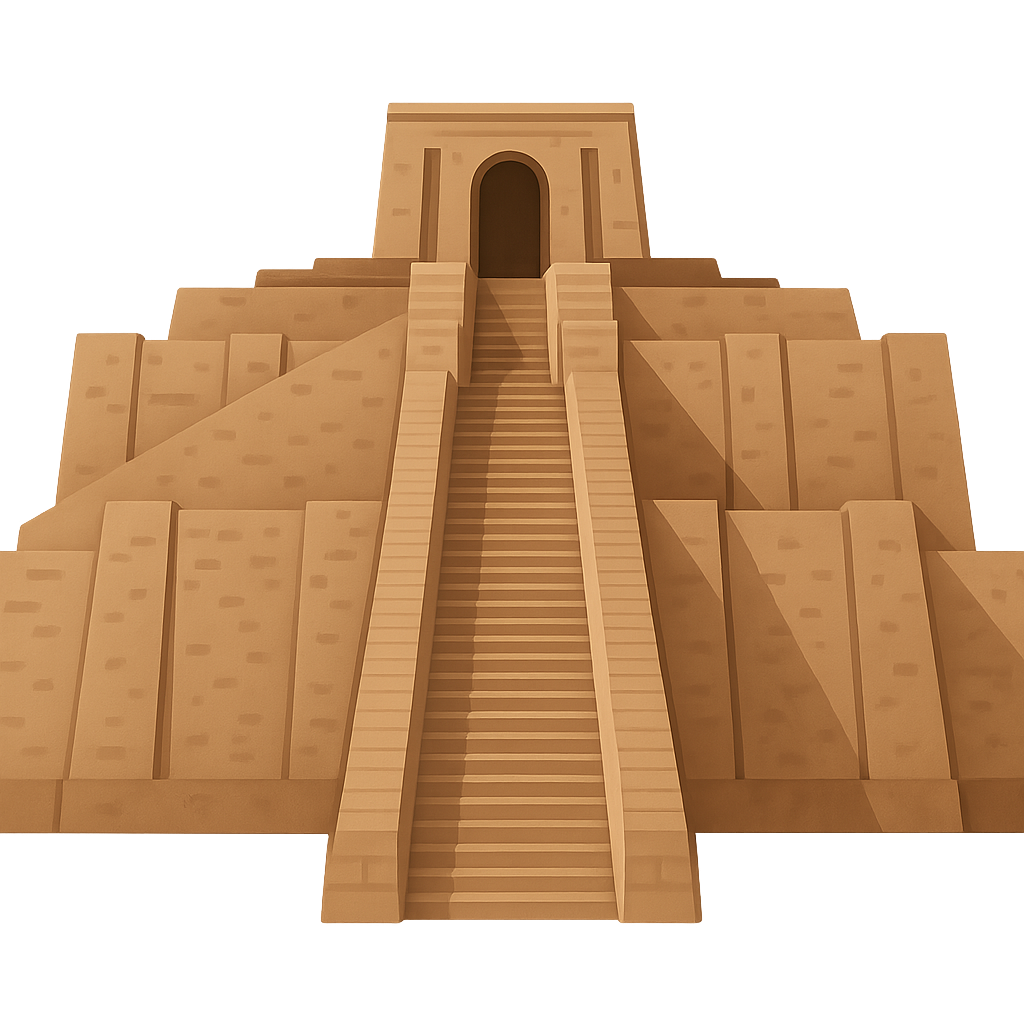
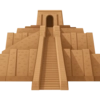
At the very heart of my existence stood my greatest treasure, a structure so immense it seemed to command the sky itself. This was the Great Ziggurat, a testament to the devotion and ambition of my people. It was built by a wise and powerful ruler, King Ur-Nammu, around the 21st century BCE. He envisioned a man-made mountain of baked brick, a solid and enduring connection between the earth and the heavens. It was not a pyramid with hidden chambers but a layered temple platform, rising in three massive tiers. Three monumental staircases, each with one hundred steps, converged at a gate high on the first level. From there, another staircase led to the very top, where a sacred temple once gleamed in the sun. This shrine was dedicated to Nanna, the moon god, my city's special protector. When my people gathered in the courtyard below and looked up, they felt a profound sense of awe. They believed this stairway allowed their god to descend to earth and for their priests to ascend toward the heavens. It was the center of their spiritual world, a symbol of order, faith, and their place in the universe.
But even the greatest cities cannot last forever. My lifeblood, the Euphrates River, began to change its course. Slowly, over many generations, the water that had nourished me moved farther and farther away, leaving my canals dry and my ports silent. Without the river, my trade routes withered, and farming became difficult. One by one, my families packed their belongings and left, seeking new homes in places where life was easier. The bustling streets grew quiet, and the desert winds began their patient work, burying my walls and homes in sand. I fell into a deep, long slumber. For more than two millennia, I was just a mound in the desert, a forgotten legend. Then, in the early 20th century, a British archaeologist named Sir Leonard Woolley arrived. Starting in 1922, he and his team carefully began to brush away the sand. It was like I was waking from a dream. They uncovered my houses, my temples, and the magnificent ziggurat. Most astonishingly, they discovered the Royal Tombs, filled with breathtaking treasures that had been hidden for 4,500 years. My secrets were finally being shared with a new world.
Today, my streets are quiet once more, but my voice echoes across time. The Great Ziggurat still stands against the desert sky, a powerful symbol of what humans can achieve when they work together with vision and faith. Though my people are long gone, their ideas are woven into the fabric of the modern world. The Code of Ur-Nammu, one of the earliest known legal codes, was written here, establishing justice for all people. The invention of writing, nurtured in my schools, allows us to share knowledge and stories to this day. The very idea of a city—a place for community, culture, and innovation—was perfected within my walls. I am no longer a bustling metropolis, but I am a timeless lesson. I teach of human creativity, the rise and fall of civilizations, and the enduring power of ideas. I am a connection to the very dawn of our shared history, inspiring everyone to look at the world they live in and wonder how it all began.
Activities
Take a Quiz
Test what you learned with a fun quiz!
Get creative with colors!
Print a coloring book page of this topic.







 Free for Educators