

 English

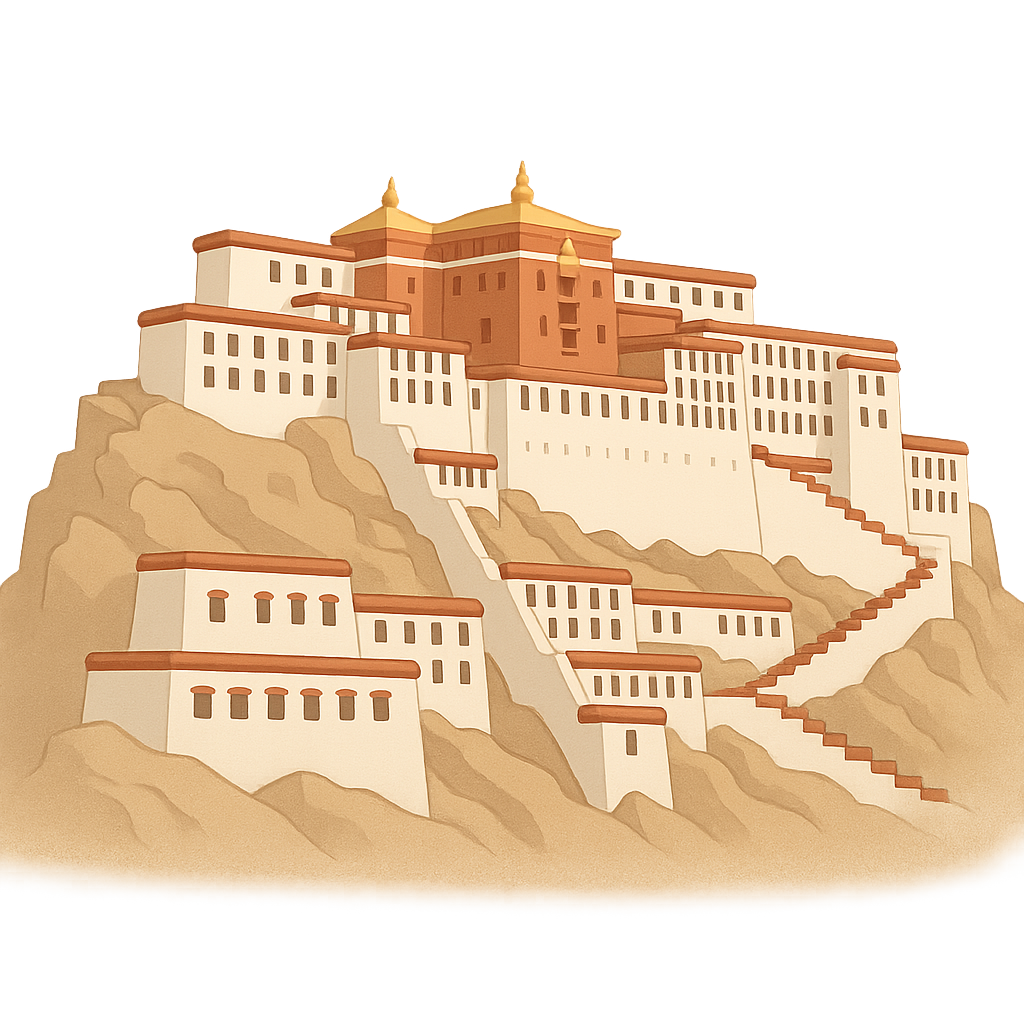
A Voice from the Roof of the World
I feel the sharp wind whip around my stony shoulders, a constant companion for millions of years. Far below, clouds drift by like fluffy white ships sailing on an endless blue sea. I wear a thick blanket of snow and ice that glitters in the sunshine, a cold coat that never comes off. I am a great, stony wrinkle on the Earth's skin, so ancient that I have watched forests grow and rivers change their course. My highest peaks stretch so far into the sky they can tickle the stars on a clear night. For a very long time, I was a silent giant, watching the world turn. You might know me by my name. I am the Himalayas, the roof of the world.
My story began a very, very long time ago, about 50 million years ago. Imagine two giant pieces of the Earth, like enormous puzzle pieces, slowly drifting across the planet. One was the land that would become India, and the other was the great continent of Asia. They slowly, powerfully, began pushing against each other. It wasn't a fast crash with a loud bang, but a slow, steady crunch that lasted for millions of years. This incredible pressure pushed the ground up, up, up, folding and wrinkling the rock until I was born. And guess what. I am still growing, just a little bit taller each year, about as fast as your fingernails grow. I am not just rock and ice. I am home. For thousands of years, I have been home to the strong and kind Sherpa people. They live high on my slopes, and their bodies are used to my thin air. They know my paths and respect my power, understanding my moods and my dangers. I am also home to amazing animals you won't find anywhere else. The silent snow leopard, with its smoky gray fur, hunts expertly on my cliffs. The sturdy yak, with its long, shaggy hair, helps people carry heavy loads. My melting snow is one of my greatest gifts. It gathers into tiny streams that join together to become great rivers like the Ganges and the Indus. These rivers flow down into the plains below, giving life-giving water to millions of people, helping their farms grow and their cities thrive.
For centuries, people looked up at me with wide eyes full of wonder. They saw my towering peaks as sacred places, homes to gods and spirits. They called my highest peak 'Chomolungma', which means 'Goddess Mother of the World'. Today, many call it Mount Everest. For a long time, no one dared to climb to my highest points. The air is too thin, the weather is too dangerous, and the ice is too treacherous. But human curiosity is a powerful thing. Two brave men decided they would try to reach my highest point together. One was Tenzing Norgay, a Sherpa who grew up in my shadow and knew my secrets. The other was Sir Edmund Hillary, an explorer from a faraway land called New Zealand, full of determination. They were not rivals. they were a team. They knew they could only succeed if they helped each other. On May 29th, 1953, they began the final, dangerous part of their climb. They faced freezing winds and steep, icy walls, but they worked as one, tied together by a rope and by their shared dream. Finally, they stood on the very top of my highest peak, the first people ever to do so. They showed the world that with courage and friendship, even the highest challenges could be met.
I am more than just a collection of tall mountains. I am a place where people find peace and test their strength. I am a source of life-giving water for lands far away. I am a reminder that some of the greatest things can be achieved when we work together, trusting and helping one another just as Tenzing and Edmund did. I hope my story inspires you to look for the mountains in your own life. They might not be made of rock and ice, but they are your own big challenges. Climb them with courage, help your friends along the way, and never forget to enjoy the view from the top.
Activities
Take a Quiz
Test what you learned with a fun quiz!
Get creative with colors!
Print a coloring book page of this topic.



 Free for Educators