English
 For Schools
 For Homeschool

The Story of India: A Land of Many Colors
I have snowy mountains that touch the clouds in my north, and warm, sunny beaches that kiss three seas in my south. My air smells of cardamom and jasmine, and my streets echo with a hundred different languages. I am a rainbow of festivals, a tapestry of traditions, and a kitchen filled with thousands of delicious flavors. My story is written in ancient stone, whispered on the winds of the desert, and sung by the mighty rivers that flow through my heart. I am India.
My memory is long, stretching back thousands of years. I remember one of my first great civilizations, the Indus Valley people, who built incredible cities like Mohenjo-Daro around 2500 B.C. with neat streets and clever water systems that were ahead of their time. Later, wise thinkers sat under banyan trees along my sacred rivers, like the Ganges, sharing ideas that grew into philosophies and religions like Hinduism, Buddhism, and Jainism. They explored deep questions about life, the universe, and how to live with kindness and compassion. This was a time of profound thought, when my spirit of curiosity and my search for truth were born.
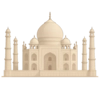
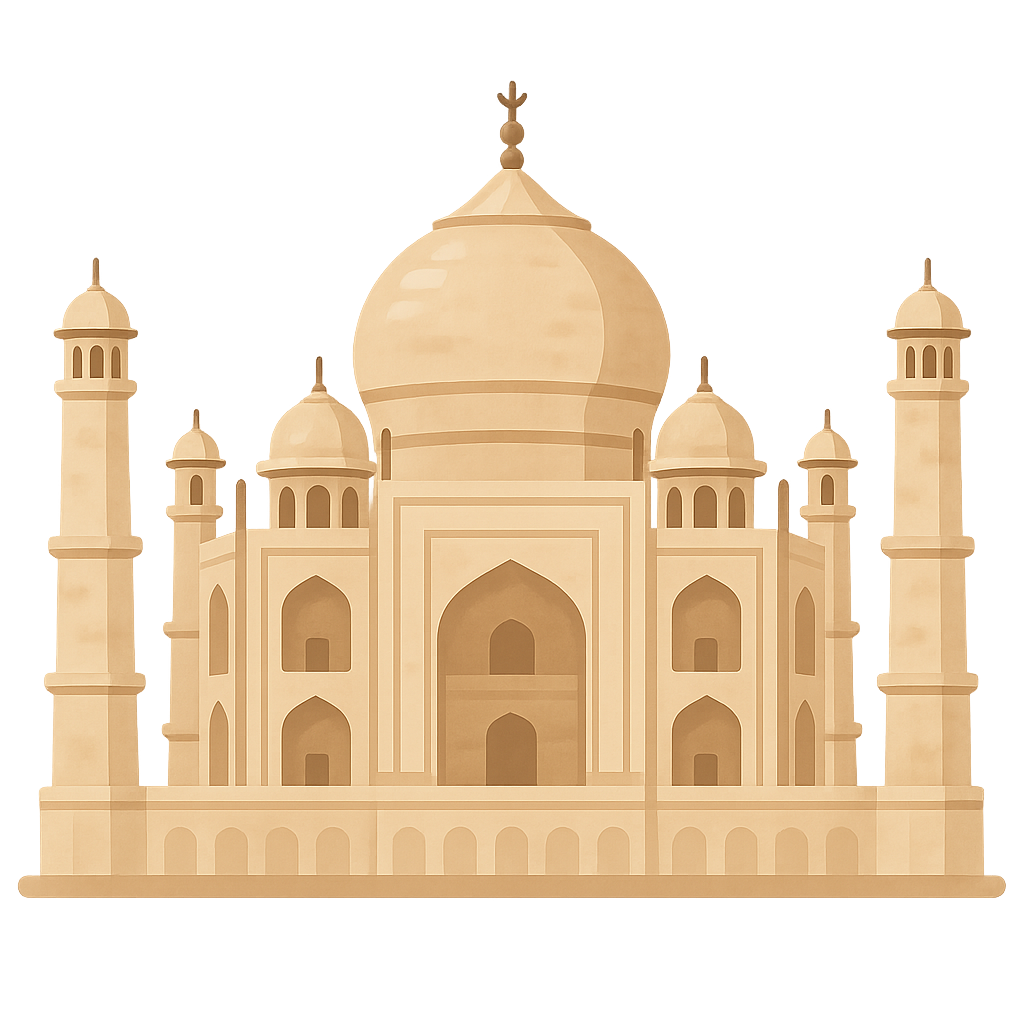
Great empires rose and fell upon my soil, each leaving its unique mark. I remember the powerful Mauryan Empire, which began around 322 B.C. Its greatest ruler, Ashoka, was a fierce warrior at first. But after the great and sorrowful Battle of Kalinga, he changed his ways completely. He chose the path of peace and spread messages of compassion on pillars of stone for all to see. Centuries later, I entered my Golden Age under the Gupta Empire, starting around the 4th century A.D. This was a time of amazing discovery and creativity. My mathematicians and astronomers were brilliant. They invented the number zero—a gift that changed math and science forever—and they accurately mapped the stars and planets. Much later, the Mughal emperors arrived, beginning in the 16th century, bringing with them a magnificent love for art and architecture. Their influence can still be seen in my grand forts and delicate gardens. One emperor, Shah Jahan, was so heartbroken by the loss of his wife that in 1632, he began building the most beautiful tribute to love the world has ever seen: the Taj Mahal. It is a palace of shimmering white marble that seems to float in the air and glows in the moonlight, a symbol of eternal beauty and devotion.
My story took a different turn when I was ruled by another country from across the sea, Great Britain. Their rule lasted for nearly two hundred years, and it was a difficult period. But this challenge also brought my people together with a powerful, shared dream of freedom. A wise and gentle man named Mahatma Gandhi showed everyone a new way to fight for what was right—not with weapons, but with peace, courage, and truth. He called this powerful idea 'satyagraha,' or 'truth force.' Millions of people from every corner of my land joined him. They walked together in protest, spoke together for their rights, and dreamed together of a future they could build for themselves. Their peaceful struggle was long, but their spirit was unbreakable. Finally, on August 15th, 1947, a new day dawned. I became an independent nation, free to write my own destiny. The joy and hope of that day still echo through my history, a reminder of what can be achieved with unity and peaceful determination.
Today, my heart beats with the energy of over a billion people. I am a land of bustling, modern cities and quiet, timeless villages. I am a place of brilliant scientists who send rockets to the Moon and Mars, and talented artists who create dazzling movies in Bollywood that are loved all over the world. My greatest treasure is my diversity—all the different cultures, languages, foods, and traditions that live together as one family. My story is still being written, every single day, by the hopes and dreams of my children. I am ancient, yet I am always young, and I welcome everyone to come and discover the countless stories I hold within me.
Activities
Take a Quiz
Test what you learned with a fun quiz!
Get creative with colors!
Print a coloring book page of this topic.