

 English

A Home Among the Stars
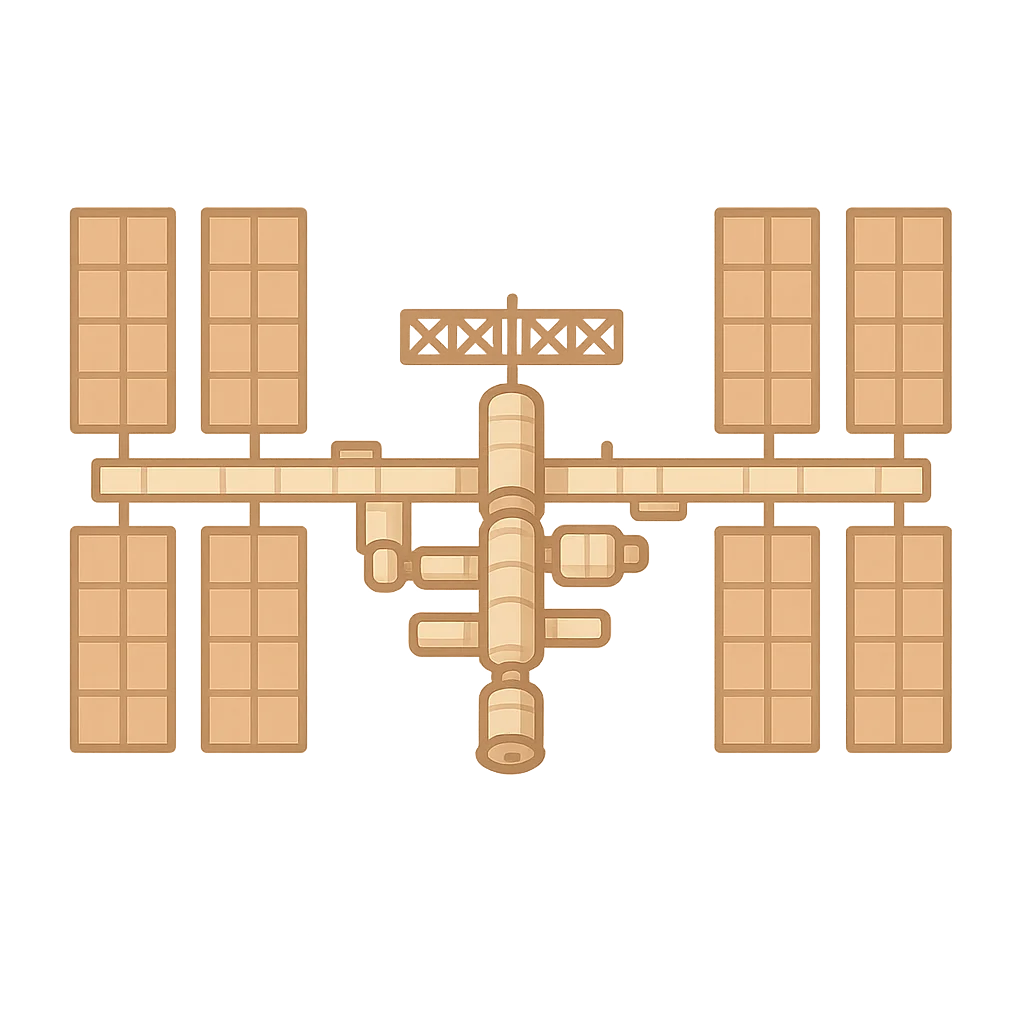
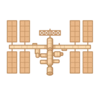
Imagine floating in an endless, silent sea of darkness, sprinkled with the light of a billion distant suns. Below you, a breathtaking marble of swirling blue oceans, white clouds, and green continents turns slowly. This is my view, every single moment. I race around this beautiful planet so fast that I get to see the sun rise and set not once, but sixteen times every day. Each sunrise paints my metallic skin in brilliant shades of orange and gold, and each sunset dips the world into a soft, velvety black. I am a sprawling city in the sky, a complex maze of modules, hatches, and windows. My wings are not for flying, but for drinking in the sun's energy; vast, shimmering panels of blue and gold that stretch out like a dragonfly's. I wasn't born on Earth and sent here. I was built piece by piece, a giant puzzle assembled in the emptiness of space, orbiting 250 miles above everyone I protect and serve. I am a beacon of human curiosity, a fast-moving star that you can sometimes spot from your own backyard, zipping across the night. I am the International Space Station.
My story is not one of a single nation, but of the entire world coming together to achieve something extraordinary. Unlike buildings on Earth, I couldn't be constructed from the ground up. I had to be built in orbit, the most challenging construction site imaginable. My very first piece, a Russian module named Zarya, which means 'Sunrise', was launched into the sky on November 20th, 1998. It was the seed from which I would grow. Just a couple of weeks later, on December 4th, an American module named Unity was sent up to meet it. Astronauts carefully used a robotic arm to grasp Unity and join it to Zarya, and in that moment, my heart began to beat. This was the start of an unprecedented partnership. My family of creators includes five major space agencies: NASA from the United States, Roscosmos from Russia, JAXA from Japan, the European Space Agency (ESA), and the Canadian Space Agency (CSA). For years, they sent up new rooms, laboratories, and solar arrays on powerful rockets. With each new piece, brave astronauts would venture out on spacewalks, floating in their bulky white suits to connect cables, bolt down structures, and bring me to life. It was like building the most magnificent and complicated treehouse in the universe, a symbol that even after years of competition, these nations could become the greatest team to build a home among the stars.
I am more than just a structure; I am a home and a laboratory unlike any other. On November 2nd, 2000, I welcomed my first residents, the Expedition 1 crew, led by American commander William Shepherd. Since that day, I have never been empty. For over two decades, I have been continuously occupied by astronauts from all over the world. Life here is a dance with physics. Without gravity, everything floats. Astronauts don't walk, they glide from one module to another. They sleep in sleeping bags tethered to the walls so they don't drift away in the night. Eating requires special packaging to prevent crumbs from floating into delicate equipment, and exercising is a daily necessity. They strap themselves to a special treadmill or use resistance machines to keep their muscles and bones strong against the weakening effects of weightlessness. My true purpose, however, is science. I am a unique laboratory where we can conduct experiments that are impossible on Earth. Inside my walls, astronauts have grown plants without soil to understand how we might grow food on future space missions. They have studied how fire behaves in microgravity, leading to better fire safety on Earth. Most importantly, they study the human body, learning how it adapts to long periods in space. This research is critical for planning future journeys to the Moon and Mars. Watching astronauts perform spacewalks is one of my greatest joys. Seeing them, attached only by a thin tether, working carefully against the backdrop of the Earth is a powerful reminder of human courage and ingenuity.
My time as a shining beacon in the sky is finite, but my legacy is eternal. I am living proof that when people from different cultures and countries set aside their differences and work toward a common goal, they can achieve the impossible. The knowledge discovered within my pressurized walls has already made life better on Earth, contributing to new medicines, improved water purification systems, and advanced materials. I am a crucial stepping stone into the cosmos. Every experiment, every spacewalk, and every day that humans live and work within me teaches us how to survive and thrive beyond our home planet. I am helping to pave the way for the next giant leaps in exploration—for future bases on the Moon and the first human footsteps on Mars. So when you look up at the night sky and see a bright, steady light moving silently across the stars, know that it is me. I am a promise in orbit, a message to every child who dreams of the future. I am a reminder to be curious, to ask big questions, and to believe that when we work together, there are no limits to what we can explore. The universe is waiting.
Activities
Take a Quiz
Test what you learned with a fun quiz!
Get creative with colors!
Print a coloring book page of this topic.










 Free for Educators