English

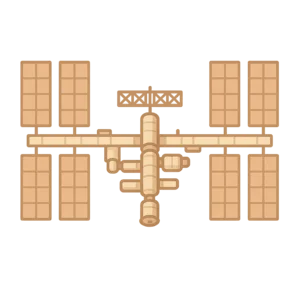
International Space Station
A large spacecraft in low Earth orbit that serves as a home and science laboratory for international crews of…
Reads at Grades 3–5 Listens at Grades 1–5
Print & create
Answer keys·No prep·Free with an account
28 worksheets · answer keys · full story · quiz · Ages 8-10 · CEFR B1
Plus adds 279,000+ more stories in 27 languages, audio for every one, and printables for all of them.
Just want International Space Station?
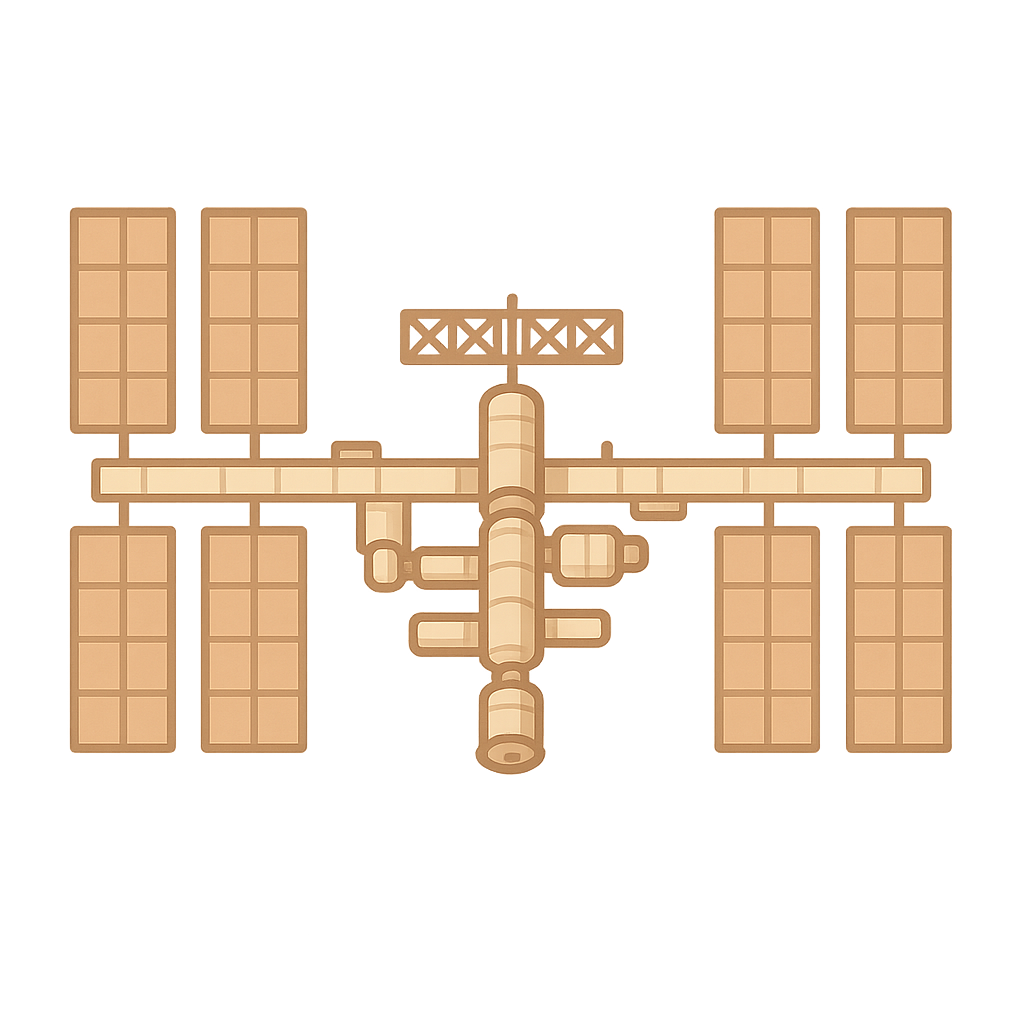
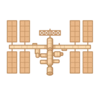
I drift silently through the deep, velvety blackness, a sparkling jewel made of metal and glass. Far, far below me, a beautiful blue marble swirls with white clouds, green lands, and deep blue oceans. It’s the most amazing sight you could ever imagine. I am a constant traveler, racing around the Earth so fast that I see the sun rise and set sixteen times every single day. One moment, the world below is bathed in golden light, and the next, it’s a glittering map of city lights against the darkness. For years, I have been a silent observer and a busy home, floating higher than the highest mountains. I am the International Space Station, a house and a laboratory in the sky.
My journey didn't start with one big launch. I was built piece by piece, like a giant, floating LEGO set assembled in the sky. My story began on November 20th, 1998, when my very first part, a Russian module named Zarya, which means 'Sunrise,' was sent into orbit. It was a lonely start, but not for long. Soon after, a piece from the United States called Unity arrived to connect with it. Over the years, more pieces came from all over the world—Europe, Japan, and Canada all sent parts of my body. Brave astronauts, acting like the most skilled construction workers you've ever seen, floated outside in their puffy white spacesuits. Using giant robotic arms and special tools, they carefully bolted, wired, and connected each new room, solar panel, and laboratory until I grew into the sprawling home I am today.
Life up here is an adventure every single day. The first crew of astronauts arrived to live with me on November 2nd, 2000, and I have never been empty since. Here, there is no 'up' or 'down.' People don’t walk; they float gracefully from one room to another. At night, they don't lie in beds but zip themselves into sleeping bags attached to the walls so they don’t float away while they dream. Even eating is different. Food has to be carefully packaged so it doesn’t float away into crumbs and get into my sensitive equipment. But I am more than just a house. I am a world-class science laboratory. Astronauts spend their days doing experiments they could never do on Earth. They study how to grow plants without soil, how medicines work differently in space, and what happens to the human body when it lives without gravity for a long time. They do all this to help people on Earth and to prepare for even longer journeys into space. Their favorite spot is the Cupola, my seven-sided bay window, where they can gaze at the Earth and the endless ocean of stars in quiet wonder.
The Floating House in the Stars
I drift silently through the deep, velvety blackness, a sparkling jewel made of metal and glass. Far, far below me, a beautiful blue marble swirls with white clouds, green lands, and deep blue oceans. It’s the most amazing sight you could ever imagine. I am a constant traveler, racing around the Earth so fast that I see the sun rise and set sixteen times every single day. One moment, the world below is bathed in golden light, and the next, it’s a glittering map of city lights against the darkness. For years, I have been a silent observer and a busy home, floating higher than the highest mountains. I am the International Space Station, a house and a laboratory in the sky.
My journey didn't start with one big launch. I was built piece by piece, like a giant, floating LEGO set assembled in the sky. My story began on November 20th, 1998, when my very first part, a Russian module named Zarya, which means 'Sunrise,' was sent into orbit. It was a lonely start, but not for long. Soon after, a piece from the United States called Unity arrived to connect with it. Over the years, more pieces came from all over the world—Europe, Japan, and Canada all sent parts of my body. Brave astronauts, acting like the most skilled construction workers you've ever seen, floated outside in their puffy white spacesuits. Using giant robotic arms and special tools, they carefully bolted, wired, and connected each new room, solar panel, and laboratory until I grew into the sprawling home I am today.
Life up here is an adventure every single day. The first crew of astronauts arrived to live with me on November 2nd, 2000, and I have never been empty since. Here, there is no 'up' or 'down.' People don’t walk; they float gracefully from one room to another. At night, they don't lie in beds but zip themselves into sleeping bags attached to the walls so they don’t float away while they dream. Even eating is different. Food has to be carefully packaged so it doesn’t float away into crumbs and get into my sensitive equipment. But I am more than just a house. I am a world-class science laboratory. Astronauts spend their days doing experiments they could never do on Earth. They study how to grow plants without soil, how medicines work differently in space, and what happens to the human body when it lives without gravity for a long time. They do all this to help people on Earth and to prepare for even longer journeys into space. Their favorite spot is the Cupola, my seven-sided bay window, where they can gaze at the Earth and the endless ocean of stars in quiet wonder.
Although I am a machine of wires, metal, and computers, I feel I have a heart. My heart is the teamwork that built me and the shared curiosity that keeps me flying. I am living proof that people from many different countries, speaking different languages, can come together to achieve something incredible. Every experiment conducted within my walls is a step forward for all of humanity. The discoveries made here help us understand our own planet better and give us the courage and knowledge to plan for future missions to the Moon and even Mars. I am a symbol of peace and curiosity, a shining beacon that reminds everyone on the beautiful blue planet below to look up, dream big, and explore together.
Wow facts
About
A large spacecraft in low Earth orbit that serves as a home and science laboratory for international crews of astronauts.
Take a Quiz
Question 1 of 5
The story says the station was built like a 'giant, floating LEGO set.' What does this comparison tell you about how the space station was put together?
Explore next




Want to do even more?
Go beyond exploring. Unlock tools that turn every story into real learning.

Storypie Plus for families
Full stories, quizzes, and printables. Nights and car rides, sorted.
- Unlimited audio stories
- Create Mode: your child stars in the story
- Offline downloads
- Printable worksheets & coloring pages

Why Storypie for Schools
Students engaged. Prep in seconds. Evenings back to you.
- Worksheets & Quizzes
- Classroom Management
- Formative Assessment
- Custom Curriculum & Lesson Plans
- 27 Languages

Why Storypie for Homeschool
Curriculum done. They'll ask for more. Hours back in your day.
- Worksheet Generator
- First-Person Audio Stories
- Built-in Comprehension Quizzes
- Custom Curriculum & Lesson Plans
- Print & Go Activities