

 English

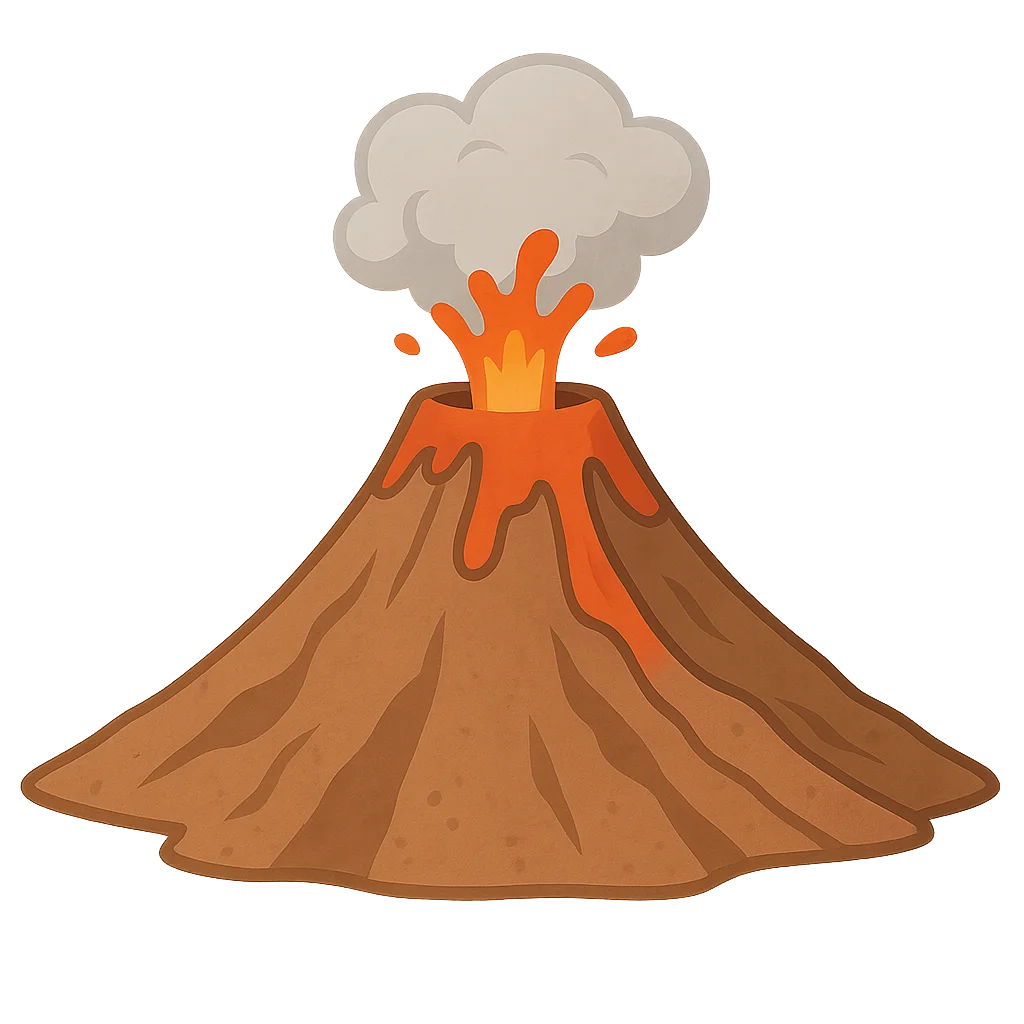
The Mountain with a Fiery Heart
From my great height, I watch the world sparkle. I see the bright sun dance on the waves of the Bay of Naples in Italy, a beautiful curve of blue water that hugs the coast. Below me, the busy city of Naples is a hive of activity, with boats zipping across the water and cars winding through the streets. For thousands of years, people looked up at me and saw only a peaceful, green mountain. My slopes were covered in lush vineyards where sweet grapes grew, and my soil was perfect for olive trees. Farmers tended their crops, and families enjoyed picnics in my shade, never guessing the secret I kept deep inside. They saw my calm outside, but they did not know about the power sleeping within me. But I am more than just a mountain. I am a giant with a fiery heart. I am Mount Vesuvius.
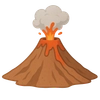
Long, long ago, in the time of the Roman Empire, my slopes were home to bustling towns. I remember Pompeii and Herculaneum so clearly. They were filled with life. I would watch people walk along stone streets, shop in busy markets, and relax in their lovely homes decorated with colorful paintings. Children’s laughter would echo through the courtyards. I loved the energy and the life that flourished at my feet. But deep within my rocky core, a great pressure was building, like a secret I could no longer hold. On the morning of October 24th, in the year 79 CE, the ground began to tremble, just a little at first. Then, with a mighty 'BOOM.', I woke up. I sent a colossal cloud of ash, smoke, and tiny stones called pumice shooting high into the sky. A Roman writer named Pliny the Younger, who was watching from across the bay, wrote that it looked like a giant pine tree spreading its branches across the heavens. For two days, I rained ash down upon the towns. It was a sad time, but this thick, gray blanket did something nobody expected. It covered everything so perfectly that it created a snapshot in time, keeping the cities safe and hidden for centuries.
Many, many years passed. I grew quiet again, and a new layer of soil covered my slopes. The world almost forgot about the towns I held beneath my blanket of ash. Then, in the 1700s, people started to uncover my secret. Explorers were digging a well when they discovered the hidden city of Herculaneum in 1738. A few years later, in 1748, they found Pompeii. Imagine their excitement. It was like opening a time capsule. Archaeologists began to carefully dig, revealing a lost world. They found whole streets just as they had been left, with bakeries that still had loaves of bread in their ovens and houses with beautiful paintings still bright on the walls. I was no longer just a mountain; I had become a teacher. By showing them these preserved cities, I taught people exactly what life was like for the ancient Romans, from the food they ate to the games they played. The stories of the people who lived here were finally being told again.
My last big rumble was in the year 1944, but since then, I have been resting peacefully. Today, scientists watch me very closely with special tools. They study my every sigh and tremor to understand how volcanoes work and to help keep the people living nearby safe. I am now a beautiful national park. Brave hikers climb my steep paths to peek into my crater, the very top of my fiery heart. From up here, they can see the ruins of Pompeii and the stunning blue bay, just as I do every day. I stand as a powerful reminder of nature’s strength, but also as a guardian of history. I protect the stories of the past, and I teach lessons to every person who comes to visit me, all while I watch over the beautiful part of the world I call home.
Activities
Take a Quiz
Test what you learned with a fun quiz!
Get creative with colors!
Print a coloring book page of this topic.






 Free for Educators