

 English

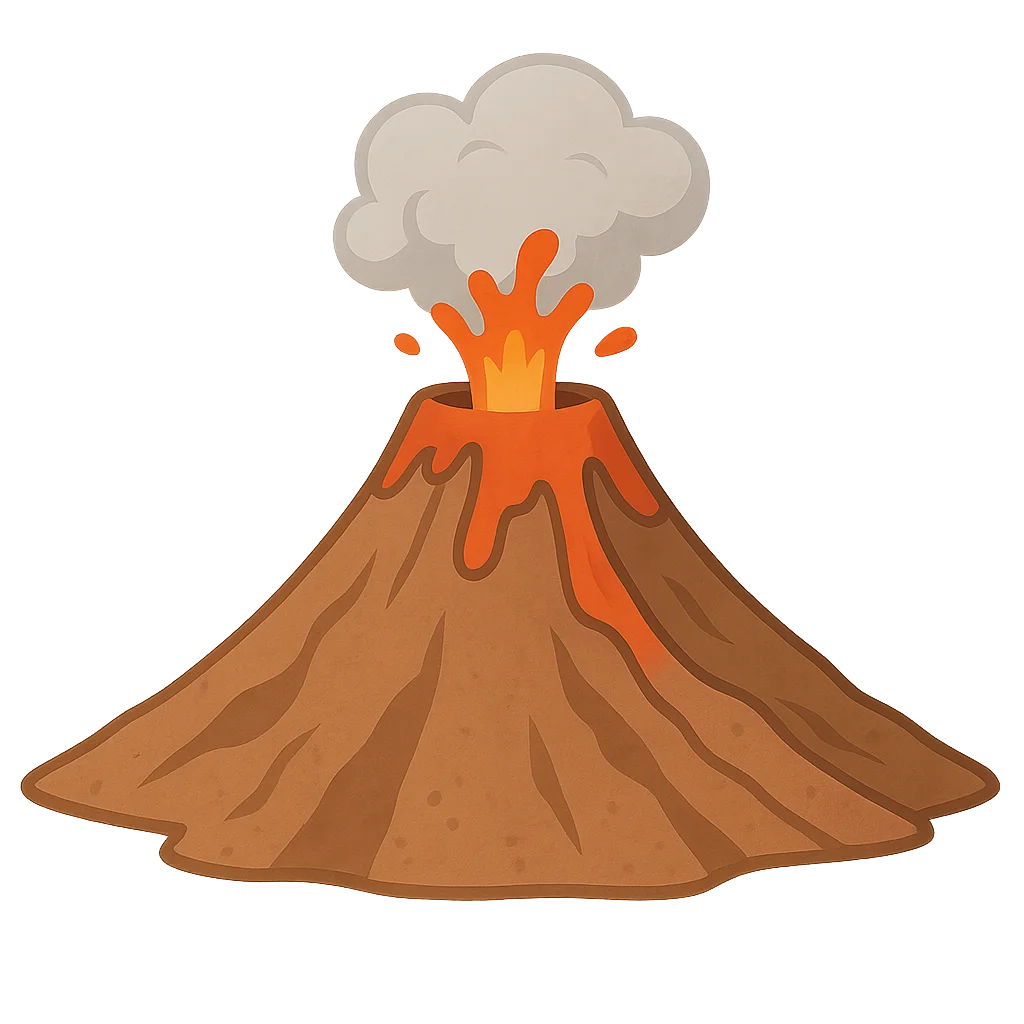
The Sleeping Giant of Naples
From a distance, I am a picture of peace. I rise like a great, slumbering giant against the brilliant blue sky, my jagged peak watching over the sparkling Bay of Naples in Italy. My slopes are a patchwork of green vineyards, fragrant lemon groves, and bustling towns where life unfolds in the warm sun. I feel the gentle sea breeze on my rocky skin and watch tiny boats leave white trails across the water. For centuries, people have built their homes on my fertile soil, trusting in my quiet strength. They see my beauty and my grandeur, but they do not always remember the fiery secret I hold deep within my core. It is a warm, rumbling power, a heart of molten rock that sleeps, but never truly rests. I am a guardian, a creator, and a destroyer. I am Mount Vesuvius, and I am a volcano.
For many hundreds of years, during the time of the great Roman Empire, my secret was almost completely forgotten. I was so quiet for so long that people saw me as just another beautiful mountain. My slopes were covered in lush forests and rich gardens, providing wood, food, and a perfect place for wealthy Romans to build their holiday villas. At my feet, the vibrant cities of Pompeii and Herculaneum thrived. I watched as generations of families filled their streets with the sounds of life—merchants calling out their wares in the busy forum, children playing games on the stone pavements, and bakers pulling fresh loaves of bread from their ovens. The people loved me for the rich, dark soil I provided, perfect for growing grapes and olives. They did not know that this fertility was a gift from my past eruptions, long before their cities were born. Then, in the year 62 CE, I stirred in my sleep. A powerful earthquake shook the ground, toppling statues, cracking walls, and startling everyone in the region. It was a deep cough from my slumbering lungs, a warning tremor from my depths. But the people did not understand its true meaning. They were resilient and hardworking, and they simply rebuilt their homes and temples, never suspecting that the beautiful mountain they lived beside was slowly, unstoppably, waking up.
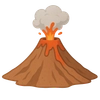
That long sleep ended on the morning of August 24th, in the year 79 CE. A tremendous roar echoed from deep within me, a sound that shook the very foundations of the world. Then, with unimaginable force, I awakened. I blasted a gigantic column of superheated gas, ash, and pumice stone miles into the sky. A Roman writer named Pliny the Younger, who watched from a safe distance across the bay, later described the cloud as looking like a giant umbrella pine tree, with a tall trunk and a wide, spreading top. It was a terrifyingly beautiful sight that quickly turned deadly. The enormous cloud blocked out the sun, plunging the vibrant, sunny day into a terrifying, unnatural night. Soon, the ash and lightweight pumice stones began to rain down on Pompeii, covering everything in a thick, gray blanket. People tried to flee, but the air was thick and choked with dust. Then, I unleashed my most fearsome power: pyroclastic flows. These were hurricane-force surges of super-hot gas, ash, and rock that raced down my slopes at hundreds of miles per hour, instantly destroying everything in their path. In just two days, the bustling cities of Pompeii and Herculaneum vanished, buried completely under a deep layer of ash and rock. Then, having spent my fury, I fell silent once more.
For over 1,600 years, the world forgot about the cities I had buried. They became a lost chapter of history, hidden beneath new layers of soil and farmland. My slopes turned green again, and new villages were built where ancient Roman ones had once stood. It seemed as though Pompeii and Herculaneum were gone forever. But then, in the 18th century, strange discoveries were made. While digging a well, workers stumbled upon ancient marble statues. Curiosity grew, and soon, organized digging, or excavation, began. The first formal excavations at Pompeii started in the year 1748. As archaeologists carefully brushed away the layers of hardened ash, they uncovered a breathtaking sight: an entire Roman city, perfectly preserved. It was a frozen-in-time snapshot of the moment my eruption had stopped everything. They found houses with vibrant paintings still on the walls, bakeries with carbonized loaves of bread still sitting in the ovens, and streets with chariot tracks worn into the stone. My blanket of ash, which had brought such swift destruction, had also protected the city from the passage of time. It gave the world the most incredible gift: a direct window into the daily life of the Roman Empire.
Today, my fiery heart still beats. I am still an active volcano, watched carefully by scientists who use special tools to listen to my rumbles and understand my moods. My most recent eruption was in March of 1944, a reminder of the power I still hold. My story is a complex one. It is a tale of nature’s immense and sometimes destructive force, but it is also a story of incredible discovery and creation. The very ash that buried cities has created some of the most fertile soil in the world, where the sweetest tomatoes and grapes grow. The cities I entombed have become invaluable teachers, showing us exactly how people lived two thousand years ago. I stand here as a guardian of the past and a symbol of nature's awesome power, inspiring curiosity, caution, and respect in all who come to see me.
Activities
Take a Quiz
Test what you learned with a fun quiz!
Get creative with colors!
Print a coloring book page of this topic.










 Free for Educators