

 English

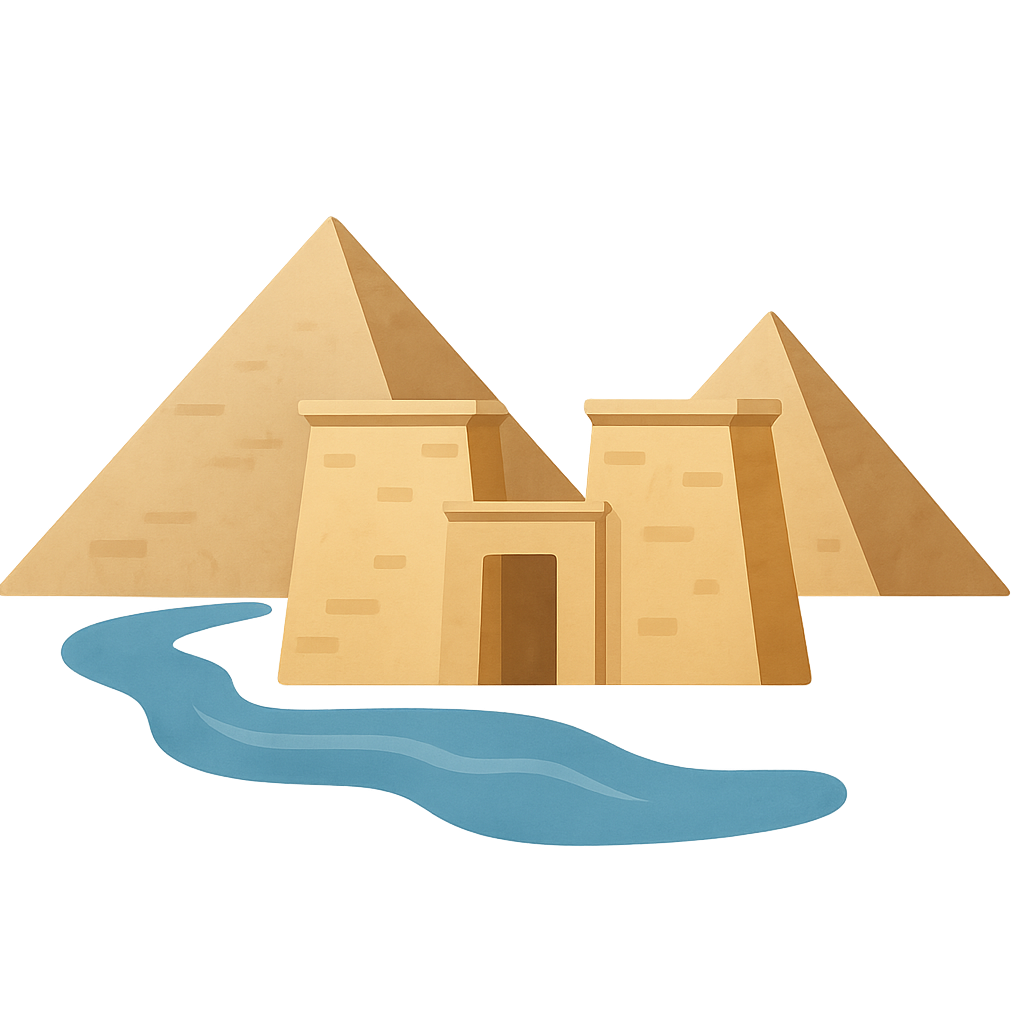
A River's Whisper
Imagine beginning as a tiny trickle, high in the cool, misty mountains of central Africa. Now, feel yourself growing, gathering strength from countless streams as you begin a journey that spans thousands of miles. I flow northward, a winding ribbon of life through a vast, golden desert. I have felt the scorching sun bake the land around me, while my waters remain a cool sanctuary. Hippos yawn in my shallows, crocodiles glide silently beneath my surface, and tall papyrus reeds rustle along my banks, whispering secrets to the wind. For millennia, I have watched civilizations rise and fall like the sun and moon. I have carried the prayers of farmers, the dreams of pharaohs, and the ambitions of explorers. My memory is as long and deep as my current. They say I am the longest river on Earth, a lifeline that has nourished history itself. I am the Nile River.
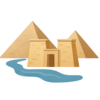
For more than 5,000 years, I was the heart of ancient Egypt. The people who lived on my banks didn't fear my power; they celebrated it. Every year, predictable as the stars, I would swell with the summer rains from the south. This great flood, which they called the Inundation, was not a disaster but a promise. When my waters rose, they covered the dry, dusty fields, and when they receded, they left behind a priceless treasure: a thick, dark layer of incredibly fertile soil called silt. This black earth was so rich that it allowed the Egyptians to grow abundant crops of wheat and barley. Because they never had to worry about starvation, they had time for other things. They had time to think, to create, and to build wonders that still awe the world. I was their partner in greatness. When they decided to build their magnificent pyramids and temples, it was I who served as their grand highway. Mighty barges floated on my surface, carrying colossal blocks of stone from quarries far to the south, delivering them right to the construction sites. I connected their entire kingdom, from the cataracts in the south to the wide delta where I meet the sea in the north. I was their calendar, their clock, and the source of their prosperity.
Despite their deep connection to me, the ancient Egyptians never knew my true beginning. For them, and for the Greeks and Romans who came after, my source was the greatest geographical mystery on Earth. Where did my life-giving waters come from? For centuries, people tried to find the answer, but the heart of Africa was a challenging and unknown land. The puzzle wasn't solved until much later. The truth is, I am born from two powerful sources. My first branch is the Blue Nile, a rushing, powerful torrent that begins in the highlands of Ethiopia. It carries the rich soil during the summer rainy season that made Egypt so fertile. My other branch is the White Nile, a calmer, steadier stream that flows from the great lakes of central Africa. For a long time, no one could trace this branch to its start. Then, in the 19th century, determined explorers from Europe ventured into the continent. One of them, an English explorer named John Hanning Speke, endured incredible hardships on his quest. Finally, on August 3rd, 1858, he stood on the shore of an immense body of water, a shimmering inland sea. He named it Lake Victoria, and he knew he had found the long-sought-after source of the White Nile, solving a riddle that had baffled the world for ages.
My journey continues today, though my rhythm has changed. In the 1960s, a great structure was built across my path in southern Egypt: the Aswan High Dam. This massive wall of rock and concrete forever ended my annual flood. The gift of the silt no longer spreads across the farmlands naturally. But the dam brought new gifts. It created a huge lake, providing a reliable supply of water for farming all year round. More importantly, it harnessed my power to create electricity, bringing light and energy to millions of homes and industries. Today, I am a shared river. My waters flow through eleven different countries, and all of them depend on me for life and work. I am still a highway for boats, a source of food, and a place of beauty. My story is a reminder that while landscapes and civilizations change, the power of nature endures. I continue to flow, connecting people and places, and whispering tales of the past to all who listen.
Activities
Take a Quiz
Test what you learned with a fun quiz!
Get creative with colors!
Print a coloring book page of this topic.








 Free for Educators