The City of Echoes

Imagine walking on stones warmed by the sun, their surfaces worn smooth by thousands of years of footsteps. The sound of water splashing in magnificent fountains fills the air, a happy song that never ends. All around you, ancient, sun-bleached ruins stand proudly next to bustling cafes where people sip coffee and laugh. It feels like you are walking through a storybook, where every corner holds a secret and the wind whispers tales of emperors and artists. I have watched the world change for more than two thousand years, holding stories in my very foundations. I am Rome, the Eternal City.

My story begins with a legend, a tale of two twin brothers named Romulus and Remus. They were abandoned as babies but were saved and cared for by a kind she-wolf who raised them as her own. When they grew up, they decided to build a city. After a disagreement, Romulus became the first king, and on April 21st, 753 BC, he founded me upon seven green hills overlooking the Tiber River. I started as just a small village of huts, but I had big dreams. I grew and grew, becoming a Republic, a special place where citizens had a voice and could vote for their leaders. My heart was the Roman Forum, a busy, open square filled with grand temples and government buildings. It was here that people came to trade goods, listen to important speeches, and make decisions that would shape my future.

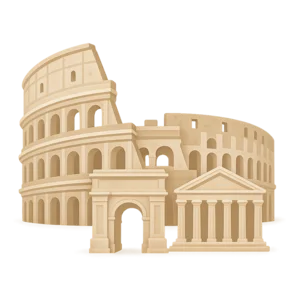
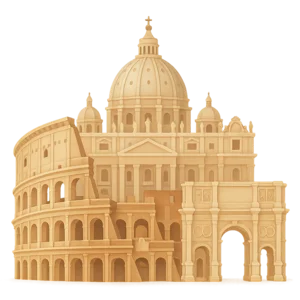
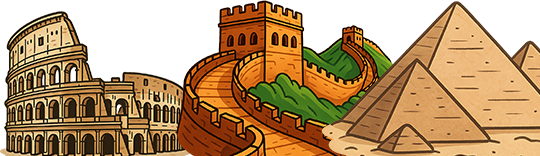
My strength and influence continued to grow until I was no longer a Republic, but the center of a mighty Empire. A powerful leader named Augustus became my first emperor, and he wanted to make me the most magnificent city in the world. My people were brilliant builders and engineers. They built amazing aqueducts, which were like long bridges for water, carrying fresh, clean streams from mountains miles away right into the city's fountains and baths. They built strong, straight roads that connected my empire like veins, making it easier for soldiers, traders, and messengers to travel. To show my power and skill, they built the Colosseum, a gigantic stone amphitheater that could hold over 50,000 people. It was a place for incredible shows and spectacles that amazed everyone who saw them, a true wonder of engineering that still stands today. I was the capital of a world that stretched farther than anyone had ever imagined.

Many centuries passed, and after my time as an empire ended, a new chapter began. It was called the Renaissance, which means “rebirth.” It was a time when art, ideas, and creativity flourished once again within my walls. Brilliant artists came from all over to create masterpieces. One of them was a man named Michelangelo. He spent years on his back, high up on a scaffold, painting the ceiling of the Sistine Chapel with breathtaking scenes that still make people gasp in wonder. Today, I am a living museum. My ancient ruins stand beside beautiful churches and busy streets. The past and the present dance together on my cobblestones. I love watching visitors from all over the world walk my paths, their faces filled with awe. My story reminds them that with courage, creativity, and teamwork, people can build things that last forever, inspiring dreams for generations to come.

Reading Comprehension Questions

Click to see answer

Answer: It means the roads spread out from the center of Rome to all parts of the empire, carrying people, goods, and messages, just like veins carry blood throughout a body to keep it alive and connected.

Answer: They built them to solve problems, like getting clean water to the city, and to show how powerful, smart, and skilled they were. The Colosseum was also for entertaining the people.

Answer: Rome became a Republic first. The story says it grew from a village into a 'powerful Republic' and then later describes the 'transition into the mighty Roman Empire with the first emperor, Augustus.'

Answer: He probably felt very focused and creative, but also tired because it was a huge and difficult job. He might have felt proud and inspired, knowing his art would be seen by people for hundreds of years.
Answer: It means that Rome is a place where ancient history and modern life exist side-by-side, so you can see ruins from thousands of years ago right next to busy streets and cafes of today.