Audio first for kids puts sound before screen to ease mental demand and spark inner play. It is a simple design choice. When children listen without competing images, attention settles. Working memory frees up and imagination gets busy.
What audio first means
Audio first for kids makes spoken-word and sound-only experiences the main way a story reaches a child. It is not a ban on books or pictures. Instead, it places listening first as the primary storytelling mode. This small swap can feel quietly powerful.
Why cognitive load matters
Screens ask children to split attention across images, text, animations, and buttons. These multiple demands raise extraneous cognitive load. By choosing audio first, adults cut that unnecessary load. As a result, a child has more mental space to build meaning and picture scenes.
How listening uses the mind
Listening leans on the brain’s phonological loop and sequential processing. Therefore, children hold and connect language over time. This steady rhythm helps them form mental images. In short, audio encourages thoughtful, active listening.
Listening stretches imagination
Hearing a voice activates auditory regions and areas tied to visual imagery and social thinking. In other words, a narrator can spark a whole internal movie. Well-timed pauses, gentle pacing, and subtle soundscapes invite kids to fill in details themselves. It is not empty silence. It is an open stage for creativity.
Development and daily routines
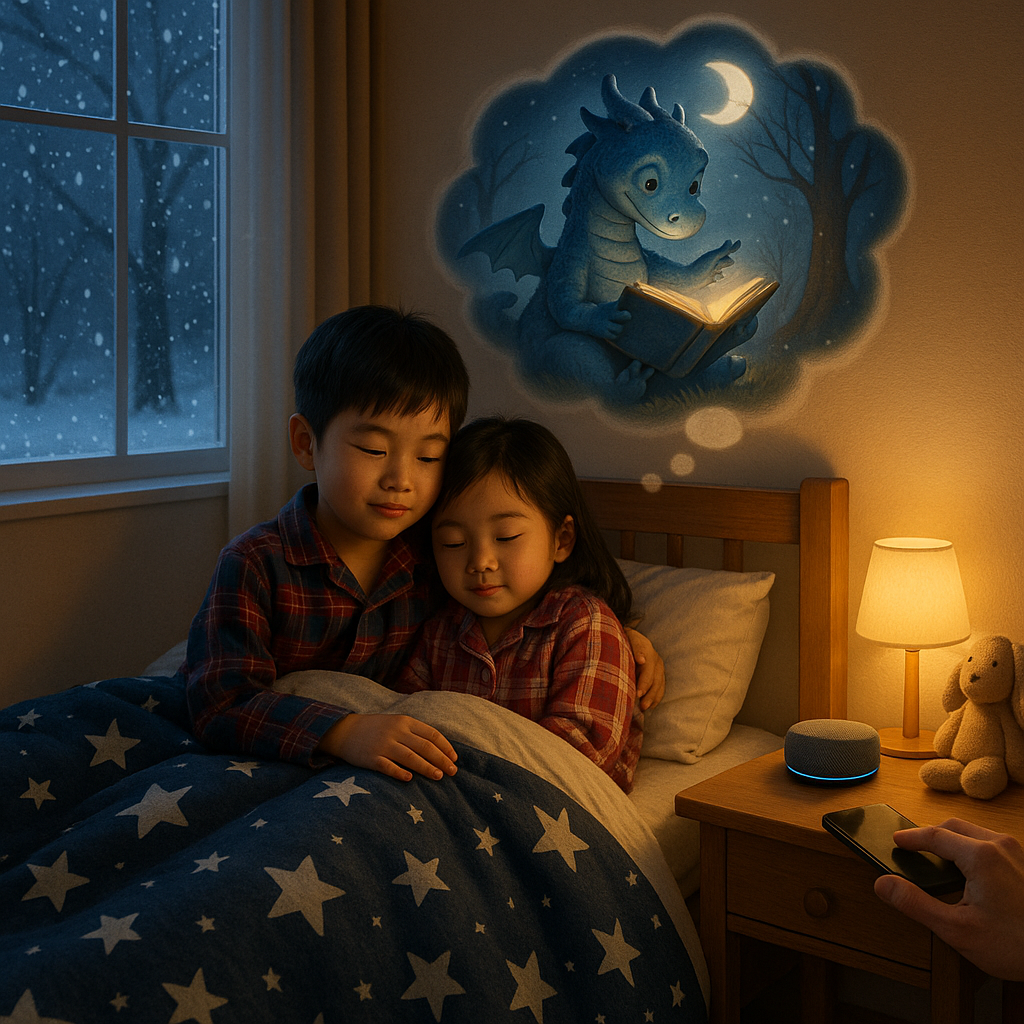
Regular listening exposes children to richer words and varied sentence patterns. This practice supports language and memory growth. Toddlers benefit from short, clear audio plus adult interaction. Older kids follow longer story arcs and build sustained attention. Also, bedtime pairs naturally with audio. It avoids blue light and gives softer sensory input. A low-volume speaker can signal sleep time and calm the household.
Inclusion, access, and safety
Audio supports children with visual impairment and families who speak multiple languages. It also helps households without video devices. Choose age-appropriate content, keep volume safe, and watch the youngest listeners closely. Design audio with clear pacing and respectful pauses, not sensory overload.
Storytelling roots, modern forms
Oral storytelling, radio drama, and audiobooks show that voice alone can captivate. Today, audio apps bring that tradition into portable, inclusive forms. They work in low light, on walks, and during quiet play. At Storypie, we prioritize audio first for kids because it lowers cognitive load and stretches imagination.
Try a tiny swap tonight
This winter evening, try swapping a 15-minute screen session for an audio story. You may find calmer bedtimes and brighter inner play. If you want a gentle way to begin, explore Storypie’s collection of short audio stories and calm soundscapes for families.
Practical note: Keep choices simple and kind. A little listening, often, goes a very long way.