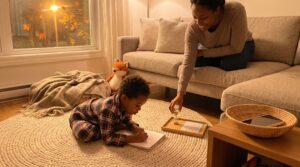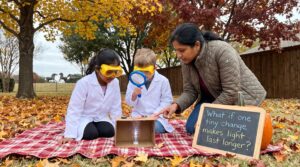

Measurement for kids starts in a winter-morning kitchen. For example, you and your child tip flour into a bowl, press a wooden spoon, and watch numbers become real.
What measurement means for kids
At its simplest, measurement compares the unknown to a known. We use units like centimetres, cups, seconds, and degrees. First, we measure length, mass, time, temperature, volume, and amount of substance. Long ago people used their bodies as standards. A cubit used a forearm. A foot matched a step. That made things convenient but messy. Different towns kept different feet. As a result, trades argued and confusion grew. According to the CIA World Factbook, only three countries—Burma (Myanmar), Liberia, and the United States—have not adopted the International System of Units (SI) as their official system of weights and measures, highlighting the global adoption of standardized measurement systems.
A tiny history to love
Over centuries people moved toward common standards. Egypt kept a royal cubit safe in temples. In the 18th century France pushed decimal measures. That idea spread slowly and steadily. Then modern physics reshaped units. In 2019 the kilogram stopped being a metal weight. Instead it became tied to the Planck constant. Now atomic clocks and the speed of light define seconds and metres. Big, elegant, and surprisingly human.
Why standards matter
Standards keep medicine safe, bridges standing, and rockets on course. Accuracy tells how close a value is to the truth. Precision tells how repeatable a result is. You can be precise but still wrong if a tool miscalibrates. Calibration and traceability tie your ruler or scale to national labs. For example, labs like NIST help make measurements reliable worldwide. Also, every measurement carries uncertainty. Scientists report that uncertainty so others can trust and compare results. As of December 2024, the Bureau International des Poids et Mesures (BIPM) reports 26,125 published Calibration and Measurement Capabilities (CMCs) in its KCDB, which emphasizes the extensive framework of calibration and measurement capabilities that underpin accurate measurements globally.
Tools you already have
You likely own useful tools for measurement at home. A ruler or tape measure works for length. Kitchen scales and measuring cups measure mass and volume. A thermometer shows temperature. A phone timer or stopwatch times events. Also GPS and atomic clocks run quietly inside many apps we use every day.
Simple, playful activities
Try these short activities to make measurement tangible and fun:
- Bake together. Measure cups and grams, then talk about why a level cup matters.
- Nonstandard units game. Count how many hands long the table is, then measure with a ruler.
- Make a balance scale. Use a hanger, string, and small cups to compare coins and cereal.
- Shadow ruler. Mark a child’s height with chalk and record growth each week.
- Temperature chart. Take daily readings for a month and draw a weather graph.
Safety note: supervise ovens, hot surfaces, and small parts. With very young children, use pre-measured ingredients and close supervision.
Read or listen to a story about Measurement now: For 3-5 year olds, For 3-5 year olds, For 6-8 year olds, For 8-10 year olds, and For 10-12 year olds.
Why this matters tomorrow: when your child measures a plant, times a jump, or lines up paperclips, they do real science. Small experiments teach a habit: numbers help describe the world. Standards make those numbers useful everywhere. That feels powerful and a little bit magical. As of May 2025, the BIPM reports there are 64 Member States to the Metre Convention, illustrating the collaborative nature of measurement science and the institutions involved.
Find more cozy learning moments on Storypie: Storypie.