Traffic light safety matters every day for families and schools. These small, bright signals order traffic and protect people. For parents and teachers, traffic light safety makes street routines simpler and safer.
Traffic Light Safety: What it is and why it matters
A traffic light tells drivers and walkers who moves and who stops. Red means stop. Green means go when the way is clear. Amber means prepare to stop. Because the rules stay the same for everyone, fewer collisions happen at junctions. Also, the signal gives children clear rules about waiting and watching. In 2023, the National Highway Traffic Safety Administration (NHTSA) estimated that red light running contributed to 1,093 fatalities nationwide, accounting for about 2% of all traffic deaths, highlighting the serious safety risks associated with red light violations.
A short timeline of milestones
The traffic light has a surprising history. First, the 1868 gas lit semaphore stood outside the Houses of Parliament in London. Then it failed after a gas leak and an explosion. However, the idea stayed alive.
Electric signals emerged around 1912 to 1914. Next, Detroit police officer William Potts added the amber light around 1920. That change created the familiar three colour system. In 1923 Garrett Morgan patented a traffic control device with an all stop position. His design influenced later systems and made intersections safer. Over time, lights became common at busy junctions. In 2023, the U.S. Department of Transportation allocated $500 million for upgrading aging traffic control systems, underscoring the financial commitment to improving traffic light infrastructure, which is crucial for safety.
How modern traffic lights work
Today most lights use LEDs. LEDs save energy and last far longer than old bulbs. Sensors buried in the road or mounted nearby detect waiting cars, cycles, and pedestrians. Adaptive systems nudge timings to ease congestion. Some junctions give priority to buses or emergency vehicles. The result is less wasted time and fewer risky crossings. Tiny tech, big safety.
Different signals and crossings to know
Vehicle lights, pedestrian lights, and cycle signals share the road. Special arrow signals regulate turns. In the UK you will meet pelican, puffin, toucan, and Pegasus crossings. Puffin and toucan crossings use sensors to be more responsive. Accessibility features include audible tones, tactile paving, and vibrating buttons. Countdown timers help people and children judge when to cross. A 2023 study by the Insurance Institute for Highway Safety (IIHS) found that red-light safety cameras reduced the fatal red-light-running crash rate in large cities by 21% and reduced the rate of all types of fatal crashes at signalized intersections by 14%, demonstrating the effectiveness of these cameras in enhancing traffic safety.
What children should learn
- Wait on the pavement. Wait for the green man or green light.
- Look both ways even on green. Watch for turning vehicles.
- Hold an adult’s hand near the road. Stay close and steady.
A quick micro activity to try
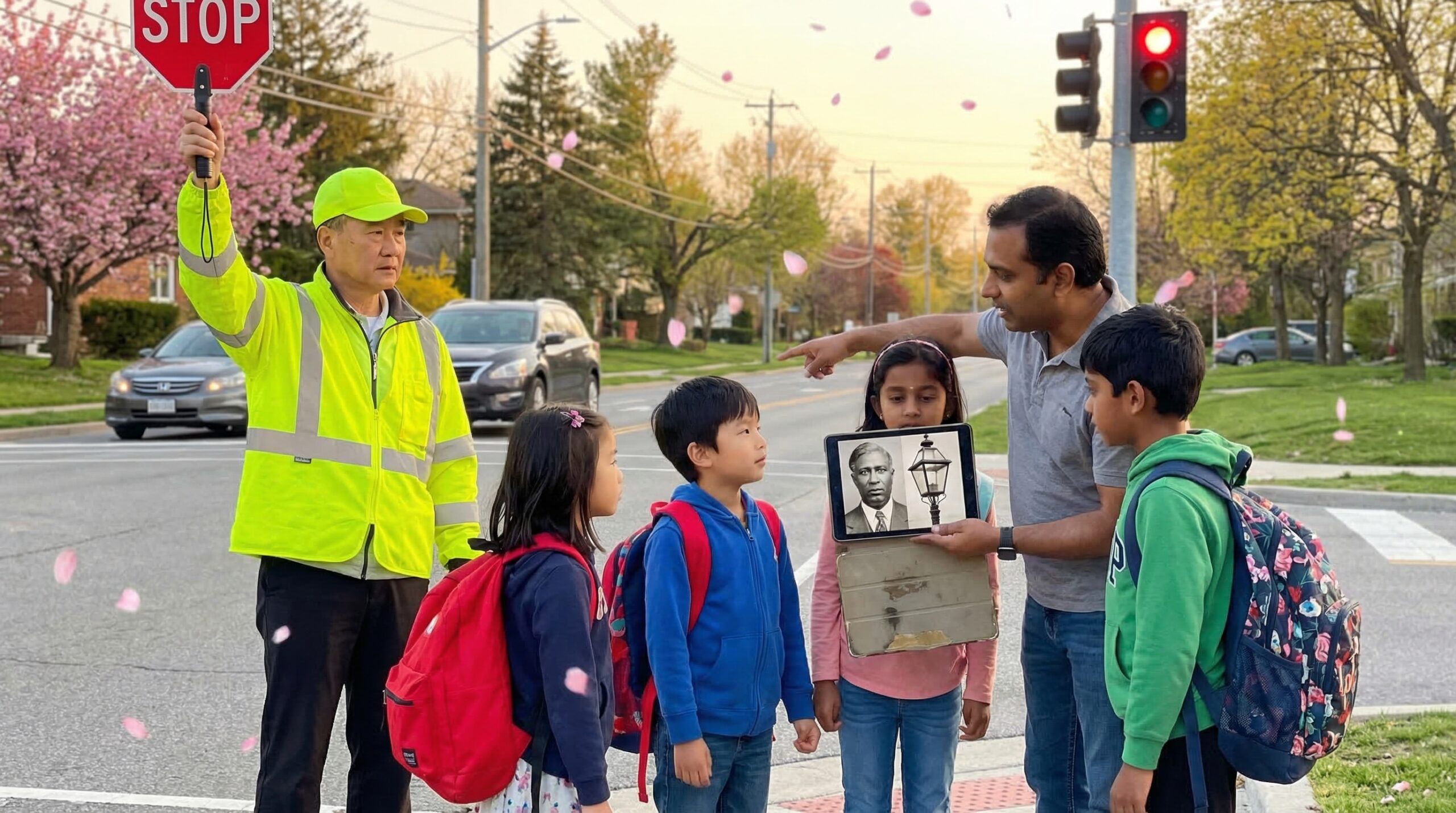
Stand safely back and watch a nearby junction for five minutes with an older child. Count how many signals you see. Note any arrows or cycle lights. Ask, Why might the bus get a green arrow here? Time the amber light and wonder about why it exists. Turn observations into questions and little wow moments.
Read or listen to a story about Traffic Light now: For 3-5 year olds, For 6-8 year olds, For 8-10 year olds, and For 10-12 year olds.
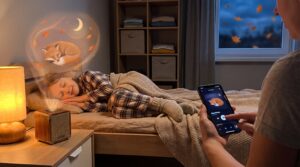
New on Storypie: an 8-minute audio traces the Traffic Light from the first gas lamp to Garrett Morgan’s all-stop. Tip: play it on the spring school run to spark a quick chat about road safety. Try the Storypie app here or visit our learning hub on Storypie here.
Final thought
A traffic light is a small bright idea that sparks big questions. It blends history, safety, and a touch of future tech. Point one out on a walk and turn it into a tiny, lasting lesson. In 2023, 1,086 people were killed and more than 136,000 people were injured in crashes that involved red-light running in the United States, providing a stark overview of the impact of red light running on public safety.