Deutsch

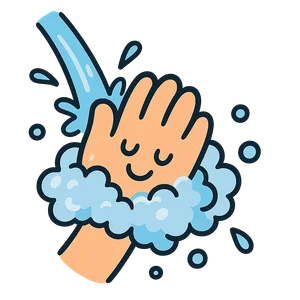
Händewaschen
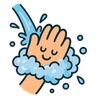
Händewaschen, ein Teil der Handhygiene, ist der Akt des Reinigens der Hände mit Seife und Wasser, um Schmutz…
Liest um Klassen 3–5 Hört zu bei Klassen 1–5
Drucken & erstellen
Antwortschlüssel·Keine Vorbereitung·Kostenlos mit einem Konto
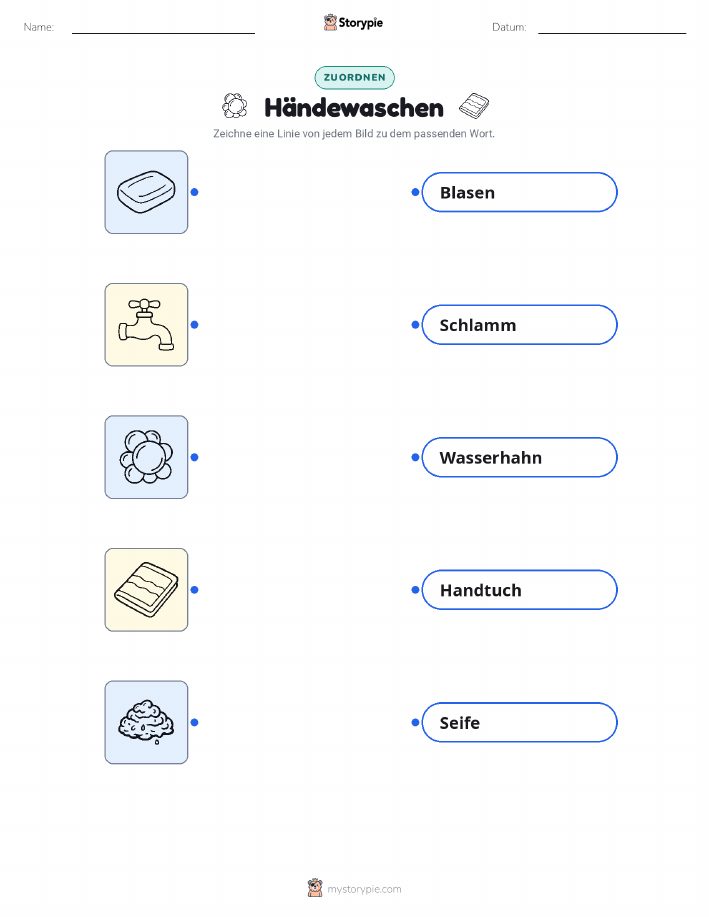
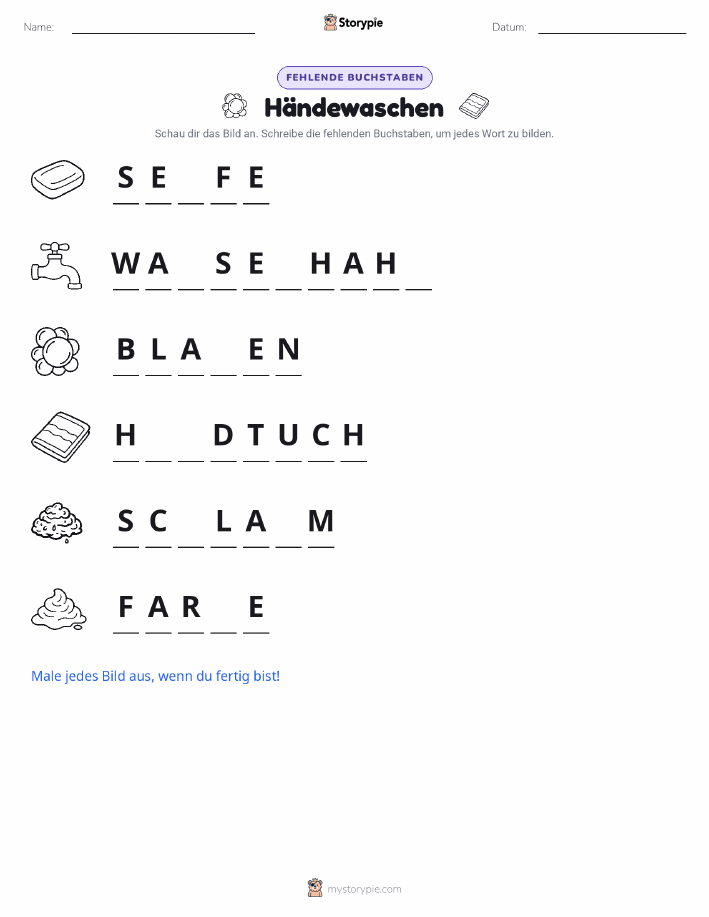
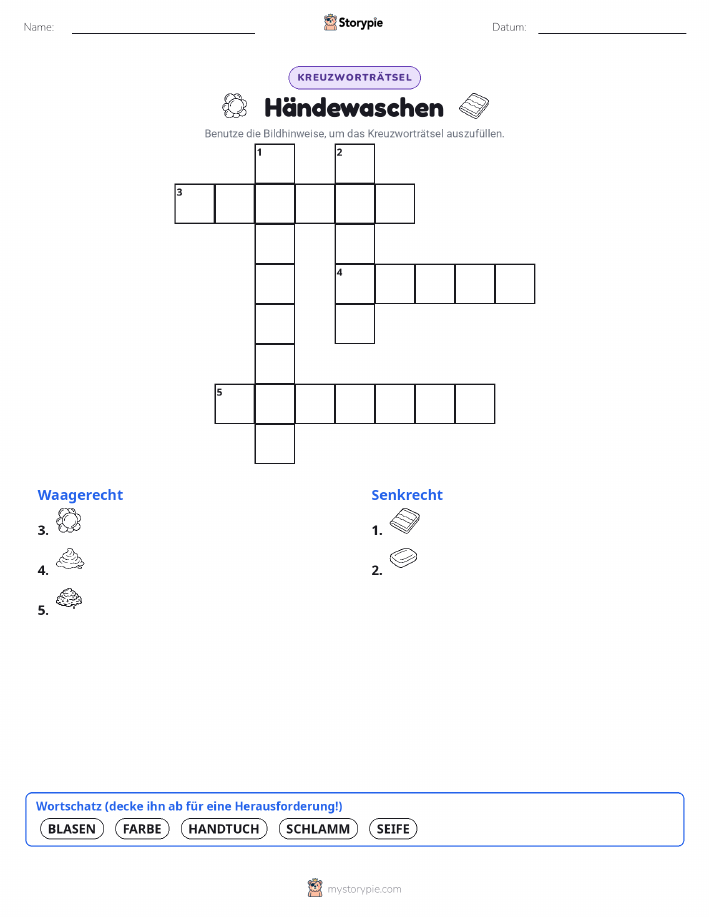
27 Arbeitsblätter · Antwortschlüssel · volle Geschichte · Quiz · Alter 8-10 · CEFR B1
Zusätzlich gibt es 279,000+ weitere Geschichten in 27 Sprachen, Audio für jede einzelne und Druckvorlagen für alle.
Möchtest du nur Händewaschen?
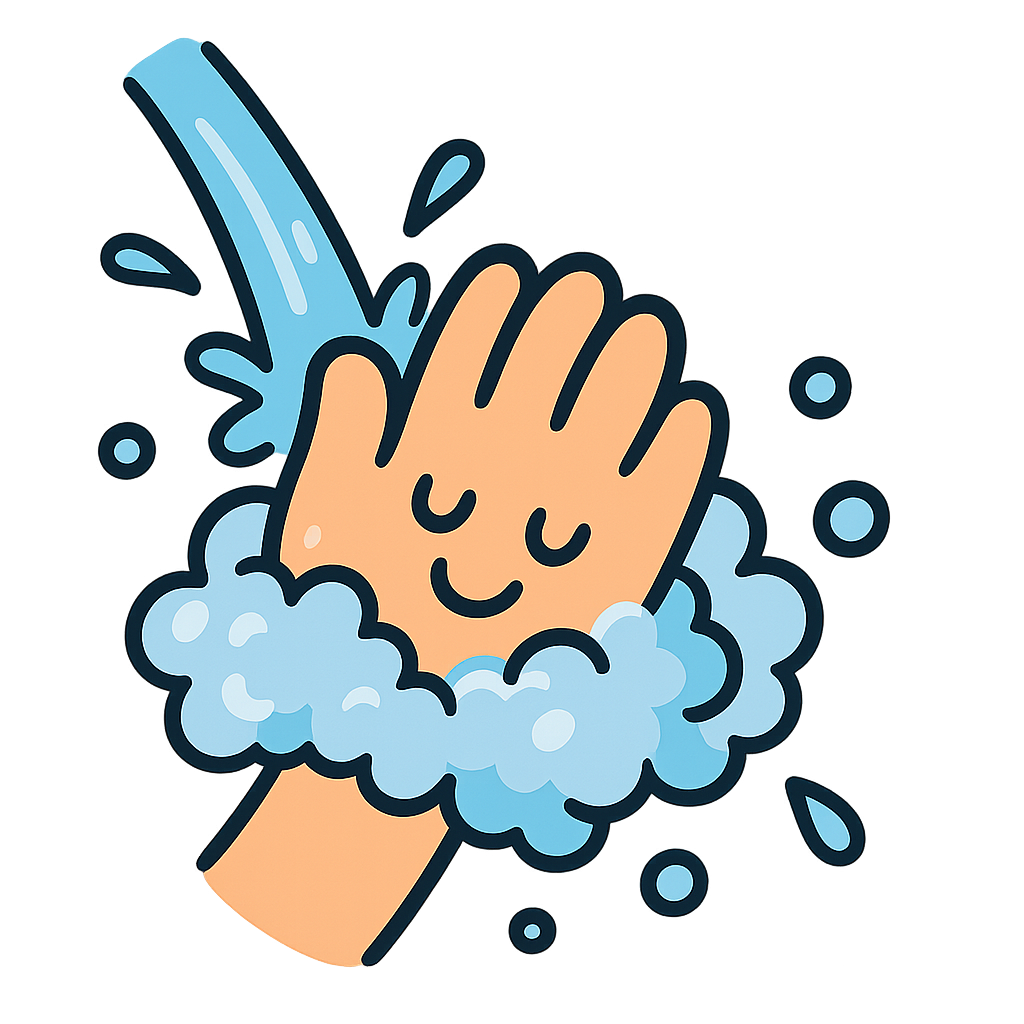
All around you is an invisible world of tiny living things called germs, which include bacteria and viruses. While most of these germs are harmless, some can make you sick if they get inside your body. I want to tell you about a simple but powerful way you can protect yourself. Handwashing is your superpower for washing these germs away before they can cause trouble. Think about when you play outside and get dirt on your hands. Even after you wipe the dirt off, invisible germs can be left behind. Handwashing helps get rid of those, too.
Learning the right steps for handwashing gives you the power to fight germs anytime. Let me explain how it works. First, you turn on the water to a warm, comfortable temperature and get your hands wet. Next, you add soap and rub your hands together to create a lot of bubbles, which we call a lather. Soap is special because it works to trap germs and lift them right off your skin. You need to make sure to scrub everywhere for at least 20 seconds. This includes the fronts and backs of your hands, the spaces between your fingers, and underneath your nails. A fun way to time yourself is to sing the 'Happy Birthday' song twice. After you finish scrubbing, you rinse all the soap and germs away under clean, running water. Finally, you dry your hands completely with a clean towel, because germs have a harder time growing on dry skin.
Knowing when to wash your hands is just as important as knowing how to do it correctly. It is crucial to wash your hands before you eat or help prepare food. This helps make sure you don't accidentally eat germs along with your meal. You should always wash your hands after using the bathroom, as this is a key way to stop the spread of germs from one place to another. If you cough, sneeze, or blow your nose, it's important to wash your hands afterward to remove any germs you may have released. It is also a great idea to wash up after playing outside or after petting animals to get rid of any dirt and germs you may have picked up.
The Power in Your Hands
All around you is an invisible world of tiny living things called germs, which include bacteria and viruses. While most of these germs are harmless, some can make you sick if they get inside your body. I want to tell you about a simple but powerful way you can protect yourself. Handwashing is your superpower for washing these germs away before they can cause trouble. Think about when you play outside and get dirt on your hands. Even after you wipe the dirt off, invisible germs can be left behind. Handwashing helps get rid of those, too.
Learning the right steps for handwashing gives you the power to fight germs anytime. Let me explain how it works. First, you turn on the water to a warm, comfortable temperature and get your hands wet. Next, you add soap and rub your hands together to create a lot of bubbles, which we call a lather. Soap is special because it works to trap germs and lift them right off your skin. You need to make sure to scrub everywhere for at least 20 seconds. This includes the fronts and backs of your hands, the spaces between your fingers, and underneath your nails. A fun way to time yourself is to sing the 'Happy Birthday' song twice. After you finish scrubbing, you rinse all the soap and germs away under clean, running water. Finally, you dry your hands completely with a clean towel, because germs have a harder time growing on dry skin.
Knowing when to wash your hands is just as important as knowing how to do it correctly. It is crucial to wash your hands before you eat or help prepare food. This helps make sure you don't accidentally eat germs along with your meal. You should always wash your hands after using the bathroom, as this is a key way to stop the spread of germs from one place to another. If you cough, sneeze, or blow your nose, it's important to wash your hands afterward to remove any germs you may have released. It is also a great idea to wash up after playing outside or after petting animals to get rid of any dirt and germs you may have picked up.
A long time ago, people didn't know that invisible germs could make them sick. A Hungarian doctor named Ignaz Semmelweis noticed a serious problem in the hospitals where he worked. He saw that many mothers were getting very sick after giving birth. He had an idea that doctors were carrying something invisible on their hands as they went from one patient to another. He asked all the doctors to start washing their hands with a special cleaning solution. Almost immediately, far fewer people got sick. His important discovery proved that handwashing is one of the most powerful tools in medicine and health.
Today, we know that Dr. Semmelweis was right. Handwashing is one of the best and easiest ways for you to keep yourself and others from getting sick with illnesses like colds and the flu. It doesn't require any special equipment—all you need is soap, water, and a few seconds of your time. By making handwashing a regular habit, you are taking an active role in keeping your body healthy and strong. You also help protect your family, friends, and community, too.
Wow-Fakten
Über
Händewaschen, ein Teil der Handhygiene, ist der Akt des Reinigens der Hände mit Seife und Wasser, um Schmutz, Dreck und Mikroorganismen zu entfernen.
Mach ein Quiz
Frage 1 von 5
In the story, what does the word 'crucial' mean when it says, 'It's crucial to wash them before you eat'?
Nächstes erkunden



Möchtest du noch mehr machen?
Gehe über das Erkunden hinaus. Entsperre Werkzeuge, die jede Geschichte in echtes Lernen verwandeln.

Storypie Plus für Familien
Vollständige Geschichten, Quizze und Druckvorlagen. Nächte und Autofahrten, organisiert.
- Unbegrenzte Audio-Geschichten
- Erstellmodus: Dein Kind ist der Star der Geschichte
- Offline-Downloads
- Druckbare Arbeitsblätter & Ausmalbilder
Warum Storypie für Schulen
Engagierte Schüler. Vorbereitung in Sekunden. Abende gehören wieder Ihnen.
- Arbeitsblätter & Quizze
- Klassenraumverwaltung
- Formatives Assessment
- Benutzerdefinierter Lehrplan & Unterrichtspläne
- 27 Sprachen
Warum Storypie für Homeschooling
Lehrplan erledigt. Sie werden nach mehr fragen. Stunden zurück in Ihrem Tag.
- Arbeitsblatt-Generator
- Audio-Geschichten aus der Ich-Perspektive
- Integrierte Verständnisquizze
- Individueller Lehrplan & Unterrichtspläne
- Druck- und Mitnehm-Aktivitäten